News
The latest from the AI agent ecosystem, updated multiple times daily.
NixOS as the Ideal Substrate for LLM Coding Agents
Opinion piece arguing that Nix's declarative, reproducible, and sandboxed package management makes NixOS uniquely suited to the LLM coding agent era. The author explains that coding agents can use `nix shell` / `nix develop` to pull in exact tool versions, compile in isolation, and leave zero lasting mutations to the host system — transforming ad hoc agent experiments into committed, reproducible `flake.nix` artifacts. HN commenters reinforce the thesis, noting that NixOS is the only OS they'd trust an AI agent to reconfigure, because rollbacks are instant and auditable.
Blackburn's TRUMP AMERICA AI Act Would Repeal Section 230, Expand AI Liability, and Mandate Age Verification
Senator Marsha Blackburn has introduced a 291-page legislative discussion draft — the TRUMP AMERICA AI Act — that bundles Section 230 repeal with a two-year transition, new tort liability frameworks for AI developers (defective design, failure to warn, strict liability), mandatory age verification for AI chatbot makers, and a declaration that training on copyrighted works is not fair use. The bill absorbs KOSA, the NO FAKES Act, the GUARD Act, and the AI LEAD Act, consolidating AI enforcement across the FTC, DOJ, NIST, and Department of Energy. Key liability terms like "harm" and "foreseeable" are left undefined — a gap that critics say makes preemptive self-censorship and mandatory identity verification the only viable survival strategy for platforms and developers.

Vibe-Coding Tools Like Lovable Are Making Spam and Scams Look Dangerously Polished
Reporting by Tedium's Ernie Smith observes that AI-powered vibe-coding tools are enabling a new wave of high-quality spam and phishing emails. Where spam was once visually crude and easy to dismiss, AI-generated designs now produce coherent layouts that render correctly even with images off — previously a key spam tell. Security firm Guard.io coined the term "VibeScamming" to describe how platforms like Lovable let unskilled criminals build convincing scam pages and malware with a few prompts. Anthropic's own reporting from 2025 acknowledged the "no-code ransomware" risk, with functional malware kits reportedly selling for up to $1,200. Smith argues that the visual homogeneity of vibe-coded aesthetics will erode trust in legitimate vibe-coded products over time.
Littlebird Raises $11M Seed to Power Always-On AI Context via Screenreading
Littlebird is a Mac desktop AI productivity tool that silently reads the active text content of your screen across all apps and meeting audio, building a persistent memory of your work without requiring integrations or manual setup. It lets users chat with their full work history, auto-generate meeting notes, and receive proactive "routines" — personalized briefings derived from observed activity. The app is SOC 2 certified, stores data encrypted on AWS, and explicitly rejects using user data for model training. The company has raised an $11M seed round. On Hacker News, commenters drew immediate parallels to Microsoft's Windows 11 Recall and flagged Littlebird's cloud storage model as a non-starter for privacy-conscious users.

Designing AI for Scientific Breakthroughs: Why Scaling Won't Trigger Paradigm Shifts
A long-form essay from Asimov Press argues that current AI systems — including LLMs and tools like AlphaFold and GNoME — excel at prediction within existing scientific frameworks but are not currently architected to drive paradigm shifts. Trained on human-curated data with predefined conceptual vocabularies, they risk producing "hypernormal science": ever-finer predictions without the capacity to propose entirely new explanatory frameworks. The piece draws on Maxwell's equations, Einstein's special relativity, and Darwin's natural selection to show that breakthroughs require stepping outside prevailing paradigms, not optimizing within them. The author frames this as a design choice rather than an inevitable ceiling, calling for "visionary machines" that can devise new conceptual vocabularies rather than refine existing ones.
How One Developer Runs Five Parallel Claude Code Agents Simultaneously
Neil Kakkar, an engineer at Tano, describes how he restructured his workflow around Claude Code over six weeks — building infrastructure rather than features. Key unlocks: a custom /git-pr skill for automated PRs, switching to SWC for sub-second server restarts, using Claude Code's preview feature so agents self-verify UI changes, and building a port-assignment system for parallel git worktrees. The result: five concurrent agent worktrees, each building a separate feature autonomously until UI verification passes. HN commenters push back on commit count as a success metric and raise concerns about review burden and code quality at scale.
Claude Code Cheat Sheet: Community-Built, Auto-Updated Reference
A community-built, automatically-updated cheat sheet for Claude Code covering keyboard shortcuts, slash commands, CLI flags, MCP server setup, the skills and agents system, memory management, and config files. Created by phasE89, a daily user who had Claude research its own docs and GitHub changelog, then generate a printable A4 HTML page. A daily cron job keeps it current with new features tagged with "NEW" badges. Free, no signup, mobile-friendly. HN commenters noted Claude Code is substantially ahead of OpenAI Codex on CLI capabilities, and flagged that the --dangerously-skip-permissions flag is missing.
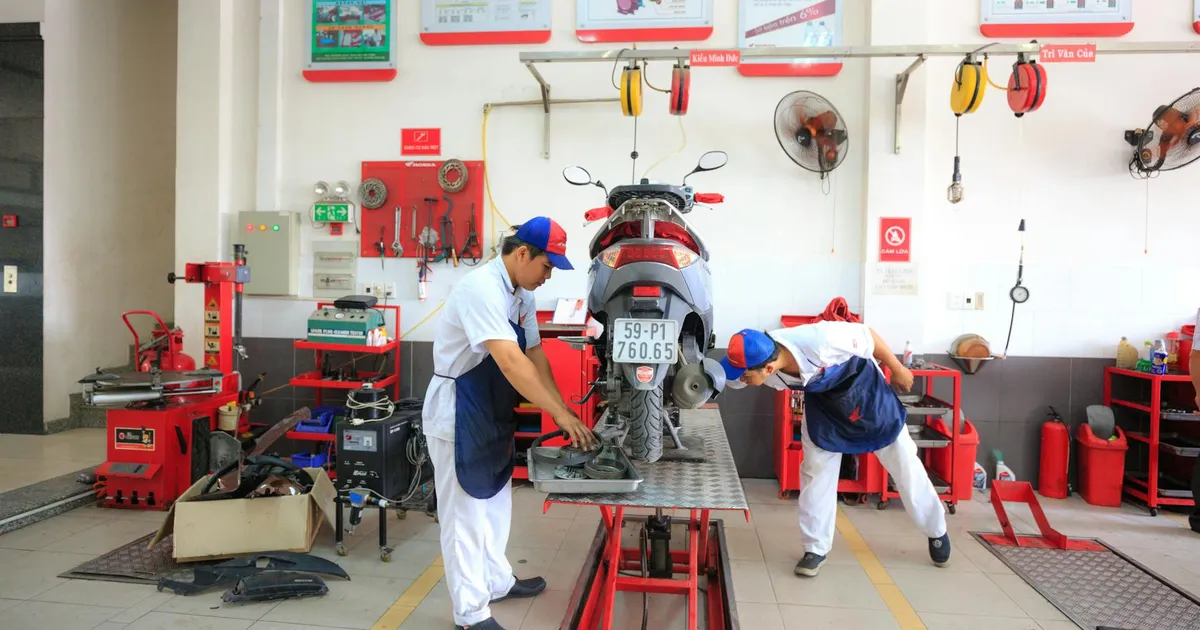
Developer builds AI voice receptionist Axle for mechanic shop using RAG, Claude, and Vapi
Software developer Kedasha Kerr built a custom AI phone receptionist named Axle for her brother's luxury mechanic shop to capture missed calls. The system uses a RAG pipeline with MongoDB Atlas vector search (Voyage AI embeddings) to ground Claude's responses in real shop data, Vapi for telephony (with Deepgram STT and ElevenLabs TTS), and FastAPI for the webhook server. Key design decisions included constraining the LLM to only answer from a curated knowledge base and building a fallback callback-capture flow. HN commenters raised practical concerns about dynamic parts pricing, inaccurate quotes creating legal and reputational risk, and the difficulty of quoting novel repairs — pointing to real gaps between a clean demo and a production deployment.

GPT-5.4 Pro solves frontier open math problem on Ramsey hypergraphs, confirmed for publication
OpenAI's GPT-5.4 Pro became the first AI to solve a genuine open problem in combinatorics from Epoch AI's FrontierMath benchmark — a Ramsey-style hypergraph problem that had stumped 5–10 expert mathematicians and was estimated to take a human expert 1–3 months. The solution was elicited by Kevin Barreto and Liam Price, confirmed correct by problem contributor Will Brian (Associate Professor, UNC Charlotte), and will be written up for publication in a specialty journal. Three other frontier models — Anthropic's Opus 4.6, Google's Gemini 3.1 Pro, and a second GPT-5.4 configuration — subsequently solved the same problem using Epoch's general scaffold for open-problem testing, confirming the capability is not unique to one system.
iPhone 17 Pro Runs a 400B Parameter LLM via Flash Streaming
ANEMLL, an open-source project optimizing LLM inference for Apple's Neural Engine, has demonstrated an iPhone 17 Pro running a 400B parameter model entirely on-device by streaming weights from flash storage to the GPU — no cloud required. If the technique matures into accessible developer tooling, mobile agents could run frontier-scale reasoning offline, on private hardware, at zero inference cost.
Developer describes AI-assisted PR with Claude Code: "I feel like a fraud"
A software engineer shares their emotional experience using Claude Code to submit their first AI-assisted pull request to the Chroma syntax highlighter (used by Hugo). Despite the PR being approved and merged, the author describes feeling empty, fraudulent, and disconnected from the craft of engineering. The post resonates with broader anxieties about identity, craftsmanship, and the industry's push for AI-assisted velocity over understanding. HN commenters largely push back, arguing tool use is legitimate contribution and drawing historical parallels to ORMs and storage automation replacing DBA roles.
Outworked: Open-Source Pixel-Art Office UI for Orchestrating Claude Code Agents
Outworked is an open-source Electron desktop app that wraps Claude Code in a charming 8-bit office metaphor — each AI agent becomes an "employee" with a desk, personality, and sprite. A boss orchestrator breaks goals into subtasks, routes them to agents, and supports parallel execution and inter-agent communication via a shared message bus. Built on React 19, Phaser 3, and the Claude Code SDK, it includes a git panel, cost dashboard, skills system (SKILL.md files), and a defense-in-depth safety model. Created by ZeidJ and collaborators over a couple of weekends as a fun, accessible entry point for people who've heard of Claude Code but don't know how to use it.
Open Source Maintainer Merges AI-Written Post Mocking Unwanted AI PRs
Andrew Nesbitt, creator of the open analytics platform Ecosyste.ms, merged an AI-written blog post on March 21 satirizing the flood of low-quality, unsolicited AI-authored pull requests hitting open source repositories. The post — generated by Claude at another developer's request — advises maintainers to degrade their projects to maximize bot engagement, inverts every software engineering best practice, and invents fake ecosystem metrics that read disturbingly like real ones. Nesbitt built the analytics layer that bots are actively gaming, and his closing note hints that Ecosyste.ms may need to start tracking AI contributions before its own health signals become adversarial attractants.

Aurora's Driverless Semis Are Hauling Commercial Freight in Texas. Federal Rules Haven't Caught Up.
Aurora Innovation has been running driverless semi-trucks on Texas public highways since 2025 as a paying commercial operation, not a test program. A March 17, 2026 New York Times report examines Aurora's lead and the competitive and regulatory landscape around autonomous freight. Note: the Times piece was paywalled; this article draws on publicly available information about the companies and regulations described, not the full source text.
Six LLMs Predicted Coffee Cooling Curves — Two Frontier Models Couldn't Answer at All
A blogger at Dynomight prompted eight LLMs to derive equations predicting how fast boiling water cools in a ceramic mug, then ran the physical experiment to compare. Six returned usable answers — Claude 4.6 Opus, GPT 5.4, Gemini 3.1 Pro, Kimi K2.5, Qwen3-235B, and GLM-4.7 — all converging on exponential-decay forms. DeepSeek and Grok failed to return usable answers while still billing for compute. Claude 4.6 Opus in reasoning mode performed best but cost $0.61; Kimi K2.5 cost $0.01. The piece is a lightweight but concrete benchmark of LLM physical-reasoning "taste" — the ability to make calibrated assumptions about underspecified real-world problems — rather than a test of retrieval or code generation.
LLMs Learn From Code Artifacts, Not How Developers Actually Program
An opinion piece arguing that LLMs are trained on the outputs of programming (finished code, documentation, Stack Overflow answers) rather than the process of programming (how developers think, iterate, and debug). HN comments debate whether RL on git histories or live-coding video footage could close this gap, with Cursor and similar IDE-integrated tools cited as potential sources of "process" data. A skeptical comment cautions against over-fitting theories to single observations about model behavior.
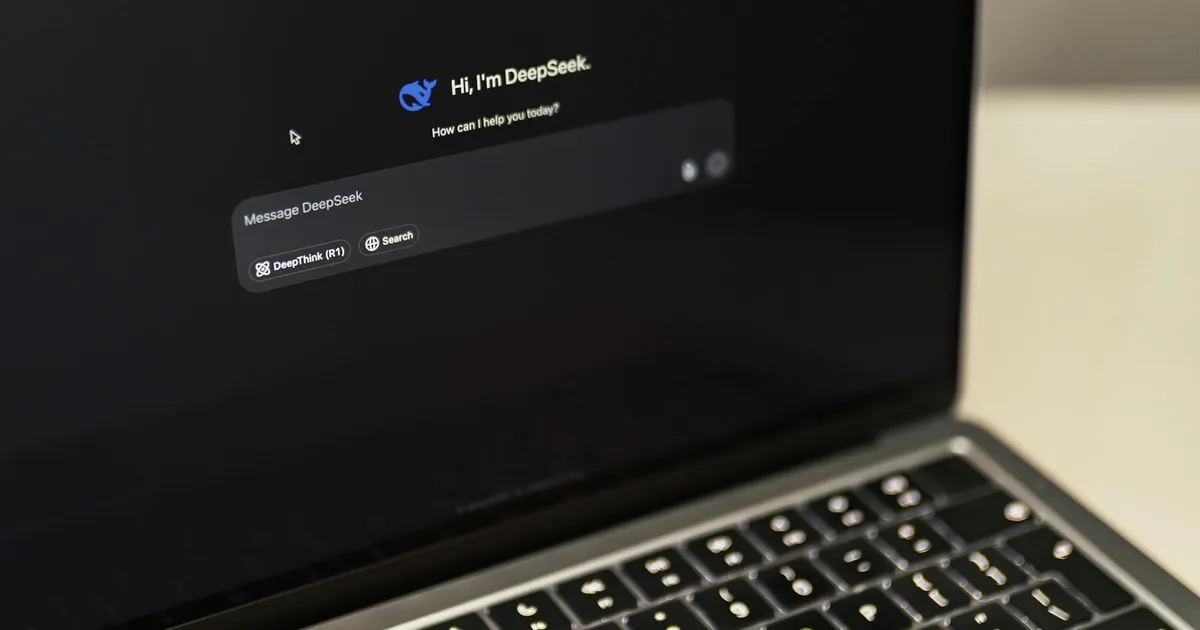
Flash-MoE Runs Qwen3.5-397B on a Laptop via 2-bit Quantization and Expert Reduction
Flash-MoE is a GitHub project demonstrating that the Qwen3.5-397B-A17B mixture-of-experts model can be run on consumer laptop hardware using aggressive 2-bit quantization combined with reducing active experts per token from 10 down to 4. It achieves ~5–6 tokens/sec, but 2-bit quantization degrades model quality severely — the author even notes JSON tool-calling becomes unreliable — and a $3,000 MacBook Pro is hardly an average laptop. A counterpoint from comments: better 2.5 BPW quants on an Apple M1 Ultra achieve ~20 t/s with benchmarks of 87.86% MMLU and 82.32% GPQA Diamond, a more practical path to consumer inference of the same model.
Project NOMAD: Offline Server Bundles Local LLMs via Ollama for Emergency Preparedness
Project NOMAD (Node for Offline Media, Archives, and Data) is a free, Apache 2.0 offline server that bundles Wikipedia via Kiwix, GPU-accelerated local LLMs via Ollama, OpenStreetMap offline maps, and Khan Academy courses via Kolibri — all operable without internet. Built by Crosstalk Solutions and aimed at preppers, off-grid users, and self-hosters, it runs on any Ubuntu/Debian machine with two shell commands. Competitors like PrepperDisk ($199–$279) and Doom Box ($699) are Raspberry Pi-locked and charge hundreds; NOMAD runs free on any PC with GPU acceleration. HN commenters noted it is currently US-centric (maps, Wikipedia links), has Docker networking rough edges, and point to Kiwix's ZIM format as one of several offline content approaches. Marginal relevance to the AI agent ecosystem — the LLM component is an Ollama-backed chat assistant rather than an autonomous agent platform.
Why a Professor May Hire AI Instead of a Graduate Student
A Science.org opinion piece makes the cost-benefit case for replacing graduate student researchers with AI tools in academic labs, sparking sharp debate on Hacker News about the ethical tension between research efficiency and academia's educational mission — and whether publicly funded universities owe more than output.
Walmart: ChatGPT Instant Checkout Converted 3x Worse Than Its Own Website
Walmart tested approximately 200,000 products through OpenAI's Instant Checkout feature, allowing purchases inside ChatGPT without visiting Walmart's site. Conversion rates were three times lower than click-out transactions. Walmart EVP Daniel Danker called the in-chat experience "unsatisfying." OpenAI has since phased out Instant Checkout in favor of app-based merchant checkout. Walmart is now pivoting to embed its own chatbot, Sparky, inside ChatGPT, with a similar integration planned for Google Gemini. HN commenters flagged real-world friction: inventory data was stale, showing in-stock items that weren't actually available.

California BASED Act Bans Self-Preferencing to Give AI Startups a Fair Shot
California Senator Scott Wiener has introduced SB 1074, the BASED Act (Blocking Anticompetitive Self-preferencing by Entrenched Dominant platforms), targeting companies with market caps over $1 trillion and 100M+ monthly US users. The bill prohibits self-preferencing — rigging search results, using third-party seller data to build competing products, and restricting data portability. Explicitly framed to protect the next generation of AI-powered startups, it has backing from Y Combinator CEO Garry Tan, Cory Doctorow, DuckDuckGo, Proton, Yelp, and Fight for the Future.
If DSPy Is So Great, Why Isn't Anyone Using It? — Why DSPy's Adoption Gap Is Bigger Than Its PR Problem
Skylar Payne argues that every serious AI engineering team eventually reinvents DSPy's core abstractions (typed signatures, composable modules, prompt management, optimizers) through pain — but does it worse. The article walks through the seven-stage evolution of a typical LLM system, from a raw OpenAI call to a fragile hand-rolled framework, then shows how DSPy handles the same patterns out of the box. Despite 4.7M monthly downloads vs LangChain's 222M, companies like JetBlue, Databricks, Replit, VMware, and Sephora report real production benefits from DSPy. HN commenters push back, noting that DSPy's true differentiator — prompt optimization via MIPROv2 — is barely covered, and that lighter alternatives like LiteLLM handle model-swapping just as cleanly.

BlackRock CEO Larry Fink Warns AI Boom Will Deepen Wealth Inequality
In his annual letter to investors, BlackRock CEO Larry Fink cautions that AI's economic gains will likely accrue disproportionately to companies with existing data, infrastructure, and capital, mirroring historical patterns of technological wealth concentration but potentially at a larger scale. He stops short of proposing structural solutions, instead urging broader public participation in capital markets. HN commenters note the irony of Fink — who manages $14tn in assets — raising inequality concerns, and highlight that housing costs are a more fundamental driver of wealth divergence.

NOBL Launches Public Notebook Arguing AI Adoption Is a Work Design Problem, Not a Software Problem
NOBL, an organizational design consultancy, has launched a public notebook arguing that most companies are misframing AI adoption as a tooling problem rather than a fundamental work redesign challenge. The notebook addresses what humans should still do, where judgment belongs, how workflows shift, and what governance must change as AI is integrated into organizations.

AI Didn't Create the Academic Integrity Crisis — It Just Made It Impossible to Ignore
Dr. Nafisa Baba-Ahmed argues in The Guardian that AI (particularly ChatGPT) hasn't created new academic integrity problems — it has merely industrialised shortcuts like essay mills and shared model answers that already existed. The real issue is that traditional coursework essays were always a fragile proxy for genuine intellectual engagement. Universities should seize this moment to redesign assessments that require evidence of reflection and intellectual struggle, rather than lamenting a pre-AI past that was never as pure as imagined.
CLI, Skills, or MCP? A Framework for Choosing Agent Tool Integration
A developer post by jaehongpark-agent argues that MCP, CLI tools, and agent skills serve different integration needs rather than competing. The "build once, connect many" framing positions MCP as shifting integration cost to the server side — a meaningful distinction when connecting agents to dozens of external services.
GPT-5.3-Codex-Spark: OpenAI's Real-Time Coding Model Running on Cerebras WSE-3
OpenAI's GPT-5.3-Codex-Spark is a research preview model purpose-built for real-time coding, delivering over 1,000 tokens per second via Cursor. It runs on Cerebras' Wafer Scale Engine 3 (WSE-3) hardware — OpenAI and Cerebras have disclosed a hardware partnership, though its full scope hasn't been publicly detailed. The model features a 128k context window, text-only input, and infrastructure improvements including persistent WebSockets that cut roundtrip overhead by 80%, per-token overhead by 30%, and time-to-first-token by 50%. Jack Pearce, who wrote the first detailed breakdown at jackpearce.co.uk, draws a parallel to grok-code-fast-1, noting ultra-fast coding models are highly addictive for rapid iteration.
Multibot: Open-Source Serverless Multi-Bot AI Platform on Cloudflare Workers
Codance AI has open-sourced Multibot, a serverless multi-agent platform that runs at the edge for $5/month — combining Cloudflare Workers and Durable Objects for per-conversation agent state with Fly.io Sprites for persistent Linux sandboxes. It ships multi-bot orchestration, sub-agent spawning, LLM-driven two-layer memory, and cross-platform messaging on Telegram, Discord, and Slack, with support for any major LLM provider via BYOK.

BlackTwist launches MCP server for managing Meta Threads via Claude, Cursor, and VS Code
BlackTwist, a social media scheduling tool for Meta's Threads platform, has released an MCP (Model Context Protocol) server that lets users manage their Threads accounts directly from AI assistants like Claude Desktop, Claude Code, Cursor, and VS Code. Users can schedule posts, check analytics, manage drafts, and configure auto-replies using natural language commands — no tab-switching required. The MCP server is included in all plans including the free tier, with 3,100 creators already using the broader BlackTwist platform.

The Shadow Dev Problem: AI coding assistants are silently splitting engineering teams into two capability tiers
Intent Solved, a strategic AI advisory firm, argues that tools like Claude Code are creating a "Shadow Dev Problem" — a growing capability gap within engineering teams where some developers use AI agents to write production code autonomously while others don't, fracturing codebases, review processes, and institutional knowledge. The piece critiques both blanket bans and unstructured free-for-all adoption, advocating instead for deliberate, organization-wide implementation strategies.

'AI-Free' Certification: The Race to Create a Globally Recognized Label
At least eight organizations in the UK, Australia, and US are competing to create a trusted "AI-free" certification label for creative content, with schemes ranging from freely downloadable badges to audited verification programs. The aspirational model is Fair Trade, but the comparison may undersell the challenge: unlike physical supply chains, AI integration is invisible, recursive, and impossible to fully audit after the fact. Without a single agreed standard, experts warn the proliferating labels risk leaving consumers more confused than the problem they claim to solve.

Eight 'Human-Made' Certification Schemes Are Racing to Become the Standard
Eight competing organizations are fighting to become the definitive "human-made" or "AI-free" certification label for books, music, and creative work — and none of them agree on the rules. The schemes range from free downloadable badges to rigorous paid auditing systems. Experts warn that without convergence on a single standard, competing definitions will erode rather than build consumer trust. HN commenters have raised a deeper problem: AI use is a spectrum, not a binary, and organic food certification capture offers a cautionary parallel for where this ends up.

Andrej Karpathy Releases LLM-Powered US Job Market Visualizer Scoring 342 Occupations by AI Exposure
Andrej Karpathy published an interactive treemap visualizing 342 US occupations (143M jobs) sourced from Bureau of Labor Statistics data. The tool includes an LLM-powered scoring pipeline where a custom prompt rates each occupation's "Digital AI Exposure" on a 0–10 scale, estimating how much current AI will reshape each role. The pipeline is general-purpose — users can swap in any prompt (e.g. robotics exposure, offshoring risk) to recolor the map. Karpathy frames it as a development/research tool, not a formal economic study, and cautions that high AI exposure scores predict restructuring, not necessarily job elimination, due to demand elasticity effects. HN commenters noted dark irony: software developers — scoring 9/10 on AI exposure — are simultaneously facing a brutal 12-month job search market despite BLS projecting above-average growth for the role.
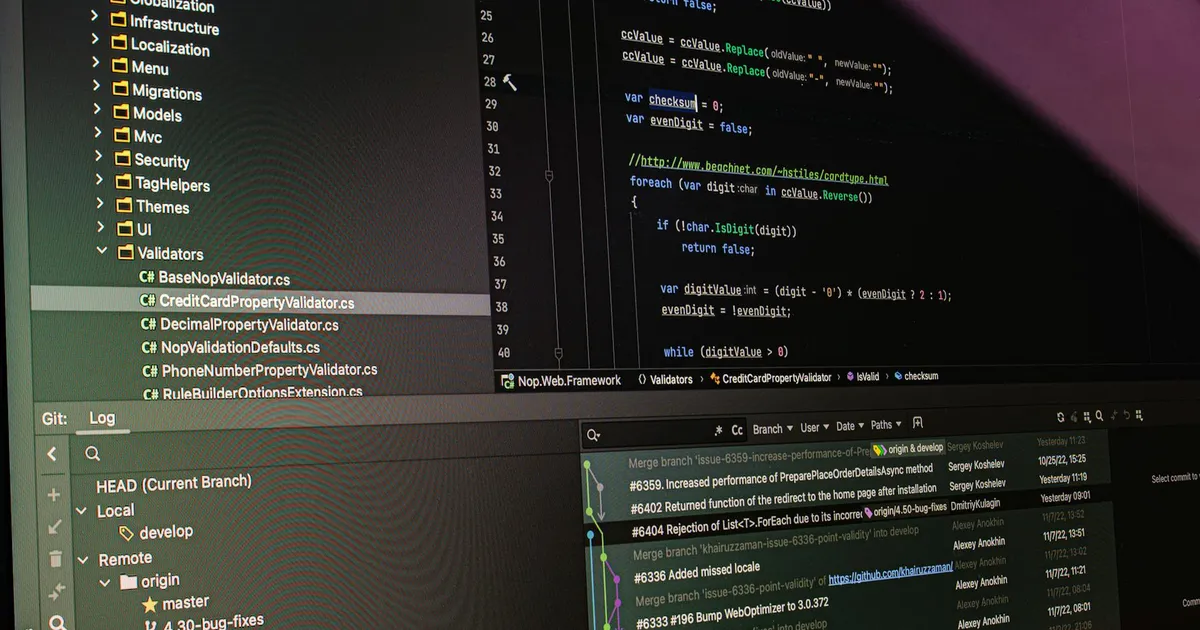
Developers Are Crowdsourcing Cursor AI Config Files — and One Repo Has Become the Default Starting Point
A curated GitHub repository called awesome-cursorrules, maintained by PatrickJS, collects community-contributed .cursorrules configuration files for the Cursor AI code editor. These files let developers bake project-specific coding standards, architecture preferences, and library choices directly into Cursor's context — and the repo has become a practical library for teams tired of AI assistants that ignore existing conventions. Sponsored by Warp and CodeRabbit.
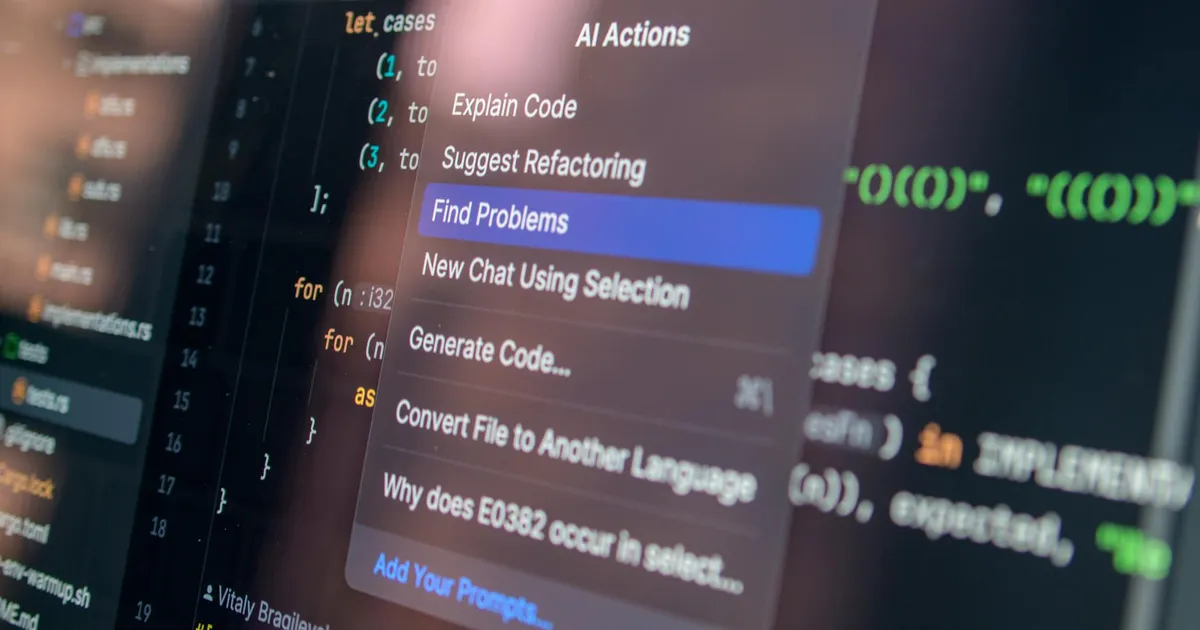
SciTeX Notification Brings TTS-to-Phone Escalation Alerts to AI Agents via MCP
SciTeX Notification is an open-source Python library and MCP server that gives AI coding agents (like Claude Code) a voice through multi-backend notifications: local TTS, phone calls, SMS, email, and webhooks. It enables a 24/7 autonomous development workflow where agents can escalate from audio alerts to Twilio phone calls when a developer is away or asleep. The MCP server integration allows agents to autonomously choose notification channels and escalate based on urgency.

Don't Prompt Too Soon: The Cognitive Case for Delaying AI Inference
An AI industry professional argues that the reflex to open a chat window before a thought has fully formed may be eroding the generative phase where original ideas take shape. Drawing on the neuroscience of the default mode network, Aishwarya Goel makes the case for "delaying the inference" — using AI after thinking, not at the very first spark of an idea.
Shard: Parallel AI Coding Orchestrator Using Git Worktrees
Shard is an open-source TDD-driven orchestrator that decomposes coding tasks into a DAG of parallel sub-tasks and dispatches multiple AI coding agents (Claude Code, Aider, or Cursor) concurrently using git worktrees for isolation. It handles planning, partitioning, dispatching, aggregating, and self-healing (auto-fixing test failures) in a five-stage pipeline. Configurable via shard.toml, it supports Anthropic and OpenAI as planner backends and enforces cost limits and timeouts across parallel agent runs.

Developer Builds Anthropic-Powered Substack Digest Using Claude Code to Tame 169 Subscriptions
A developer overwhelmed by 169 Substack subscriptions used Claude Code to build an automated daily digest system. The solution scrapes RSS feeds from all subscriptions, uses the Anthropic API to generate article summaries, and delivers a condensed email report each morning via GitHub Actions — cutting through information overload by letting AI do the skimming.

Which Jobs Are Most Vulnerable to AI? Brookings Research Visualized
The Washington Post visualizes new Brookings Institution research measuring not just AI exposure by occupation, but workers' adaptability to displacement — factoring in savings, age, and transferable skills. Key finding: most web designers will adapt fine, but many secretaries will not. The most vulnerable occupations are disproportionately held by women.

Neuroscope: Real-Time LLM Interpretability via Sparse Autoencoders
Neuroscope is an open-source SAE-instrumented LLM inference server that hooks into a model's forward pass to extract and stream Sparse Autoencoder (SAE) feature activations in real time. Built on top of mistral.rs, it targets Gemma 2 2B IT with Gemma Scope SAEs, exposing an OpenAI-compatible chat API alongside a separate SSE stream of human-readable concept labels per generated token. The project enables developers and researchers to watch which semantic concepts a model "activates" as it generates each token, with support for auto-generated labels via DeepSeek, Claude, or GPT-4o.

Building a Reliable Locally-Hosted Voice Assistant with llama.cpp and Home Assistant
A detailed technical guide by Nicolas Mowen documenting his journey replacing Google Home with a fully local voice assistant powered by llama.cpp, Home Assistant Assist, and open-source LLMs (Qwen3, GLM). Covers hardware selection (eGPU setups, Beelink MiniPCs), model quantization choices from HuggingFace, STT/TTS stack (Wyoming ONNX ASR with Nvidia Parakeet, Kokoro TTS), prompt engineering to fix LLM behaviors, custom wake word training, and integrations for weather, search, and music. HN comments highlight wake word detection as the hardest unsolved problem for local voice, with comparisons to Echo devices and mention of Coqui XTTS-v2 for better TTS prosody.
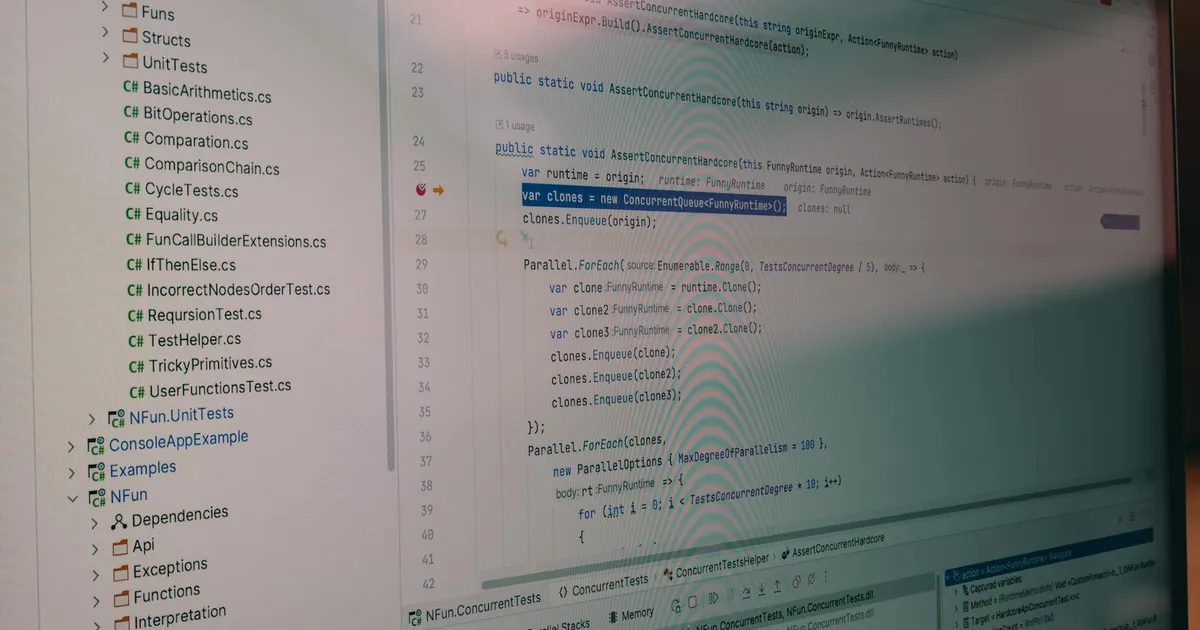
Slopcheck: CLI Tool to Detect AI-Generated Code in Projects and Dependencies
Slopcheck is an open-source Rust CLI tool that scans projects and their dependency trees for indicators of AI-generated code. It detects LLM commits from known agents like Claude and Copilot, looks for AI-related config files (CLAUDE.md, AGENTS.md), checks .gitignore for hidden AI files, and distinguishes between current and former LLM use. Dependency scanning is supported for Rust (via cargo metadata) and JavaScript (via npm package.json parsing).
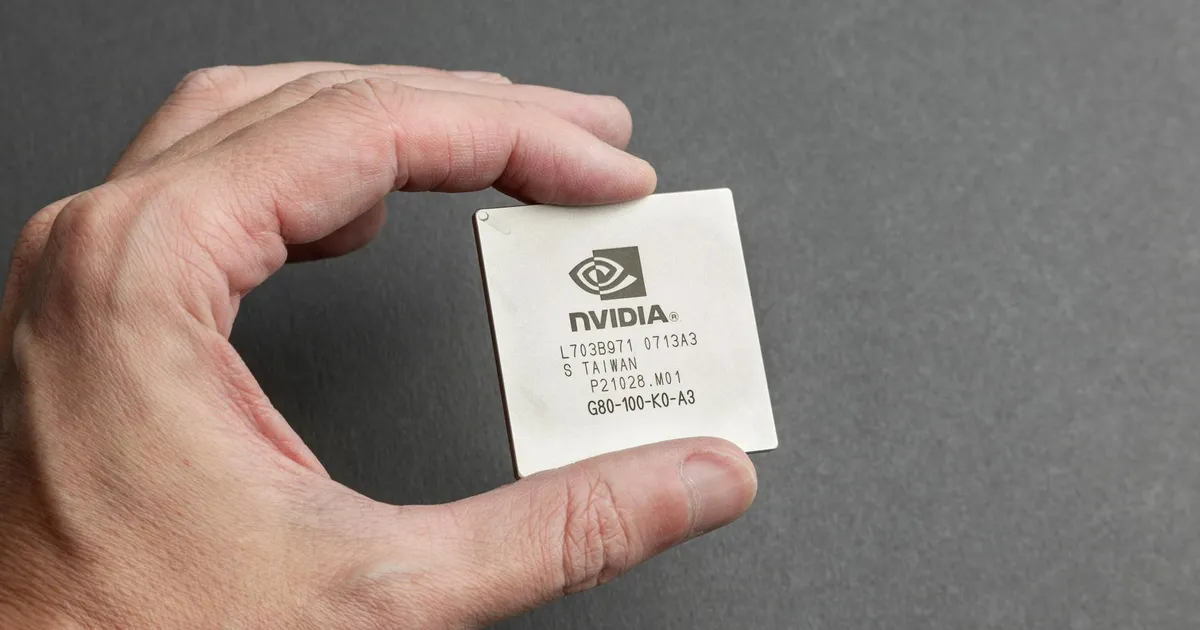
rolvsparse claims 83–133× LLM inference speedup and 99% energy reduction with no hardware changes
Rolv.ai is promoting rolvsparse©, a claimed new sparse matrix compute primitive that allegedly delivers up to 133.5× throughput speedup and 99.9% energy reduction on LLM feed-forward network layers — including architecture-matched benchmarks for GPT-4o and Claude 3.5 Sonnet class models on NVIDIA B200. However, the HN comments reveal the actual benchmarks behind the post's title were run on a 4-core HP All-in-One consumer PC (Intel i7-1165G7), not datacenter hardware, with power measurements via psutil (uncalibrated). The website makes sweeping datacenter-scale claims while the independently reproducible results come from a laptop-class machine. The technology is presented as hardware-agnostic, running across NVIDIA, AMD, Intel, Google TPU, and Apple Silicon, with independent validation claimed from the University of Miami Frost Institute.

Hecate: Open-Source AI Assistant You Can Video Call via Signal
Hecate is an open-source project that lets you video call an AI assistant through Signal's private calling infrastructure. It combines local/private LLM inference (via Tinfoil.sh), speech-to-text (Whisper or Voxtral), local TTS (Pocket TTS), and animated VR avatars rendered with @pixiv/three-vrm. The assistant has no memory between calls and runs on Linux using Signal's end-to-end encrypted calling stack.
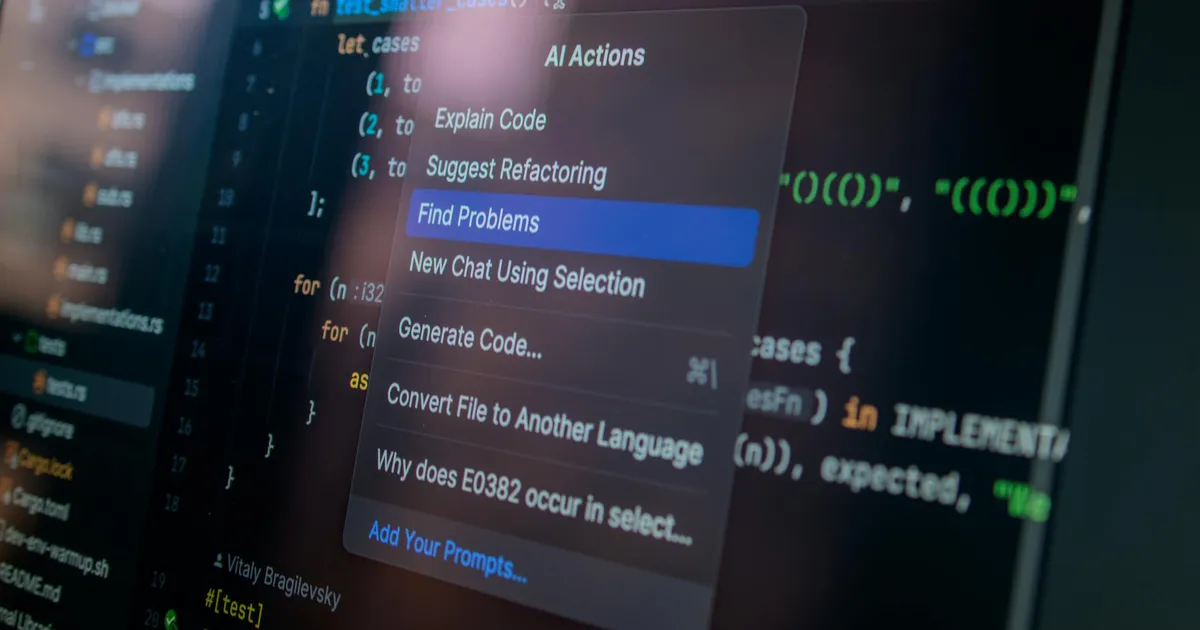
Study finds Cursor AI boosts short-term dev velocity but increases long-term code complexity in open-source projects
A peer-reviewed empirical study using difference-in-differences causal estimation found that adopting Cursor AI in open-source GitHub projects leads to a statistically significant but transient increase in development velocity, paired with a substantial and persistent increase in static analysis warnings and code complexity. The research, accepted at MSR '26, matched Cursor-adopting projects against a control group and found that quality degradation ultimately drives long-term velocity slowdown — calling for quality assurance to be a first-class citizen in agentic AI coding tool design. HN commenters note the findings likely reflect lack of feedback loops (e.g. SonarQube not integrated into the agent pipeline) and that newer models may already be reducing outright errors even if complexity grows.
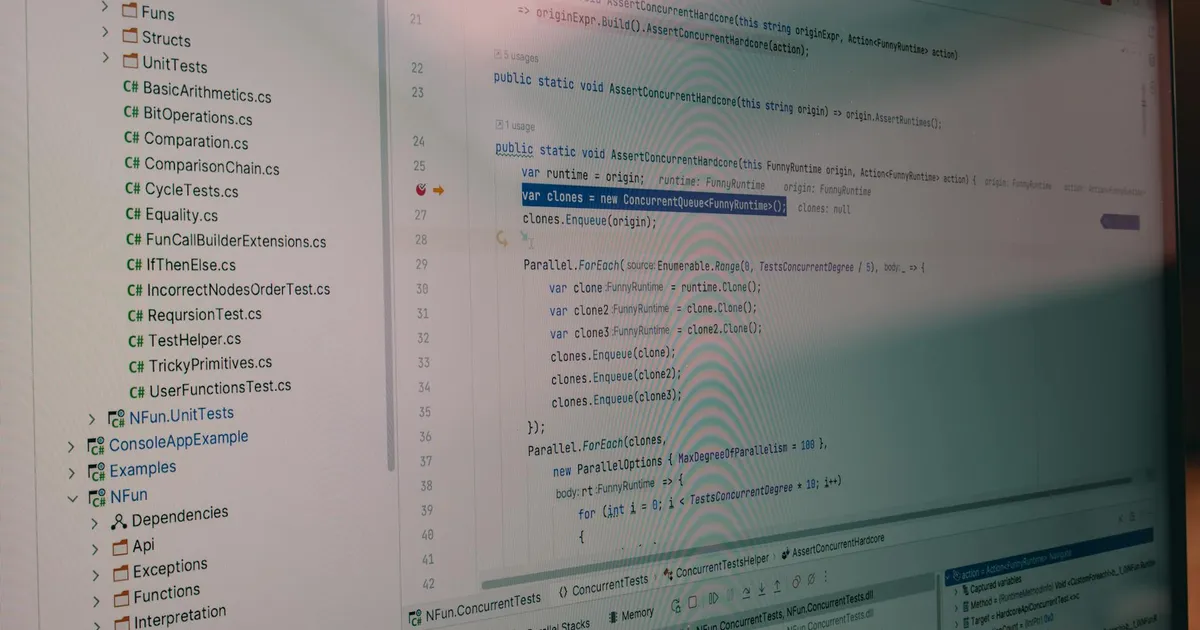
Vizit: Self-Hosted AI Agent Workbench for Jira Visualizations Using GitHub Copilot CLI
Vizit is an open-source, self-hosted dashboard tool that pairs Atlassian/Jira data with agentic GitHub Copilot CLI workflows. Users describe the visualization they want in natural language and the agent generates the Python script and renders the output. Results can be versioned, organized into pages/folders, and iterated on via follow-up prompts. The creator notes plans to add connectors beyond Jira and integrate additional coding agents like Codex and Claude Code.

Pokémon Go Players Unknowingly Built Niantic's 30-Billion-Image AI Vision Dataset
Niantic used Pokémon Go's AR scanning features to quietly collect 30 billion images from players worldwide, feeding the company's Visual Positioning System — a geospatial AI platform now sold to outside developers as spatial computing infrastructure.
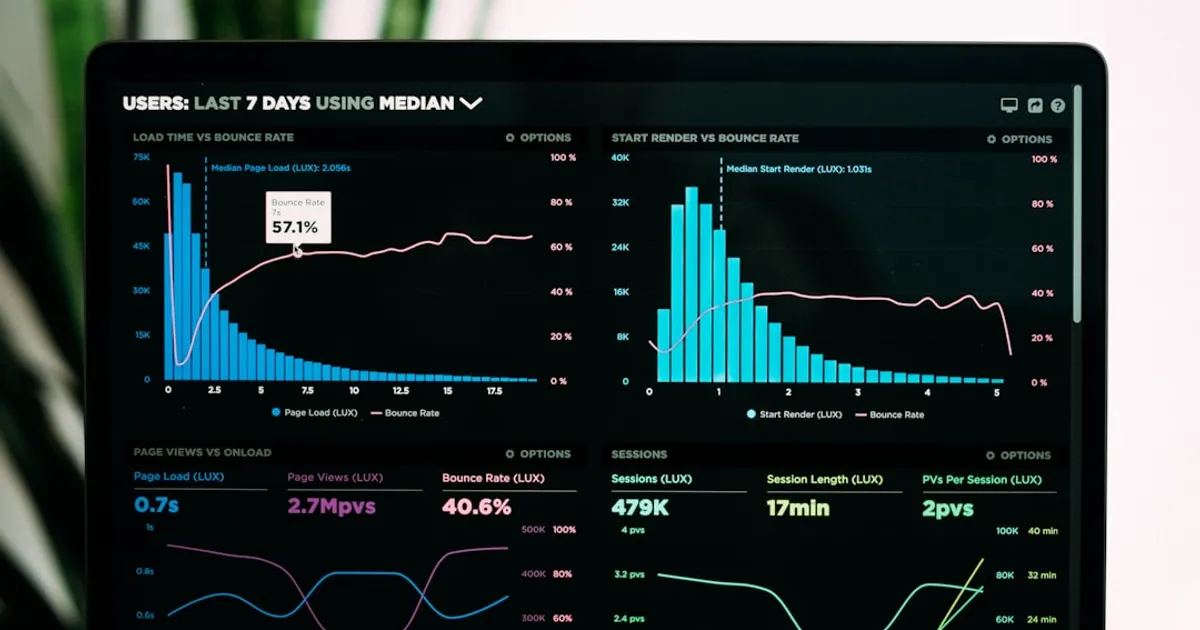
Ije Engineer Ditches Docker for SQLite and a Fake Bash Shell to Keep an Autonomous Agent Observable
Chukwudi Oranu at early-stage AI company Ije built purpose-made sandboxing for rack88, an autonomous agent that aggregates data, runs dialectic reasoning, and reaches decisions without human prompting. After rejecting Docker (daemon overhead) and Firecracker (too heavyweight for current stage), he settled on AgentFS — an SQLite-backed virtual file system stored as a single .db file — paired with Just Bash, a TypeScript-simulated shell with a Python interpreter. The explicit trade-off: file system and network isolation, but no process isolation. A retro-skinned browser GUI provides real-time observability into the agent's state.
Godogen: Claude Code Skills That Build Playable Godot 4 Games via AI Pipeline
Godogen is an open-source project that autonomously generates playable Godot 4 games from a text description — its most distinctive feature being a visual QA feedback loop that captures live in-engine screenshots and iterates on detected issues. The pipeline uses two Claude Code skills for orchestration, Gemini and Tripo3D for asset generation, and bundles documentation for 850-plus Godot classes to compensate for thin GDScript training data. Claude Code with Opus delivers the best results; OpenCode is a viable alternative.
Tego AI's Skills Security Index Puts AI Agent Skills Under the Microscope
Tego AI has released the Skills Security Index (v0.9.2), a publicly searchable database of automated security risk assessments for AI agent skill definitions — the modular tools, functions, and plugins that agents use to execute tasks. Each entry is scanned against a standardized schema covering prompt injection, credential exposure, excessive permissions, and data exfiltration potential, then ranked across five tiers from Pass to Critical. Skills are sourced from major platform registries and GitHub. The company is in stealth, using the public index as a credibility wedge ahead of what its tagline suggests will be a broader agent governance platform. HN commenters are skeptical, arguing the risk is just untrusted code execution with new branding.