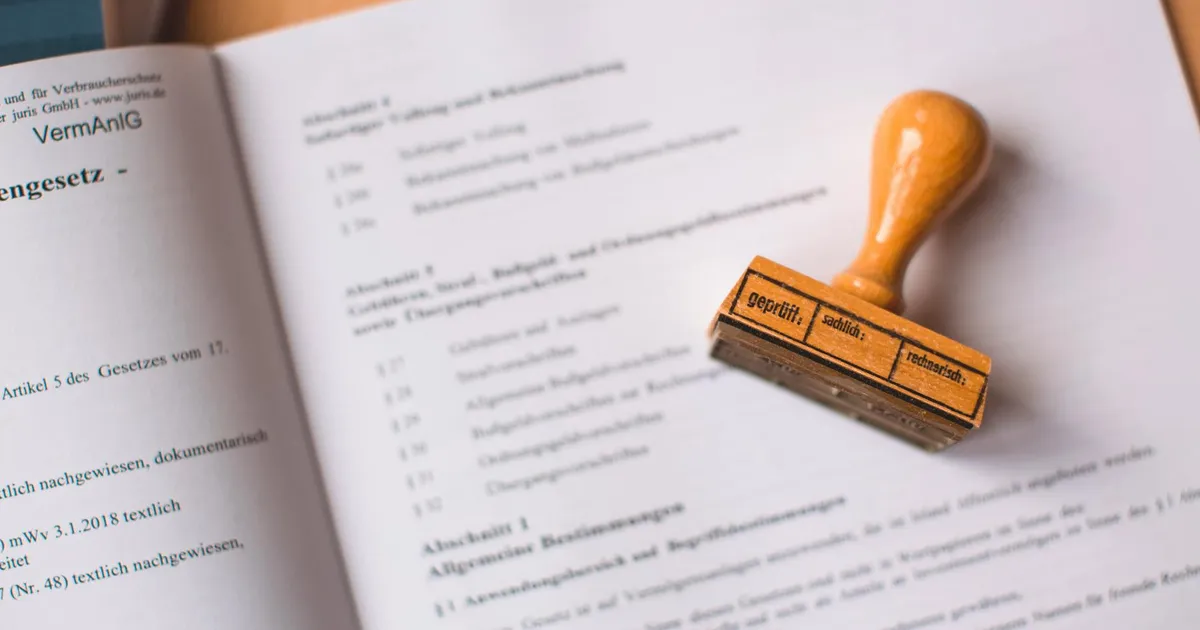
Eight organizations are now racing to certify creative work as "human-made" — and none of them agree on how to do it.
BBC News counted at least eight competing schemes as of March 2026, ranging from freely downloadable badges on sites like no-ai-icon.com and notbyai.fyi to paid auditing services such as aifreecert, which deploys professional analysts and AI-detection software to vet submissions. UK publishing house Faber and Faber has started stamping select titles "Human Written" at author request — including Sarah Hall's novel Helm — but has not disclosed what verification standards, if any, back the claim.
Among the more structured entrants, UK company Books by People charges publishers directly, requiring questionnaires about internal practices and periodic AI-detection sampling of content. Co-founder Esme Dennys put the stakes plainly: "Publishers are grappling with a new landscape where books can be produced in minutes rather than months or years and readers can no longer be sure if a book reflects a human experience or machine imitation."
Australian competitor Proudly Human runs a more intensive system, checking manuscripts at every stage of publication — including manuscript-to-ebook comparisons — and has announced plans to expand into music, photography, and film. CEO Alan Finkel, widely known as Australia's former Chief Scientist, argues that self-certification alone is not enough and that full third-party verification is the only thing that gives a label real credibility. (His specific role at Proudly Human should be confirmed before publication.)
Whether any single standard emerges is far from certain. AI Research Scientist Sasha Luccioni argues that AI is now embedded in so many everyday tools — spell-checkers, layout software, autocomplete — that a clean binary "AI-free" line is impossible to draw, and that a spectrum-based certification would be more honest. Dr. Amna Khan of Manchester Metropolitan University warns that competing definitions will erode consumer trust unless the field converges on one standard, pointing to Fair Trade as the model to aim for.
Online discussion has surfaced a more granular alternative: a modular label that breaks out AI use separately for writing, illustration, layout, and marketing. No current initiative has adopted that approach, but it would tell consumers something a blanket certification cannot.
The demand for clearer labeling is not hypothetical. When Velvet Sundown was exposed as a fully AI-generated band, the story went viral. That still hasn't produced a winner in the certification race — but it has made clear the stakes for whoever gets there first.