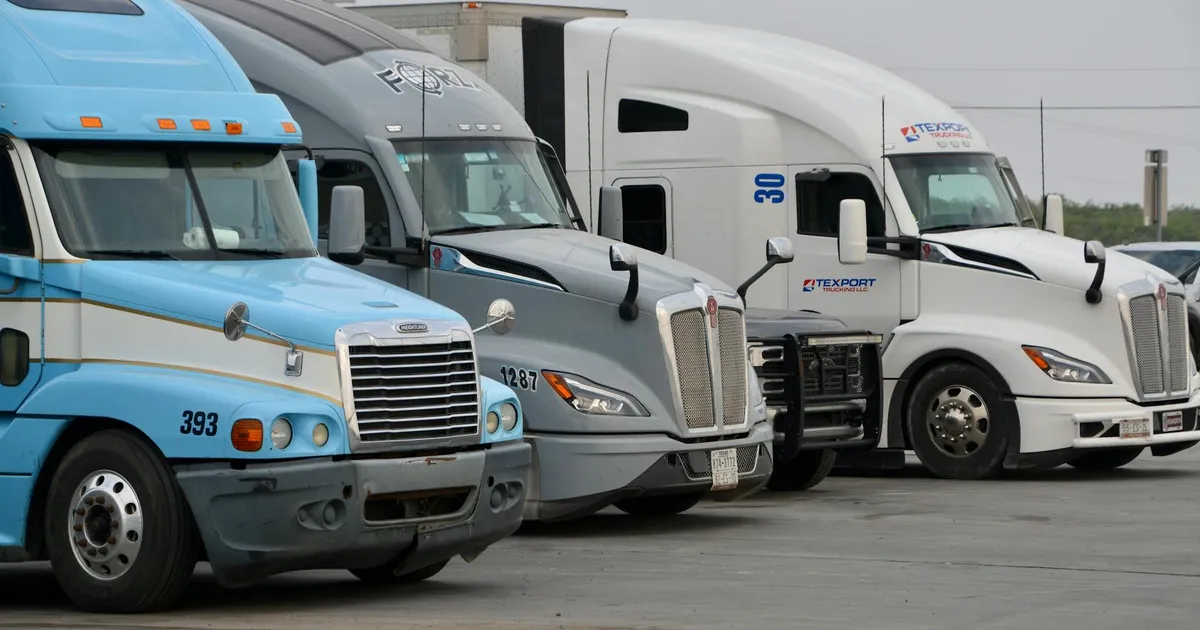
Aurora Innovation has been running driverless semi-trucks on Texas public highways since 2025 — no safety driver aboard, paying freight customers, recurring routes. A March 17, 2026 New York Times report frames this as a commercial operation, not a pilot, and examines who else is close behind.
Texas is not an accident. The state established legal frameworks for driverless commercial vehicles early, and its long flat interstates with predictable weather suit highway autonomy better than urban grids or mountain corridors. Kodiak Robotics, Plus.ai, Gatik, and Waymo's freight division are all running operations there. Daimler and Volvo have OEM-backed programs in the same geography.
The field has already thinned once. Embark Trucks — one of the better-funded early startups — folded, and Applied Intuition, an AV simulation company, picked up its assets. That hasn't cooled the money. Capital has returned as Texas deployments shift from demonstration to routine freight movement.
Federal oversight is trailing the rollout. The Federal Motor Carrier Safety Administration is revising its rules for autonomous commercial vehicles, but states are setting the real pace. Texas, Arizona, and Arkansas have each moved to enable driverless freight without waiting for Washington.
Roughly 3.5 million people drive trucks professionally in the United States. The industry's stated case — that autonomous systems address a chronic driver shortage and perform better than humans on long overnight hauls — hasn't been seriously tested against independent safety data at commercial scale. What remains unresolved is how quickly deployment spreads beyond Texas highway corridors and what happens in regions where long-haul trucking is a dominant employer.
Aurora has not disclosed commercial volumes or route counts. The FMCSA has not published a timeline for finalizing autonomous commercial vehicle rules. Both gaps matter: the first shapes investor confidence, the second determines whether Aurora's Texas model can replicate in states that haven't written their own frameworks yet.
EDITOR'S NOTE: The New York Times report cited here was behind a paywall and was not directly accessible. This article is based on publicly available information about the companies and regulatory developments described, not the full text of the Times piece.