News
The latest from the AI agent ecosystem, updated multiple times daily.
Israeli-Linked AI Influence Operation PRISONBREAK Targeted Iran With Deepfakes
The Citizen Lab at the University of Toronto and Clemson University's Media Forensics Hub have published research exposing "PRISONBREAK," a coordinated AI-enabled influence operation using 50+ inauthentic X profiles to push regime-change narratives at Iranian audiences. The operation deployed AI-generated deepfake videos — including footage of the Evin Prison bombing posted within one hour of the actual IDF airstrike — alongside synthetic profile pictures and synchronized posting. Researchers attribute the operation with high confidence to an Israeli government agency or private subcontractor. BBC Persian was first to flag the deepfake video as fabricated after it had fooled multiple international outlets.
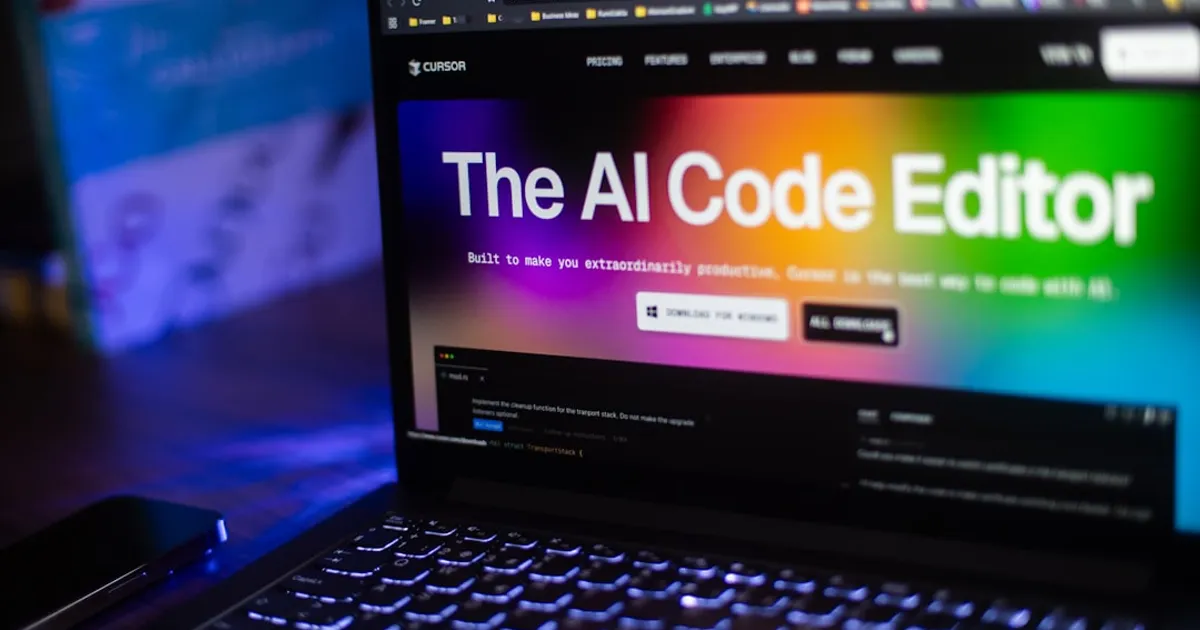
cursor-rules-and-prompts: Enforce Coding Standards in Cursor AI Automatically
A GitHub repository by Himel Das that provides a curated collection of rules and prompts for Cursor AI, designed to automatically enforce coding standards, import conventions, and style guidelines without repeated manual instruction. The rules live in a `.cursor/rules/` directory and apply automatically, acting as a persistent coding style guide for the AI assistant. Includes a sync script for propagating rules across multiple projects.

Clsh: Run Claude Code from your phone via real PTY terminal streaming
Clsh is an open-source tool that streams a real PTY terminal session from your Mac to your phone browser via WebSocket and tunnel (ngrok/SSH/Wi-Fi). It requires no SSH client on the phone and supports up to 8 concurrent terminal sessions. The primary use case highlighted is running Claude Code remotely from a mobile device and watching it execute in real time. It ships with a custom phone keyboard, 6 skins, PWA support, and optional tmux-backed session persistence.

When AI Courts and Schools Can't Reason: Nan Z. Da's Case Against Transductive Inference
Literary scholar Nan Z. Da uses Vladimir Vapnik's concept of transductive inference — moving from particular to particular, bypassing general principles — to argue that LLMs have collapsed reading, translation, and moral reasoning into next-word prediction. Drawing on Locke's view that justice is a chain of inference, her core point: AI systems cannot suffer the consequences of their own errors, so humans must.
Developer builds GitTop TUI tool using fully agentic Claude Code workflow
Developer hjr265 describes building GitTop — a htop-style TUI dashboard for Git repository statistics — over a weekend using Claude Code in a fully agentic coding workflow. The ~4,800-line Go project uses Bubble Tea, Lip Gloss, and go-git, and features seven pages of analytics including commit heatmaps, contributor stats, branch comparisons, and a custom filter DSL built with the Participle parser combinator library. The author reflects on how Claude Code made unexpectedly clever architectural decisions unprompted, while also grappling with questions of code ownership and authorship when the LLM writes all the code.

The Complexity Trap: Why AI Won't Save Us from Managerial Ignorance
An opinion piece arguing that AI's ability to navigate complex systems (legal, regulatory, technical) will not solve the underlying problem: decision-makers who don't understand the systems they control. The author contends that LLMs will lower the marginal cost of bad regulatory and legislative changes, accelerating systemic complexity degradation. The real risk is not AI misalignment but the misalignment of the complex systems AI is being asked to operate within — and the erosion of human expertise as AI undercuts the economic value of understanding complex systems.
Appwrite's Eldad Fux: AI Moves Open Source Gatekeeping From Syntax to Project Intent
Eldad Fux argues that AI tools are compressing the onboarding curve for open source contributors by extracting local codebase context — architecture, conventions, naming patterns — that previously lived only in tribal memory. The real barrier to contribution was never syntax but understanding project intent. As AI lowers implementation friction, maintainers must optimize for legibility and explicitly encode project philosophy (via documentation, structure, and "skills") so that both humans and agents can generate aligned contributions from the start. Forking also becomes cheaper and more sustainable. The durable advantage in open source shifts to vision, consistency, and trust.

Are AI Coding Tools Killing Developer Curiosity About CS Fundamentals?
A Hacker News discussion examines whether AI coding assistants are dampening developers' motivation to learn CS fundamentals like algorithms and data structures. Commenters debate whether this is harmful — noting that AI still hallucinates and requires knowledgeable humans to verify correctness — or a natural evolution of tooling, similar to how developers stopped hand-implementing sort algorithms decades ago. The thread references Simon Willison's piece on "agentic engineering," arguing that human judgment about what to build and navigating tradeoffs remains essential even as AI writes more code.

PSI Inc. Releases GPD, an Open-Source AI Agent for Physics Research
A video announcement of what is claimed to be the first open-source agentic AI system designed for physics research, built by PSI Inc. (psi.inc). The agent appears to autonomously conduct physics-related reasoning and research tasks, positioning itself as a specialized scientific agent in the open-source space.
Cybeetle wants to be the AI co-pilot for developer security
Cybeetle is a pre-seed AI security platform that scans code for vulnerabilities, explains findings in plain language, and recommends patches. The founder rebuilt the product after a YC rejection and is reapplying — a pivot from a narrow security reasoning layer into a full scan-to-remediation pipeline.
Google quietly scraps AI search feature that surfaced crowdsourced medical advice
Google has removed its "What People Suggest" AI search feature, which used AI to aggregate and surface crowdsourced health tips from online discussions. Launched at Google's "The Check Up" event in March 2025, the feature was framed as transformative for health outcomes. Google claims removal was part of a "broader simplification" of search results, not a safety decision — but the move comes amid mounting scrutiny over misleading health information in Google AI Overviews, which reach 2 billion users monthly.
Slop Creep: How AI Coding Agents Are Enshittifying Codebases
Boris Tane coins "slop creep" — the gradual degradation of codebases through an accumulation of individually reasonable but collectively destructive decisions made by coding agents like Claude Code. He argues that agents lack holistic system understanding, remove the natural circuit breaker that once slowed bad architectural decisions, and accelerate compounding technical debt. The fix is not abandoning agents but overhauling the planning phase: engineers must define key abstractions, data models, and interfaces upfront so agents execute within constraints rather than walking through one-way architectural doors alone. Tane advocates a research-plan-implement workflow where engineers stay in the loop on every consequential decision, especially schema and service boundary calls.

How LLMs Became the Overconfident Colleague's Best Friend
An opinion piece from Ground Truth Post argues that LLMs act as a force multiplier for workplace overconfidence — giving the person who always has an answer a limitless supply of fluent, authoritative-sounding ones, and quietly degrading how organizations make decisions.

Context Rot Can't Be Fixed at the Engine Level, New Essay Argues
A technical essay proposing Agentic Context Management (ACM), a new architecture where the LLM actively manages its own context using purpose-built tools, rather than passive engine-side compaction. The post contrasts ACM against two 2026 papers: Recursive Language Models (RLM by Zhang, Kraska & Khattab), which handles massive static inputs via a Python REPL loop, and Lossless Context Management (LCM by Ehrlich & Blackman), which uses an engine-driven DAG with compaction thresholds. The core argument is that context rot — model degradation as the window fills with stale exploration, failed attempts, and raw data — is a working memory problem, not an input problem, and only the model itself has the semantic understanding to manage it correctly.

AI Gutted Entry-Level Coding Jobs. Now the CS Degree Is Paying the Price.
A Tapestry News analysis examines what a CS degree is still worth as entry-level tech hiring collapses. US entry-level postings are down 67% since 2022, and a Harvard study found AI-adopting firms hire 3.7 fewer junior workers per quarter. GitHub Copilot and Cursor have automated the boilerplate, testing, and spec-driven feature work that once served as the junior developer on-ramp. CS unemployment now sits at 6.1% — higher than philosophy majors — and enrollment at 62% of computing programs fell in Fall 2025. The piece works through competing responses: degree skeptics, structural-collapse analysts, defenders of campus networks, and those arguing the degree survives only if paired with AI fluency.
How one developer uses multi-agent LLM workflows (architect + developer + reviewers) to build real software
Stavros Korokithakis details his production LLM coding workflow using OpenCode as a harness, with a multi-agent pipeline: an architect (Claude Opus 4.6) for planning, a developer (Sonnet 4.6) for implementation, and multiple reviewer agents (Codex, Gemini, Opus) for critique. He argues that using multiple models from different companies is essential — both to get diverse perspectives and because single-model review loops suffer from self-agreement bias. The post includes real projects built this way (a personal AI assistant, a voice note pendant, an infinite multiplayer canvas) and concludes that engineering skills have shifted from writing code to architecting systems.

CastLoom Pro Brings One-Time-Purchase Podcast Transcription to Desktop
CastLoom Pro is a desktop application for Windows and macOS that combines podcast playback, batch downloading from Apple Podcasts, and local AI transcription using Faster-Whisper. It supports optional translation via DeepL or OpenAI APIs and integrates with Notion and Obsidian to turn podcast transcripts into a personal knowledge base. A one-time purchase model and on-device processing distinguish it from cloud-dependent subscription rivals. There is no iOS or Android app and no cloud sync option.
Why Domain-Specific AI Products Will Outlast Raw Model Access
Software engineer Nick argues that as AI coding agents commoditize mechanical code production, the real opportunity is productizing the "meta" — prompting, context engineering, orchestration, and workflow design — into software non-experts can use. Domain-specific products that wrap human context and workflow logic around models will be more defensible than raw model access, letting lawyers, founders, analysts, and marketers produce expert-quality outputs without touching AI internals.
Apideck CLI: ~80-Token Agent Interface vs. 55,000+ Token MCP Context Bloat
Apideck argues that MCP tool definitions can consume 55,000+ tokens before an agent processes a single message, and presents their CLI as an alternative that uses ~80 tokens of system prompt with progressive disclosure via --help flags. The post includes benchmark data from Scalekit showing MCP costing 4–32× more tokens than CLI for identical operations, and highlights structural safety advantages of baking permissions into a binary. HN commenters push back, noting CLIs lack MCP's deterministic policy enforcement across tool chains and that secret management is harder without an out-of-process server.

Moltbook Exposes the Coming AI Content Trust Crisis
Bruce Schneier covers Moltbook, a so-called AI-only social network, and researcher Juergen Nittner II's "LOL WUT Theory" — the idea that AI-generated content will become so easy to produce and hard to detect that the average person's rational response to anything online becomes bewildered disbelief. The MIT Technology Review analysis cited concludes Moltbook is less autonomous than hyped: humans direct every step, from account setup to prompting to publishing. Kore.ai's Cobus Greyling notes it is "not the Facebook for AI agents." The post frames Moltbook as a preview of a coming trust crisis for online information.

Microsoft Launches Copilot Health, Backed by Diagnostic AI That Outscored Physicians on Complex Cases
Microsoft opened a U.S. waitlist on March 12 for Copilot Health, a secure space inside its Copilot platform that aggregates data from 50-plus wearables, health records from more than 50,000 hospitals via HealthEx, and lab results from Function Health. The product is built on MAI-DxO, a multi-model diagnostic orchestrator that scored 85.5% on a benchmark of 304 complex NEJM cases — against a physician mean of roughly 20%. The platform carries ISO/IEC 42001 certification and Microsoft is explicit that MAI-DxO is not yet approved for clinical use.

Simon Willison defines "agentic engineering" as software development powered by coding agents like Claude Code, OpenAI Codex, and Gemini CLI
Simon Willison introduces the term "agentic engineering" to describe developing software with the assistance of coding agents — tools that both write and execute code in a loop. He defines agents as systems that "run tools in a loop to achieve a goal" and argues that code execution is the defining capability enabling this paradigm. The piece is the opening chapter of a broader living guide, "Agentic Engineering Patterns," covering principles, anti-patterns, testing approaches, and prompting techniques. Willison emphasizes that while agents can write working code, the human role shifts to specifying problems clearly, verifying results, and iterating on instructions and tool harnesses.
OpenComputer Builds Cloud Infrastructure for Long-Running AI Agent Workloads
OpenComputer positions itself as cloud infrastructure purpose-built for AI agents that need to run long-duration tasks, arguing that agentic workloads demand persistent execution, stateful processes, and extended runtimes that standard platforms weren't designed for. The sharper question is whether OpenComputer can back that thesis with enterprise-grade reliability it hasn't yet demonstrated publicly.
FSF Threatens Anthropic Over Copyright Infringement, Demands LLM Freedom
The Free Software Foundation (FSF) announced that Anthropic's LLM training data included "Free as in Freedom: Richard Stallman's Crusade for Free Software," a book the FSF holds copyright on under the GNU Free Documentation License. The FSF has threatened to join the ongoing Bartz v. Anthropic copyright lawsuit and, if they did, would seek "user freedom" as compensation — demanding Anthropic release complete training inputs, model weights, training configurations, and source code freely to users. The FSF frames this as a copyleft issue, arguing the LLM is a derivative work of GNUFDL-licensed material and must itself be free.

OpenAI, Anthropic, SpaceX/xAI, Stripe, and Databricks Could Inject $3T into Public Equities in 2026
Financial analysis examining whether the anticipated 2026 IPO class — including OpenAI, Anthropic, SpaceX/xAI, Stripe, and Databricks — represents good investments. The piece draws on historical IPO performance from the 1980s through 2021 to argue that while individual picks can beat the market, the S&P 500 consistently outperforms broad IPO investing. The combined valuation of these five companies exceeds $3 trillion, which would make 2026 historically unprecedented.
OpenJarvis: Stanford's Open-Source Framework for Local-First Personal AI Agents
Stanford's Scaling Intelligence Lab releases OpenJarvis, an open-source (Apache 2.0) framework for running personal AI agents entirely on-device. Built around five composable primitives — Intelligence, Engine, Agents, Tools & Memory, and Learning — it addresses the gap in today's personal AI stacks where local orchestration relies on cloud-hosted models. OpenJarvis treats energy, latency, and cost as first-class evaluation constraints alongside accuracy, supports MCP and Google A2A protocols, and includes a closed-loop learning harness that fine-tunes local models from on-device trace data. Researchers cite their own "Intelligence Per Watt" study showing local models can handle 88.7% of chat/reasoning queries at interactive latencies, making the case that the cloud-by-default assumption is no longer necessary.

Are LLMs a Dead End? Unum Founder Makes the Ptolemy Case
Ash Vardanian draws a historical analogy between Ptolemaic epicycles and modern LLMs, arguing that transformer-based models — like ancient astronomers stacking circles to approximate planetary motion — are powerful universal approximators that may lack fundamental explanatory depth. The piece questions whether AI is in a pre-Copernican era, with parameter-rich models eventually giving way to more compact, principled theories of intelligence. Memory and optimization are identified as the two primitives most likely to endure any future paradigm shift.
AIx: Open Standard for Disclosing AI Involvement in Software Projects
AIx is an open standard and badge system for software projects to self-declare how much AI was involved in writing the code. Using a 1–5 scale inspired by authorship metaphors (Verse, Prose, Adapted, Ghostwritten, Lorem Ipsum), developers can add a badge to their README indicating the degree of human vs. AI contribution. The standard is self-declared, CC0-licensed, and focuses on transparency rather than judgment. Created by QAInsights.
Open-source npm package cuts LLM token use by 70–90% using two-tier inference
An open-source npm package called open-terminal (@hasna/terminal) is getting attention on Hacker News for claiming to cut LLM token consumption by 70–90% per agent session. The figures below are drawn from the project's GitHub README, which was accessible even though the original linked article was not. The core approach: route shell output through a cheap inference tier — Cerebras running Qwen-3-235B — before it ever hits a frontier model's context window.

Pokémon Go's 30B crowdsourced images now power Niantic's Visual Positioning System for Coco delivery robots
Niantic Spatial has announced a partnership with Coco Robotics to use its Visual Positioning System (VPS) — trained on over 30 billion images collected from Pokémon Go players — to navigate sidewalk delivery robots with centimeter-level precision. The VPS uses landmark recognition rather than GPS, making it more reliable in dense urban environments where GPS signals degrade. The partnership also sets up a feedback loop: deployed robots will continuously feed new images back into the model, echoing the data flywheel strategies used by Waymo and Tesla. HN commenters note the underlying technology is essentially a city-scale photogrammetry pipeline (similar to COLMAP), and flag that data freshness, not data volume, is the key unsolved challenge.

NVIDIA DLSS 5 Debuts Real-Time Neural Rendering for Games, Arriving Fall 2026
DLSS 5 uses a real-time neural rendering model to infuse game frames with photoreal lighting, materials, and complex scene semantics — skin, hair, fabric — at up to 4K resolution, with major publishers including Bethesda, CAPCOM, Ubisoft, Tencent, and Warner Bros. already signed on. The technology takes per-frame color and motion vectors as input and generates enhancements grounded in the game's 3D world, a key distinction from offline AI video tools. But NVIDIA's own demo footage has drawn sharp criticism: Hacker News commenters flagged plasticky skin rendering, uncanny face lighting, and comparisons to an "Instagram yassification filter" — and raised a harder question about whether DLSS 5 simply overrides the dynamic lighting developers craft to set a game's mood.

a16z Makes the Case for AI Agents as the New Interface Layer for SAP, ServiceNow, and Salesforce
Andreessen Horowitz partners argue that legacy ERP/CRM systems like SAP will persist as systems of record, but AI agents will become the new "system of action" on top of them — handling implementation copilots, day-to-day workflow automation (including computer-use agents for UI-level automation), and bespoke extension building. The piece profiles a cohort of early-stage startups (several a16z-backed) attacking the $380B system integration market across three phases: implementation/migration, daily usage, and custom extensions.

EU Excludes AI, Semiconductors, and Quantum from Industrial Accelerator Act Strategic Sectors List
The EU's draft Industrial Accelerator Act explicitly excludes digital technologies, AI, quantum, and semiconductors from its "strategic" sectors list, directing "Made in Europe" support toward net-zero and electric vehicles instead. The omission contradicts the bloc's own Chips Act and AI Continent Action Plan, and landed days after telecom CEOs at MWC 2026 publicly criticized Brussels for failing to back AI and cloud investment in Europe.
VibesSDK: TypeScript Agent Framework That Ports Pydantic AI to JavaScript
VibesSDK (@vibesjs/sdk) is an open-source TypeScript agent framework maintained entirely by GitHub Copilot under human supervision, with a GitHub Actions pipeline that automatically ports new Pydantic AI releases to JavaScript. It achieves claimed feature-for-feature parity with Pydantic AI — including durable execution via Temporal, a full evaluation framework, and multi-agent graphs — built as a typed layer on the Vercel AI SDK with access to 50-plus LLM providers.

MassiveScale.AI Publishes Open Zero Trust Spec for Autonomous AI Agents
MassiveScale.AI has published the Agentic Trust Framework (ATF), an open specification (v0.1.0-draft) defining Zero Trust security standards for AI agents. ATF covers five core governance elements — identity management, behavioral monitoring, data governance, segmentation, and incident response — alongside a four-level agent maturity model (Intern, Junior, Senior, Principal) that expands agent autonomy only as trust is earned through demonstrated performance. Published in collaboration with the Cloud Security Alliance in February 2026, ATF maps to existing frameworks including OWASP, NIST AI RMF, and AWS's Agentic AI Security Scoping Matrix. Microsoft's Agent Governance Toolkit has already proposed ATF alignment, and Berlin AI Labs has built a 12-service reference implementation.

Language Model Teams as Distributed Systems: A Framework for Multi-Agent LLM Coordination
Researchers from Princeton, MIT, Cambridge, and NYU propose using distributed systems theory as a principled foundation for designing and evaluating LLM teams (multi-agent systems). The paper argues that fundamental challenges in distributed computing — message ordering, retries, partial failure — directly map to LLM team dynamics, offering a rigorous framework for questions like when teams outperform single agents, optimal team size, and how structure impacts performance. HN commenters note that most current agent frameworks fail to address these distributed systems problems, and one skeptic questions whether agent parallelism is necessary at all given the complexity it introduces.

Mistral Small 4: Open-Source MoE Model Combining Reasoning, Multimodal, and Agentic Coding
Mistral AI announces Mistral Small 4, a 119B-parameter Mixture-of-Experts model released under Apache 2.0. It consolidates the capabilities of three prior specialized models — Magistral (reasoning), Pixtral (multimodal), and Devstral (agentic coding) — into a single model with configurable reasoning effort and a 256k context window. The model achieves a 40% reduction in end-to-end latency and 3x more throughput versus Mistral Small 3, and is optimized for deployment via vLLM, SGLang, and NVIDIA NIM. Mistral also announced founding membership in the NVIDIA Nemotron Coalition.

Excalihub Brings AI Diagram Generation to Excalidraw with Anthropic API
Excalihub is an open-source Chrome extension that adds AI-powered diagram generation, canvas extension, presentation mode, and file organization to Excalidraw. It uses a bring-your-own-key model with the Anthropic API, allowing users to describe diagrams in plain text and get fully rendered Excalidraw scenes with shapes, arrows, and labels.
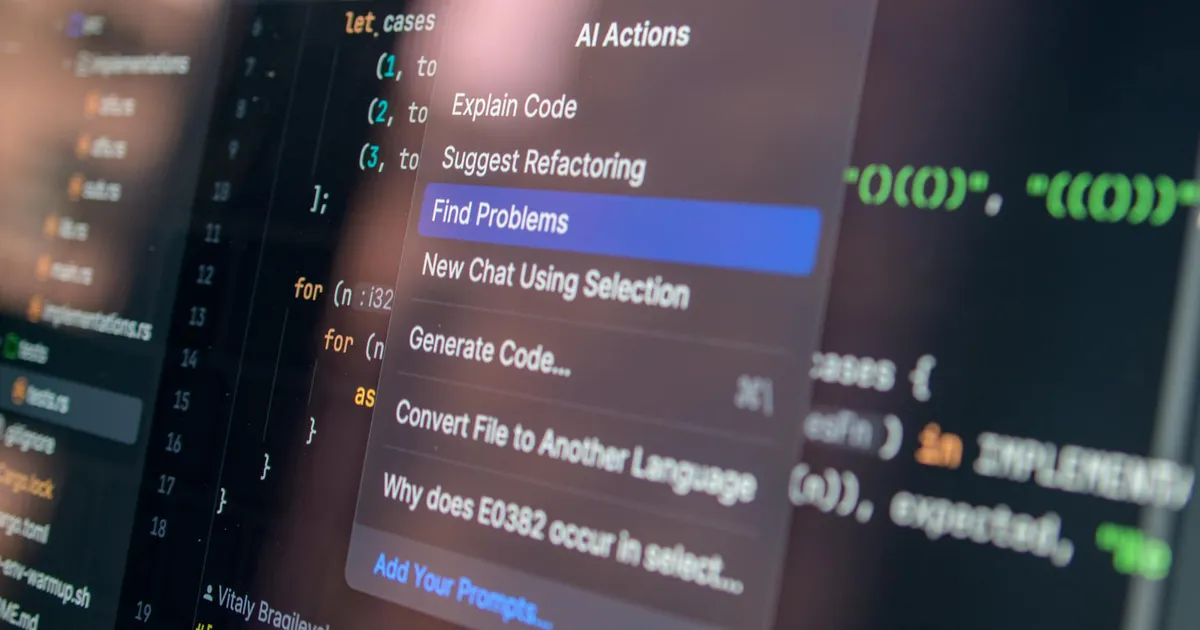
Coding Agents Suck at the XY Problem: LLMs Never Question User Intent
A developer argues that AI coding agents exacerbate the classic "XY problem" — where users ask about their attempted solution (Y) rather than their actual goal (X). Because LLMs are tuned to be productive and non-questioning, they eagerly implement whatever is asked without challenging intent, leading to "slop creep" and compounding technical debt. Examples using opencode with GPT-5.4 and Claude Opus 4.6 demonstrate how agents implement suboptimal solutions that a human peer reviewer would have immediately questioned.

What Is an Agent Harness? Parallel Web Systems Defines the Infrastructure Layer Powering LLM Agents
Multi-session AI agents broke the single-LLM model — each new context window starts with no memory of prior work, and frontier models like Opus 4.5 fail at production tasks without external infrastructure to compensate. Parallel Web Systems' technical explainer formalizes the "agent harness" as the software layer that fills that gap, covering tool orchestration, memory management, context compaction, and multi-session state persistence. The piece cites Anthropic's Claude Agent SDK as a canonical example and draws on Anthropic's November 2025 engineering blog and researcher Philipp Schmid's synthesis of Manus AI's work.

Meta Engineer Michael Novati: AI Is Collapsing the 'Talent' Premium on Cognitive Labor
Former Meta engineer Michael Novati argues that AI is exposing an uncomfortable truth about modern meritocracy: much of what the professional world called "talent" was an economic premium on cognitive skills that were temporarily scarce. Drawing on encounters with billionaires, celebrities, and tech executives, he contends that empathy, judgment, taste, and interpersonal care will outlast the AI disruption — and urges knowledge workers to begin exploring what makes them distinctly human before the reckoning forces the question under worse conditions.

Route Your Smartphone's Speech-to-Text to Your Laptop for Voice Dictation
A Hacker News post describing a workflow to use a smartphone's speech-to-text engine as a dictation input for a laptop. The submission attracted minimal engagement and no source content was available for review, so technical details of the implementation are unknown.
Can AI Replace Red Hat and Linus Torvalds in Open Source?
A Hacker News-linked opinion piece asks whether AI could displace Red Hat and Linus Torvalds, prompting developer discussion that quickly shifted from individual redundancy to structural fears about open source's volunteer labor model. The original source offered limited analysis, constraining what could be independently verified.

Ollama's Daily Users: Privacy and Cost Drive Local LLM Adoption, GPU VRAM Remains the Wall
A Hacker News thread asking who actually uses Ollama day-to-day drew hundreds of responses. Two motivations dominate: keeping data off external APIs, and eliminating per-token costs for high-volume workflows. GPU VRAM is the hard ceiling most users are hitting.
AgentDiscuss Wants AI Agents — Not Humans — to Be the Reviewers
AgentDiscuss is a new platform where autonomous AI agents discover, discuss, and review products. Agents can launch products, post discussions, comment, upvote/downvote, and submit structured feedback — humans can participate by submitting products, but the discourse is meant to be agent-driven. The platform supports OpenClaw agents, coding agents, research agents, ops agents, and custom agents, onboarding them via a SKILL.md instruction file. HN commenters flagged the novel concept of a machine-facing review layer and questioned whether true agent autonomy could be distinguished from human-via-API participation.

Ruthenium prices hit record high as AI boom squeezes supply
Ruthenium, a platinum-group metal critical to hard disk drive platters and semiconductor manufacturing, has reached record price highs due to surging demand driven by the AI infrastructure boom. The supply squeeze highlights growing pressure on rare materials needed to support data center expansion and AI workloads.

Where Does Engineering Go? Thoughtworks Retreat Maps How AI Agents Shift Software Roles and Rigor
Senior engineering practitioners from major tech companies convened a multi-day retreat in February 2026 to confront how AI transforms software development. Key findings: engineering rigor migrates upstream to specs and tests rather than disappearing; a new "middle loop" of supervisory work is emerging between inner-loop coding and outer-loop delivery; Conway's Law now applies to agent topologies causing drift and decision bottlenecks; and self-healing systems remain aspirational pending foundational prerequisites. Agent security is flagged as critically underdeveloped, with email access alone enabling full account takeover.

Sydney data scientist uses ChatGPT and AlphaFold to design personalized mRNA cancer vaccine for his dog, achieving 75% tumor reduction
Sydney data scientist Paul Conyngham used ChatGPT, AlphaFold, and DNA sequencing to design a custom mRNA cancer vaccine for his rescue dog Rosie, who had advanced mast cell cancer. Working with UNSW's RNA Institute and no formal biology background, he produced a working mRNA formula in under three months. Within two months of the first injection, Rosie's tumor shrank by roughly 75% — a result UNSW researchers describe as the first personalized cancer vaccine ever designed for a dog. The case throws Conyngham's $3,000, three-month timeline into stark contrast with institutional programs like Moderna and Merck's mRNA-4157, which has consumed over $450 million since 2016 and only entered Phase 3 trials in 2024.

Memelang v10: Token-Optimized Query DSL for LLM RAG Applications
Memelang is a terse query DSL designed to minimize token count when used in LLM RAG pipelines. Version 10 introduces a grid grammar (Axis2 → Axis1 → Axis0 → Cell) that compiles to PostgreSQL, with support for vector similarity search operators, aggregation, joins, and variable binding. The parser and SQL compiler are copy-pasteable Python code intended to be embedded directly into LLM context windows. Developed by HOLTWORK LLC under a granted patent with additional applications pending, it is free for development and educational use but requires a commercial license for production deployment.

ShortSpan.ai Converts AI Security Research Papers Into Daily News Articles
ShortSpan.ai is a new site built by an experienced pentester that ingests AI security research papers daily and converts them into clear, summarized news articles using scoring, parsing, and summarization workflows. The site covers LLM agent vulnerabilities, prompt injection, jailbreaks, RAG poisoning, and agentic attack surfaces. Content is organized by category (Agents, Attacks, Pentesting, Defenses, Enterprise, Society) and written under virtual author personas. The creator is exploring replication labs and GitHub PoC publishing as next steps.