News
The latest from the AI agent ecosystem, updated multiple times daily.

Andrej Karpathy Releases LLM-Scored US Job Market Visualizer
Andrej Karpathy released a research tool that visualizes 342 US occupations from BLS data using a treemap, with an LLM-powered pipeline that scores each occupation by custom criteria. The centerpiece is a "Digital AI Exposure" metric — a 0–10 score generated by prompting an LLM to assess how much AI will reshape each job. The pipeline is open-source and extensible: users can write their own prompts to recolor the map by any criteria (robotics exposure, offshoring risk, etc.).
Chamber (YC W26) Launches AI Agents for GPU Infrastructure Orchestration
Chamber, a YC W26 startup, has launched "Chambie" — an AIOps AI agent that acts as an autonomous teammate for ML teams managing GPU infrastructure. Chambie provides cross-cloud GPU workload observability, automatic root cause analysis for failures, and orchestration across AWS, GCP, Azure, on-prem Slurm, and Kubernetes environments. The agent integrates via CLI, SDKs, and Slack to help teams debug workload failures, rebalance GPU capacity across clouds, and iterate on training jobs faster. Chamber is SOC 2 Type I certified and runs within the customer's own infrastructure. HN commenters noted the lack of public pricing as a friction point.

AI Models Rate Music: Gemini, Voxtral, and Healer Alpha Compared Across 65 Songs
A developer used OpenRouter to have four audio-capable AI models (Gemini 3.1 Flash Lite, Gemini 3.1 Pro, Voxtral Small 24B, and Healer Alpha) write short reviews and assign 0–10 ratings to a wide range of popular songs. Notable findings include Gemini Pro's strong dislike of Rick Astley's "Never Gonna Give You Up" (rating: 1) while Voxtral gave it a perfect 10, and Voxtral surprisingly rating "nails on a chalkboard" an 8. The experiment highlights divergent aesthetic "preferences" across multimodal models and pokes fun at OpenAI's lack of structured output support in 2026.
Opinion: AI Is Killing Jobs and OpenAI Has No Incentive to Admit It
Software developer Ivan Castellanos published a blunt attack on OpenAI CEO Sam Altman and the AI industry's handling of job displacement, arguing executives have financial reasons to deny automation's harm to workers. The post reflects developer and creator frustration that is already driving active training-data litigation in the US and Europe.
Subagent-reuse: Open-Source MCP Server Cuts Claude Code Token Waste by Recycling Agent Context
An open-source MCP (Model Context Protocol) server called subagent-reuse that optimizes Claude Code's subagent usage by tracking which files each subagent has already read or modified, then routing new work to existing agents when there's sufficient file overlap. Built to address the common problem of Claude Code subagents redundantly re-reading the same files and rebuilding context from scratch, wasting tokens on each invocation.
Ambient Code Proposes Self-Correcting Loop Metrics for Agentic Engineering Teams
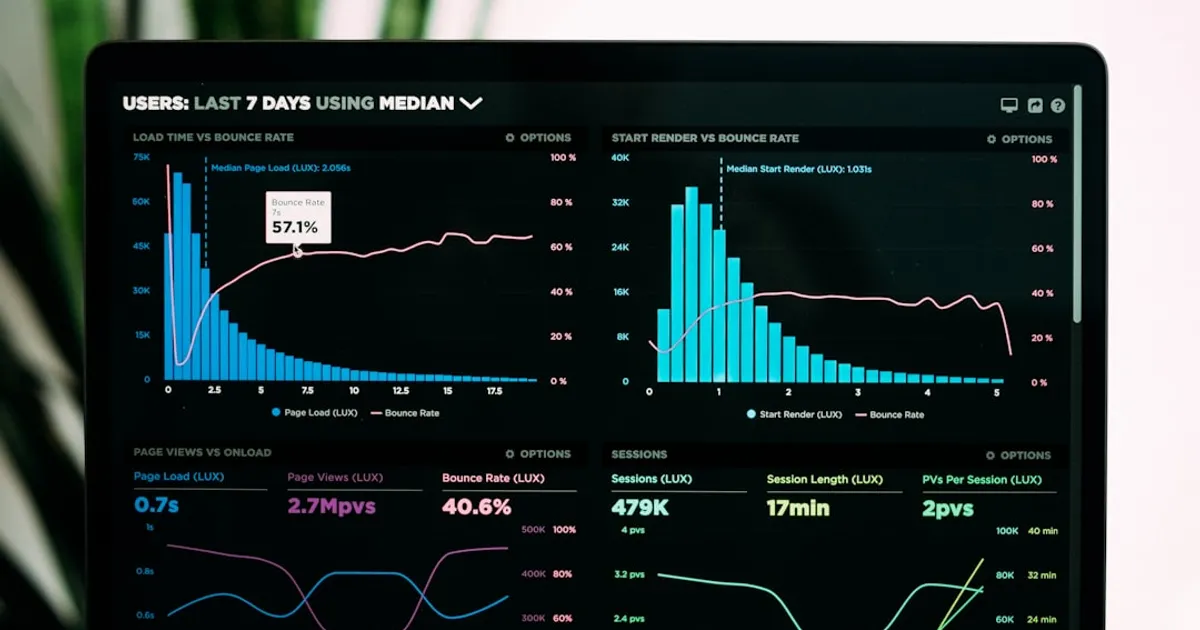
Ambient Code has published a DORA-inspired metrics framework for teams running agentic engineering systems, built around five "golden signals" and a core insight: agent interrupts are structural signals, not one-off failures. Each interrupt category maps to a specific fix type — ADR, constitution rule, or skill patch — that eliminates the whole category going forward. The framework's sharpest example is PR #51, where Ambient Code's own bot identified a recurring prompt gap and opened a pull request to patch itself.
Developer Builds Custom Memory Layer to Fix LLM Session Resets
A developer posted a custom-built persistence layer on Hacker News that gives LLMs memory across sessions, tackling the stateless reset problem that forces every new conversation to start from scratch.
How LLMs and coding agents lower the barrier to adopting Rust
An opinion piece arguing that AI-assisted development tools have changed the calculus on adopting Rust, helping generalist teams navigate the borrow checker and lifetime annotations without dedicated systems programming expertise.
63.1% of Hacker News Job Postings in March 2026 Mention AI/ML
A monthly data dashboard tracking tech hiring trends from Hacker News "Who is Hiring?" threads shows 63.1% of March 2026 job postings mention AI/ML — up 2.5 percentage points month-over-month. Built by GantryOps, the open-source pipeline classifies 363 job listings using Google Gemini Flash against a fixed taxonomy of roles, technologies, and work arrangements. ML Engineer (5%) and AI Engineer (4.4%) roles combined represent nearly 10% of all listings, with senior-level positions dominating at 48.5% of postings.

Spotify's AI DJ Can't Keep Beethoven's Movements in Order
Developer and author Charles Petzold tested Spotify's AI DJ on classical music in February 2026 and found it unable to grasp that symphonies consist of multiple ordered movements. The feature played movements out of sequence, mixed recordings from different orchestras, and substituted the wrong symphony entirely — problems Petzold traces to Spotify's metadata architecture, which was built around pop music and has no native concept of compositional hierarchy.

UK Society of Authors launches "Human Authored" logo to distinguish human-written books from AI-generated content
The Society of Authors (SoA) has launched a registration and certification scheme in the UK allowing authors to display a "Human Authored" logo on their books. Announced at the London Book Fair by novelist Tracy Chevalier, the scheme mirrors a similar initiative by the US Authors Guild launched in early 2025. The move comes amid growing concern over AI-generated books flooding the market and AI companies training models on copyrighted works without permission or payment. 82% of SoA members surveyed expressed interest in such a scheme. Thousands of authors including Kazuo Ishiguro published a protest book titled "Don't Steal This Book" ahead of a UK government assessment on proposed copyright law changes.
Craig Mod builds custom accounting software in 5 days using Claude Code
Writer and photographer Craig Mod shares his experience going "software bonkers" in 2026, building multiple custom tools using Claude Code as his AI coding partner. His flagship project is TaxBot2000 — a bespoke Python/Flask/SQLite accounting system handling multi-country finances, currency conversion, and tax prep — built in just five days. The essay is an enthusiastic first-person account of how LLM-assisted development has unlocked software creation for capable-but-not-expert coders, and speculates that SaaS subscription software faces disruption as individuals build hyper-personalized tools for N=1 use cases.
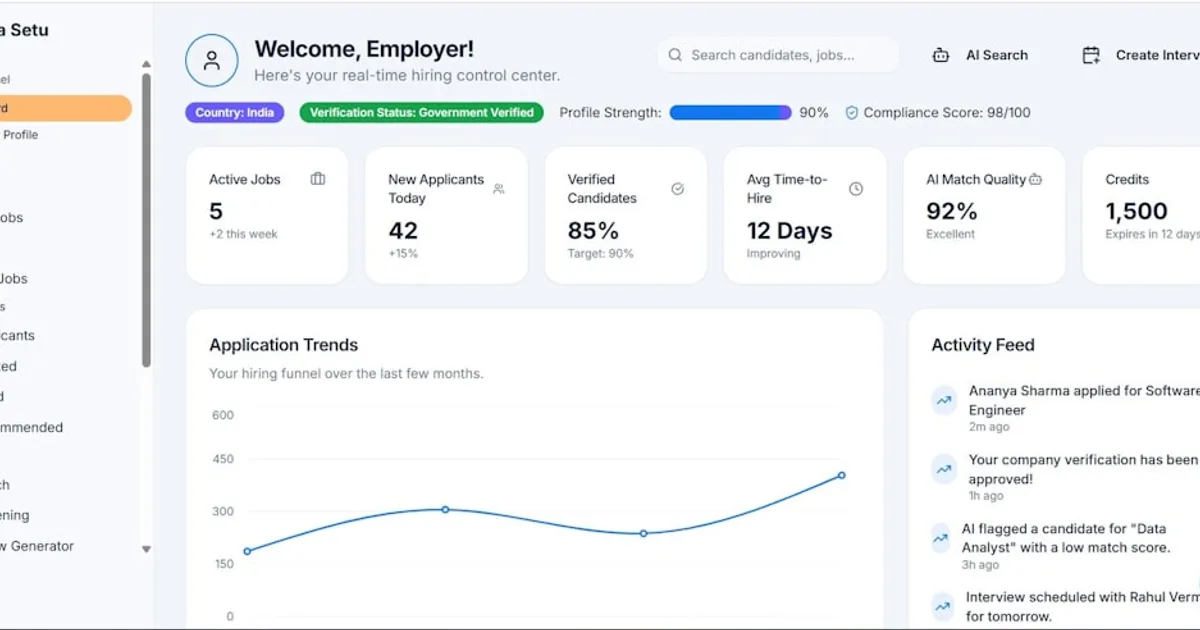
OpenFlow: Local-First Dashboard for Claude Code and RuFlo Multi-Agent Orchestration
OpenFlow is an open-source, local-first web dashboard built by AI Genius Automations that sits on top of Claude Code and RuFlo to provide a unified UI for launching, monitoring, and managing AI coding sessions. It supports multi-agent "hive-mind" sessions via RuFlo (with Byzantine fault-tolerant consensus and HNSW vector search), single-agent workflows, interactive tmux-backed terminals, a built-in web browser, git source control, and an optional Electron desktop app with local Whisper STT. The stack uses React 19, Fastify, and SQLite on the backend with WebSocket-powered real-time streaming.

Origins: AI app that infers ancestral roots from a selfie
A developer-built app called Origins claims to predict a user's ancestral roots from a selfie photo. The landing page is gated behind Google sign-in, making the methodology invisible to outside inspection. The Hacker News post received 1 point and a single dead comment. No technical details are available.
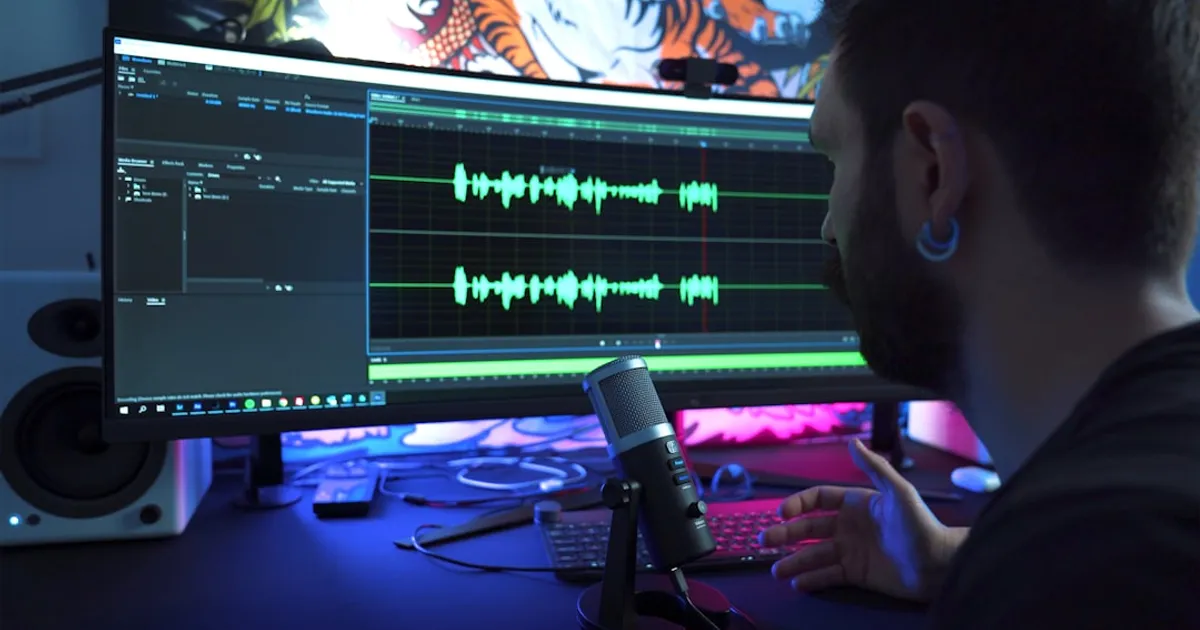
Soorf: Natural Language Audio Editor Powered by LLM Commands
Soorf is an early-access AI-powered audio editing tool that lets users manipulate audio files using plain English commands. The product advertises "66 audio building blocks" and "73.8 quintillion combinations" with no learning curve — users simply describe what they want (e.g., noise cleanup, background music replacement, normalization) and Soorf executes the edits. It offers API access across multiple languages (Python, Node.js, TypeScript, Go, Rust, Ruby, Swift, Kotlin, Java, PHP, C#) and preset workflows like "podcast-ready" and "motivational trailer cut." The product is currently in pre-launch, collecting early access signups.

Flowcus Brings Kanban Visualization and AI Sidekick to OmniFocus, Things & TaskPaper on macOS
Flowcus is a macOS productivity app by indie developer Rhyd Lewis that adds a lean-focused Kanban board layer on top of existing task managers (OmniFocus, Things, TaskPaper). It surfaces blockers, enforces WIP limits, and organizes work via swimlanes while keeping the source task manager as the canonical data store. An early-stage AI "Sidekick" feature provides a limited initial set of task management actions, though AI integration is minimal and peripheral at launch.

Investigator Used Claude Opus to Map Meta's Global Model-Law Lobbying Operation
A researcher published findings at tboteproject.com alleging that Meta drafted model legislation — boilerplate template bills — through a third-party nonprofit, using IRS 990 filings, Brazil's congressional API, and cross-referenced lobbying registrations across two continents to map a global influence operation. The investigation argues Meta is shaping regulation to create compliance burdens that entrench incumbents and shut out smaller competitors. A commenter on Hacker News claiming to be the researcher said the work was conducted using Claude Opus, making this one of the more concrete documented cases of an AI model serving as the primary instrument in a multi-jurisdictional investigation.

Why AI Agents May Be Better Off Ignoring a Core Axiom of Expected Utility Theory
Ihor Kendiukhov argues by analogy with Euclid's parallel postulate that the independence axiom of von Neumann-Morgenstern expected utility theory is one consistent choice among several, not a requirement of rationality. The post explores ergodicity economics and updateless decision theory as principled alternatives, and concludes that reflectively stable agents may systematically violate independence without becoming exploitable or incoherent.
Opinion: AI Coding Tools Like Claude and ChatGPT Risk Long-Term Skill Erosion in Developers
Howard Oakley, a former neurosurgeon turned Mac blogger, argues in a March 2026 piece that AI tools like Claude, ChatGPT, and Grok are eroding the professional skills of the developers and writers who rely on them. Using his medical background to distinguish "skill fade" from general cognitive decline, he warns that early-career professionals who outsource core cognitive tasks to AI risk stunting the foundational development they need to become experts — and compares AI overuse to morphine: effective in the right dose, destructive when misused.
RChat: Browser-Based R Coding Assistant for Researchers Who Don't Write R
RChat is a browser-based AI coding tool that converts plain English descriptions into production-ready R code, targeting researchers and data scientists. It offers AI-generated ggplot2 visualizations, error debugging, and an online R compiler with no setup required. Built by Amygware s.r.o., it positions itself against traditional RStudio workflows and general-purpose LLMs like ChatGPT and Claude.
AI Agents Are Entering Scientific Labs. Researchers Don't Yet Know How to Judge Them
Frontier models are acing PhD-level benchmarks while the research community debates whether those scores measure anything real. A new paper in Science argues benchmark saturation is exposing the limits of AI evaluation frameworks, not confirming the arrival of scientific AI.
Agent 404: Tool to Prevent AI Agents from Hitting Dead Links and Hallucinating
Agent 404 is a developer tool designed to improve AI agent reliability by detecting and handling dead or broken links before agents encounter them, reducing hallucination and failed tool calls caused by missing web resources. The Show HN post received minimal traction, suggesting early-stage visibility.
Comprehension Debt: The Hidden Cost of AI-Generated Code
Addy Osmani (Google) coins "comprehension debt" — the growing gap between code that exists in a system and what any human actually understands. As AI coding tools accelerate code output, the human review and knowledge-transfer loop breaks down. An Anthropic randomized controlled trial of 52 engineers found AI-assisted developers scored 17% lower on comprehension tests than controls, with the biggest drops in debugging. The article argues that passive delegation to AI ("just make it work") impairs skill formation far more than active, question-driven use, and warns that no current engineering metric — velocity, DORA, coverage — captures this invisible accumulation of cognitive debt.

Buxo.ai: LLM picks which meeting slots to show your invitees
Buxo.ai is a Calendly alternative that routes slot selection through a large language model, surfacing only the most contextually appropriate meeting times rather than displaying every open slot.
99helpers launches V2 of free AI Answer Generator with multi-language and tone support
99helpers has released V2 of its free AI Answer Generator, a web-based tool that uses LLMs and NLP to provide direct, synthesized answers to user questions. It supports 14+ languages and multiple tone options, positioning itself against traditional search engines. The tool is a free offering within the broader 99helpers AI-powered customer support chatbot platform, aimed at driving trial signups.
Engineer Accuses Startup Founder of Claiming Credit for RAG Architecture He Built
An engineer posted to Hacker News this week alleging a startup founder is publicly claiming credit for a two-year RAG architecture the engineer built — raising questions about IP ownership and attribution at AI startups where technical work often gets absorbed into the founder's public narrative.
Grok Scraper: Playwright-based OpenClaw skill to access Grok AI without an API key
A developer built "Grok Scraper," an OpenClaw skill that uses Playwright browser automation to interact with xAI's Grok directly through the X.com web UI — bypassing the need for an X API key. It targets X Premium subscribers who already have free Grok access, persisting a browser session to send prompts and extract responses as Markdown. The tool is technically against X's ToS and requires a GUI for initial login, but works for low-frequency personal use. CSS class selectors are fragile due to X's CSS-in-JS pipeline regenerating hashed class names on each deploy.

Open-Source GreenBoost Driver Extends NVIDIA GPU VRAM with System RAM and NVMe for Larger LLMs
Independent developer Ferran Duarri has released GreenBoost, an open-source GPLv2 Linux kernel module that creates a multi-tier GPU memory extension for NVIDIA GPUs. By intercepting CUDA memory allocation calls via an LD_PRELOAD shim and mapping pinned system RAM pages as DMA-BUF descriptors importable as CUDA external memory, GreenBoost transparently expands effective VRAM using DDR and NVMe — enabling consumer GPUs like the RTX 5070 (12GB) to run models such as glm-4.7-flash:q8_0 (31.8GB) without quality-degrading quantization or CPU-offload token throughput penalties.

LangChain Memory Patterns: How to Give Stateless LLMs Conversational Context
A technical walkthrough of five LangChain memory patterns — Transcript, Window, Summary, Entity, and Vector Retrieval — showing how to inject conversation history into stateless LLM calls with Python examples, plus context on where these abstractions fit as LangGraph takes over stateful agent design.

Godex: Building a Free AI Coding Agent with MCP Servers and Local LLMs via Ollama
Developer Cheikh Seck describes the design of Godex, a personal AI coding agent built to replicate the Codex experience for free by interfacing with Ollama and local LLMs via MCP servers. The post explores how MCP (Model Context Protocol) servers connect LLMs to local development ecosystems, and notes that while any LLM can be plugged in, not all models reason well enough for agentic workloads. The author mentions testing gemma3 locally on 16GB RAM as the catalyst for the project.

Rosetta Map: GPT-powered neighborhood translation between cities
Rosetta Map is an interactive mapping tool by Riley Walz that translates neighborhoods between cities by finding their closest analogs. It uses GPT to score neighborhoods across dimensions like density, cost, nightlife, transit, and cultural significance, then applies the Hungarian algorithm for optimal bipartite matching. Street name analogs are matched using the same process. Built on OpenStreetMap and MapLibre.

Why AI Models Are Making the Right to Be Forgotten Unenforceable
Legal scholar Dr. Gilad Yadin argues that AI systems like ChatGPT and Google's Gemini-powered AI Overviews are structurally incompatible with privacy law's erasure rights. Unlike relational databases where data occupies discrete, deletable records, AI models encode training data into distributed mathematical weights that cannot be surgically removed — making GDPR and CCPA erasure requests effectively toothless against deployed models.

Norwegian Consumer Council Calls Generative AI the Next Wave of Enshittification
The Norwegian Consumer Council (Forbrukerrådet) published "Breaking Free: Pathways to a Fair Technological Future," a policy report examining how digital services are systematically degrading through a process called "enshittification." The report dedicates a full chapter to generative AI as the next wave of this phenomenon, arguing that AI is both enshittifying existing digital services and is itself likely to become enshittified. It calls for regulatory enforcement, interoperability mandates, and competition reform to rebalance power between Big Tech and consumers.
Centurion: K8s-Style Resource Scheduler for AI Coding Agent Fleets
Centurion is an open-source Python framework that brings Kubernetes-style resource scheduling to AI coding agent fleets, directly addressing Claude Code's lack of cross-session resource management. Built after Anthropic closed a maxParallelAgents feature request as NOT_PLANNED, Centurion operates at the OS/infrastructure layer with hardware-aware admission control, memory pressure detection, auto-scaling (Optio), DAG-based task orchestration (Harness Loop), and real-time WebSocket event streaming (Aquilifer). It supports 100+ concurrent agents, 21 REST endpoints, 19 MCP tools, and Google's A2A protocol — and is model-independent, working with Claude, GPT, Gemini, or shell scripts. Anthropic's NOT_PLANNED designation functions less as a product rejection and more as an architectural handoff, ceding the infrastructure layer above Claude Code to projects like this one.

Developer ditches OpenClaw for a hand-built team of 34 Claude Code agents
Tim Dietrich, a solopreneur, describes replacing the OpenClaw autonomous agent framework with a hand-crafted virtual team of 34 specialized Claude Code agents organized into 11 groups. Each agent has a defined persona, scoped file access, and runs as a short-lived on-demand process rather than a persistent daemon. He details a file-based pipeline orchestration pattern where agents handoff work via temp files, avoiding shared memory or context bleed. The post contrasts this approach against OpenClaw's security risks — including leaked API keys, malicious plugins, and prompt injection vulnerabilities — arguing that compartmentalization and human-in-the-loop approval deliver meaningful AI leverage without the attack surface of always-on autonomous systems.

Dog's Cancer Treated with ChatGPT-Assisted mRNA Vaccine in World First
Sydney tech entrepreneur Paul Conyngham used ChatGPT for brainstorming and genetic data analysis to help design a personalized mRNA cancer vaccine for his dog Rosie, who had advanced mast cell cancer. Collaborating with scientists at UNSW's Ramaciotti Centre for Genomics and RNA Institute, the vaccine resulted in a ~50% reduction in tumor size — reportedly the first personalized cancer vaccine designed for a dog. Researchers say the approach could inform human oncology and personalized medicine.
Multi-Claude: CLI tool for managing multiple Claude accounts with isolated profiles and cloud sync
Multi-Claude is an open-source CLI utility that solves the single-account limitation of Anthropic's Claude CLI by creating isolated profile directories per account. It supports shared MCP servers, environment variables, plugins, and CLAUDE.md files via deep-merging, registers profiles as direct PATH commands (e.g. claude-work, claude-personal), and offers cloud backup/restore via a sync code. Available via npm, pip, Homebrew, Scoop, AUR, or curl. Pure bash + PowerShell, no daemon required. MIT licensed.
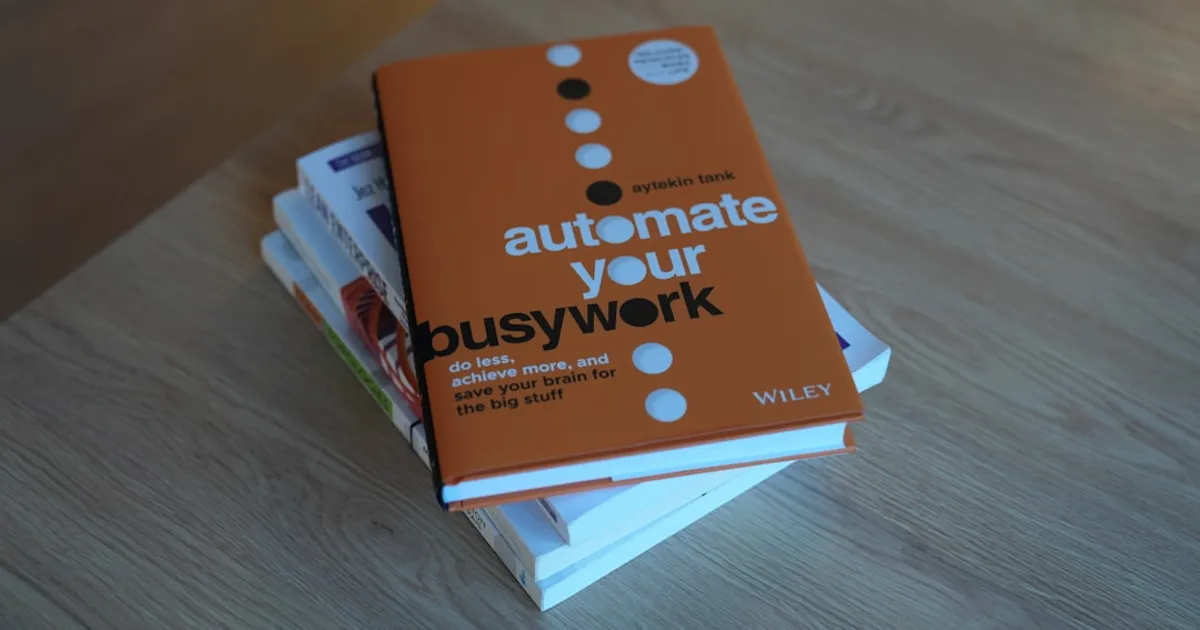
AgentPages Turns GitHub into an Autonomous Research Publisher Using gh-aw Workflows
AgentPages is an open-source tool that turns a GitHub repo into an autonomous research and publishing platform. Users define research interests in a config file; a GitHub Agentic Workflow (gh-aw) runs on a 12-hour cron, uses Tavily web search to gather information, updates a knowledge base, rebuilds an Astro static site, and auto-merges a PR — all without human intervention. Supports Claude, Codex, and Gemini as the underlying model engine.

Ukrainian para-biathlete wins Paralympic silver using ChatGPT as coach, psychologist, and doctor
Maksym Murashkovskyi, a 25-year-old Ukrainian visually impaired para-biathlete, won silver at the 2026 Winter Paralympics after six months of training with ChatGPT. He used the AI tool for half of his training plan, motivation, tactics, performance psychology, and occasional medical guidance — replacing what he called "classical" human coaching. He did not miss a single shot in the race, calling the technology "revolutionary."
Veteran developer says Claude Code killed their passion for coding
A 60-year-old developer shares a personal opinion piece arguing that Claude Code has diminished their passion for programming. The HN comments reveal a split reaction: some question why the author can't simply continue coding without AI, while others (like a 42-year-old commenter) argue AI tools have re-ignited their own passion by removing the tedious parts of coding. The discussion reflects a broader generational and philosophical divide about AI coding assistants and what "the craft" of programming means to different people.

Minimap: Local UI for Git-Native Roadmap Files in Human-Agent Workflows
Minimap is an open-source local web UI that lets humans and AI agents plan against the same canonical markdown roadmap files in a repo, rather than scattering state across chat threads and PM tools. Agents draft or update roadmap markdown via normal repo conversations; humans open Minimap to review, lightly edit, and commit changes. Markdown files are the source of truth — no database, sync layer, or second board state.
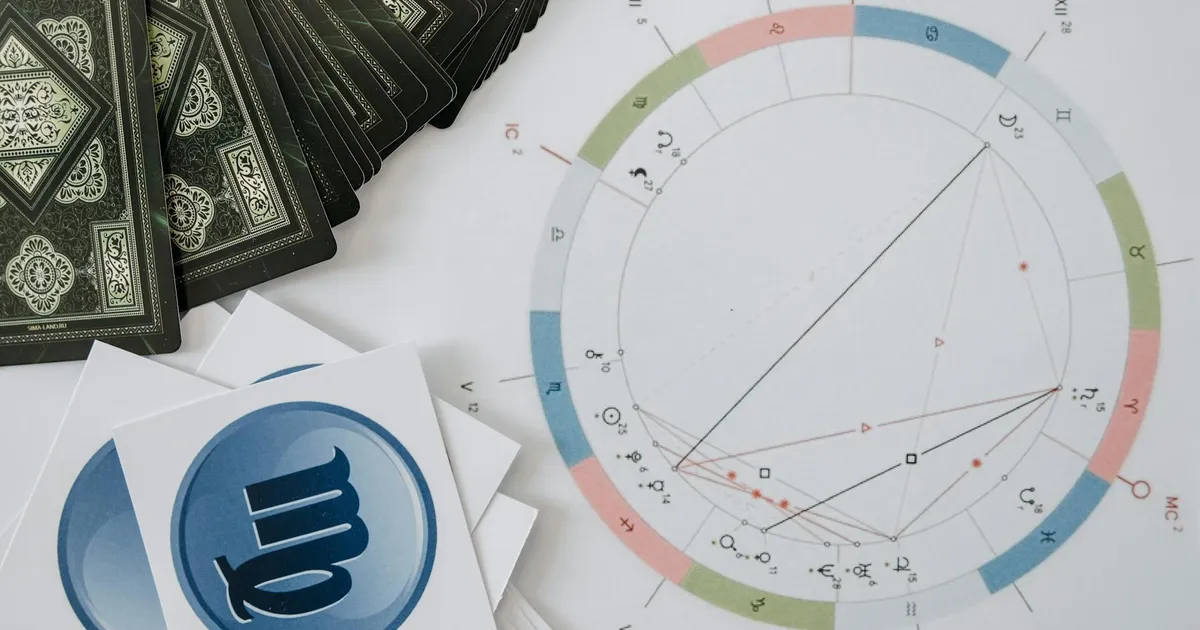
Show HN: Astrocartography AI Brings LLM Interpretation to Birth Chart Mapping
A Show HN submission presenting an AI-powered interactive astrocartography map generator. Astrocartography — a form of locational astrology systematized by Jim Lewis in the 1970s — maps planetary positions at the moment of birth onto a world map. The tool appears to use AI to generate or interpret personalized charts. No page content was available to confirm the depth of AI involvement or underlying technology.
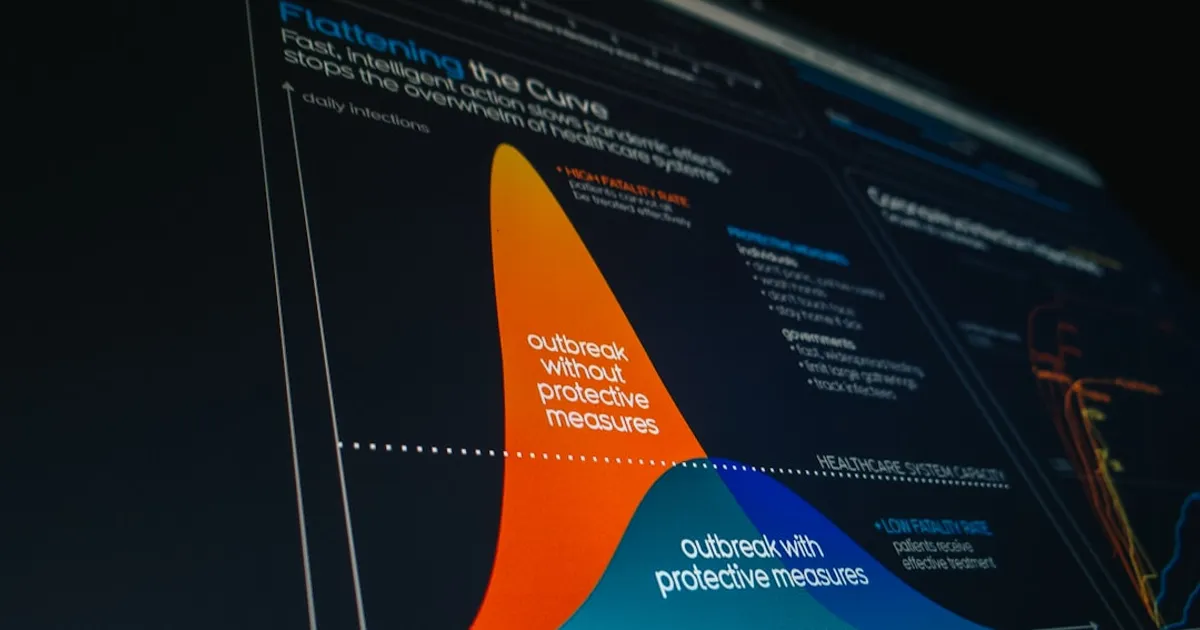
R2D3's Creator Now Designs UX for Coding Agents — His 2015 ML Explainer Still Sets the Standard
Tony, co-creator of R2D3's widely cited 2015 interactive ML explainer, now works as a product designer at coding-agent startup Augment Code, focused on agent UX. The decade-old D3.js piece — which introduced decision trees and overfitting to a generation of practitioners using scrollytelling — has resurfaced on Hacker News, drawing renewed attention to both the work and the trajectory of the people behind it.
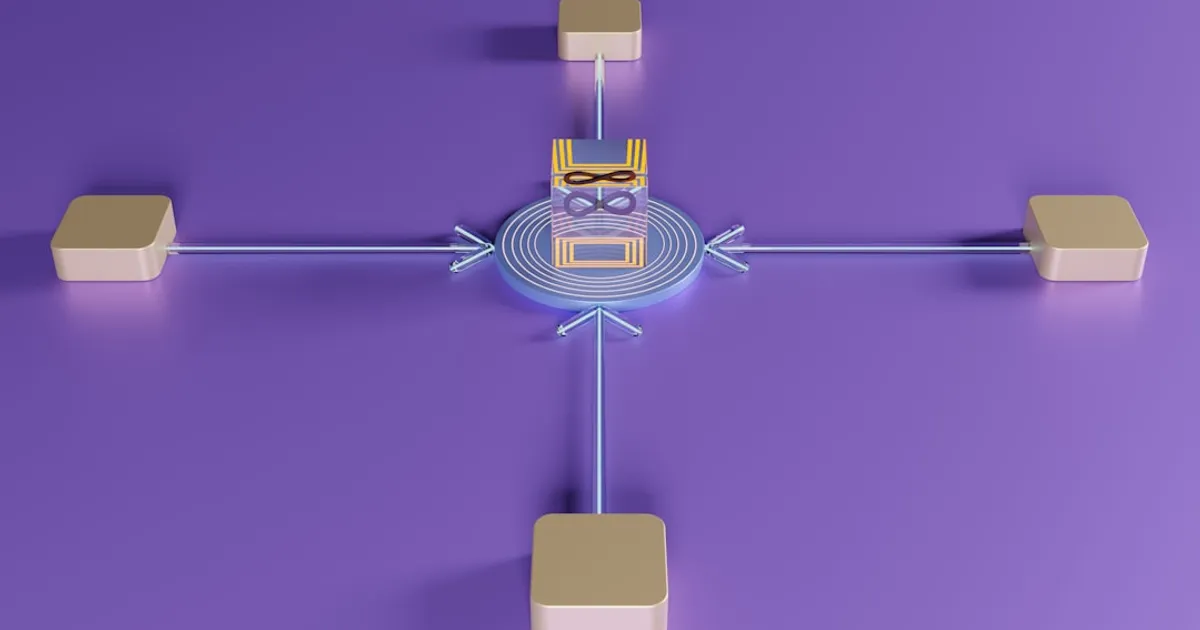
AGFS: Aggregated File System Abstracts Redis, S3, and SQL Into a Unified Interface for LLM Infrastructure
AGFS (Agent FS) is an open-source infrastructure project that exposes backend services — Redis/KV stores, message queues, S3 object storage, SQL databases — as a unified filesystem interface via RESTful APIs and FUSE mounting. Inspired by Plan 9's "everything is a file" philosophy, it lets LLM agents interact with complex infrastructure using simple shell primitives (cat, echo, ls, cp) that any model already understands without needing specialized API documentation. It includes built-in agent coordination primitives like heartbeat monitoring, task queue workers, and an MCP integration layer, making it directly applicable to multi-agent orchestration patterns.

Grantex: OAuth 2.0-Inspired Authorization Protocol Built for AI Agents
Grantex is an open authorization protocol designed specifically for AI agents, positioning itself as the OAuth 2.0 equivalent for the agentic web. It provides cryptographic agent identity (DIDs), scoped and time-limited delegated grant tokens (RS256 JWTs), immutable audit trails, and multi-agent delegation chains. The protocol ships with TypeScript, Python, and Go SDKs, a CLI, framework integrations for LangChain, AutoGen, CrewAI, Vercel AI, the OpenAI Agents SDK, Google's ADK, and MCP, enterprise features including anomaly detection and compliance exports, and trust infrastructure built on FIDO2/WebAuthn and W3C Verifiable Credentials. The spec is versioned at v1.0-final and available on GitHub under Apache 2.0. The creator says he has submitted an IETF Internet-Draft — the same standards body that ratified OAuth 2.0 and JWT — though that claim has not been independently verified.

CPU-Compatible Fork of Karpathy's Autoresearch Enables Autonomous LLM Hyperparameter Optimization on Consumer Hardware
A community fork of Andrej Karpathy's Autoresearch project by developer Matti A. Pöysti (bopalvelut-prog/autoresearch) removes the H100/Flash Attention 3 requirement, enabling autonomous AI research agents to self-modify training code, run 5-minute experiments, and iteratively optimize LLM hyperparameters on standard CPUs, Apple Silicon, or consumer GPUs. The agent loop uses a local Ollama model (Qwen 2.5 0.5b) to propose and evaluate changes to train.py overnight, logging results and auto-committing improvements.
Karpathy's autoresearch: AI agents run ML experiments overnight, achieving 11% speedup on nanochat
Andrej Karpathy released autoresearch, a minimal repo that gives an AI agent a training file (train.py) and lets it autonomously run experiments overnight — editing code, training for 5-minute windows, evaluating on val_bpb, and keeping or reverting changes. Running ~100 experiments overnight on an H100, the agent improved nanochat's Time-to-GPT-2 record from 2.02 to 1.80 hours (11% speedup), discovering gains the human maintainers had missed. Karpathy noted replication variance across sessions and flagged overfitting risk to the validation metric. The pattern has since been extended by others: Hyperspace AI's Varun Mathur ran 35 distributed agents across a P2P network rediscovering ML milestones like RMSNorm, and AutoKernel applied the same loop to GPU kernel optimization. The core thesis: the bottleneck is now eval design — defining clean, fast proxy metrics — not execution itself.
Nova: Open-Source Self-Hosted Personal AI with DPO Fine-Tuning and Autonomous Self-Improvement
Nova is an open-source, self-hosted personal AI assistant that learns from user corrections through a full DPO (Direct Preference Optimization) fine-tuning pipeline. Every correction generates a training pair; when enough accumulate, Nova automatically fine-tunes itself with A/B evaluation before deploying the improved model. It features a temporal knowledge graph, hybrid retrieval, MCP dual-client/server support, and 21 built-in tools — with no LangChain or cloud dependency.

AI Deepfaked Tom Cruise, Hollywood Lost 41,000 Jobs, and No One Has a Legal Answer
A USC professor of cinematic arts outlines three AI trends colliding with Hollywood before the Oscars: (1) ByteDance's Seedance 2.0 generating realistic deepfakes of Tom Cruise and Brad Pitt without consent, drawing a cease-and-desist from Disney and condemnation from SAG-AFTRA; (2) AI outpainting and upscaling used to adapt classic films like The Wizard of Oz for immersive venues like the Las Vegas Sphere, where the reimagining has sold over two million tickets; (3) AI entrepreneur Edward Saatchi's Showrunner platform attempting to reconstruct 45 minutes of lost footage from Orson Welles' The Magnificent Ambersons. Set against 41,000 film and TV jobs lost in LA County over three years, the piece lands on a question no one in the industry has cleanly answered: who owns an AI-reconstructed film — and who gets to say what a dead director would have wanted?
Rust Creator Graydon Hoare Describes 2025–2026 LLM Inflection as the Most Violent Shift of His Career
Graydon Hoare (creator of Rust) writes a personal journal entry describing a dramatic inflection point in LLM capabilities around late 2025 and early 2026. He observes that LLMs crossed a threshold in coding ability and — more alarmingly — vulnerability hunting, triggering a security arms race, industry disruption, layoffs, and deep community fractures. The post is notable for its ground-level, fatalistic tone: no predictions, no conclusions, just a witness account of the fastest and most violent change to working conditions he's seen in his career.