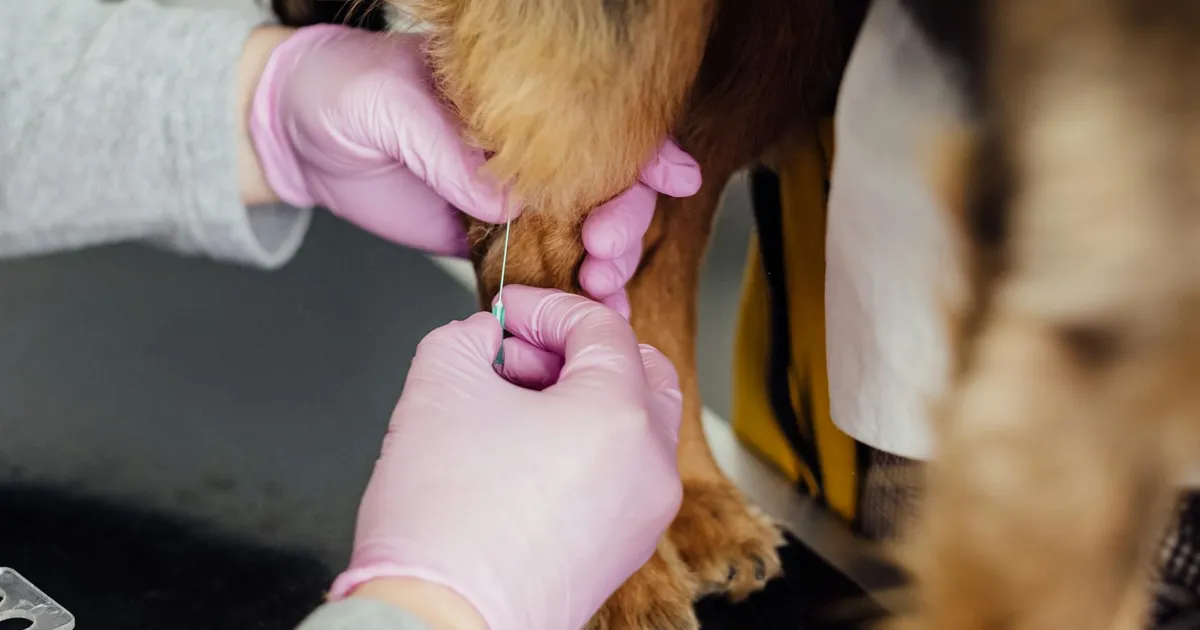
Paul Conyngham's rescue dog Rosie was eight years old, had advanced mast cell cancer, and had not responded to surgery or chemotherapy. So Conyngham, a Sydney tech entrepreneur with a background in machine learning, sequenced her DNA himself. He compared healthy and cancerous cells to isolate tumor-driving mutations, used ChatGPT to brainstorm and interpret data throughout the process, then translated those findings into therapeutic targets. The result, developed with researchers at UNSW, is what scientists are calling the first personalized mRNA cancer vaccine ever designed for a dog.
Conyngham brought his findings to the UNSW Ramaciotti Centre for Genomics and the UNSW RNA Institute, where director Pall Thordarson co-engineered a custom-designed mRNA vaccine tailored to Rosie's specific tumor mutations. Rosie received her first injection in December 2025, followed by a booster. One of her tumors has since shrunk by approximately 50%. Martin Smith, an associate professor of computational biology at UNSW, described the outcome as stunning and publicly questioned why analogous personalized approaches are not yet standard in human oncology. David Thomas, inaugural director of the UNSW Centre for Molecular Oncology, highlighted the citizen-science dimension — a technically sophisticated non-academic using publicly available AI tools to push a novel medical intervention forward.
Getting there was not straightforward. Conyngham spent months preparing an ethics proposal before Mari Maeda of the US-based Canine Cancer Alliance connected him with University of Queensland researcher Rachel Allavena, who held the regulatory approvals needed to proceed.
For readers tracking the AI agent space, the case is instructive about where large language models actually sit in complex, high-stakes workflows. ChatGPT's role here was that of an accelerant for a skilled practitioner — Conyngham's pre-existing expertise in data analysis and machine learning was essential. This is less a story about AI conducting science autonomously and more about AI interfaces lowering the barrier for technically literate non-specialists to engage with frontier biomedical research. That gap matters for personalized medicine and citizen science, even if the approach remains experimental and cost-prohibitive at tens of thousands of dollars out-of-pocket. Conyngham is already working on a second vaccine to target a tumor that did not respond to the first.