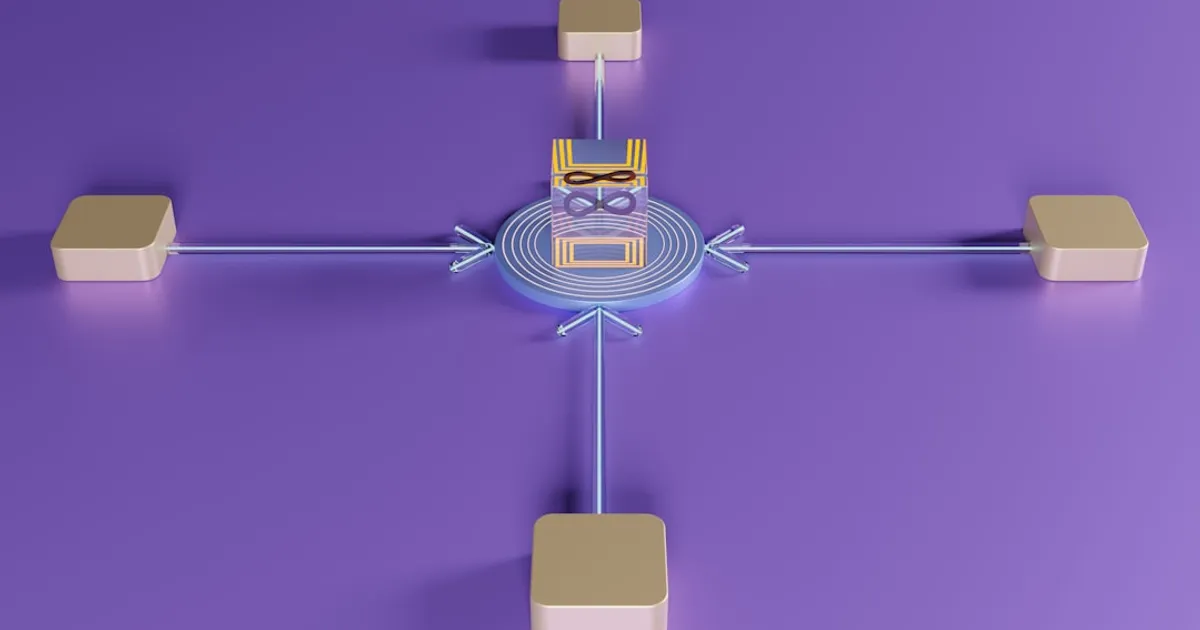
A new open-source project called AGFS (Aggregated File System, or Agent FS) exposes Redis key-value stores, message queues, S3 object storage, and SQL databases as a single unified virtual filesystem — no service-specific APIs required. Agents interact with the whole stack using shell primitives: cat, echo, ls, cp.
AGFS was created by Dongxu (Ed) Huang, Co-Founder and CTO of PingCAP and a core author of TiDB and TiKV. It's an explicit tribute to Plan 9 from Bell Labs, the operating system that pioneered the "everything is a file" philosophy. The project surfaces that abstraction both as a RESTful HTTP API and as a FUSE-mounted filesystem on Linux.
The practical argument centers on reducing the cognitive surface area LLM agents must navigate. Rather than embedding service-specific client logic into every agent or stuffing tool definitions with API documentation, AGFS maps backend operations onto file I/O patterns that any language model already understands from training data. Task queues become directories with enqueue and dequeue control files. Key-value stores become key-named files. SQL sessions follow a Plan 9-style session-file pattern. Agent liveness monitoring runs through a dedicated heartbeatfs virtual directory that automatically removes stale agents after a configurable timeout.
The composability follows directly from that design: because operations are standard Unix file I/O, agents can chain cross-service workflows using shell pipes and redirections without glue code, much like Axe orchestrates agents through similar pipe composition. Reading from a message queue and writing results directly to S3, for example, is a one-liner.
AGFS also ships with a built-in MCP (Model Context Protocol) integration layer. MCP has become the dominant standard for LLM tool use, and including it here positions AGFS as a drop-in coordination layer for teams already building on that stack. The project includes Docker support and a one-line install script; CI builds have run daily since launch.
Huang submitted it to Hacker News as a "Show HN" under the title "Aggregated File System — Everything is a file. A tribute to Plan9." The project appears to be part of a broader architectural thesis he's pursuing: his current venture, db9.ai, bills itself as "Postgres but for agents" and combines serverless PostgreSQL with cloud filesystem capabilities — a commercial product built on the same filesystem-as-infrastructure philosophy that AGFS demonstrates in open source.
The open question is adoption friction. FUSE mounting works cleanly on Linux but adds complexity in containerized environments, and teams running agents on managed cloud runtimes may find the RESTful API path more practical than the filesystem mount. How Huang handles that split — and whether db9.ai converges with or diverges from AGFS over time — will determine whether this stays a clever proof of concept or grows into load-bearing infrastructure.