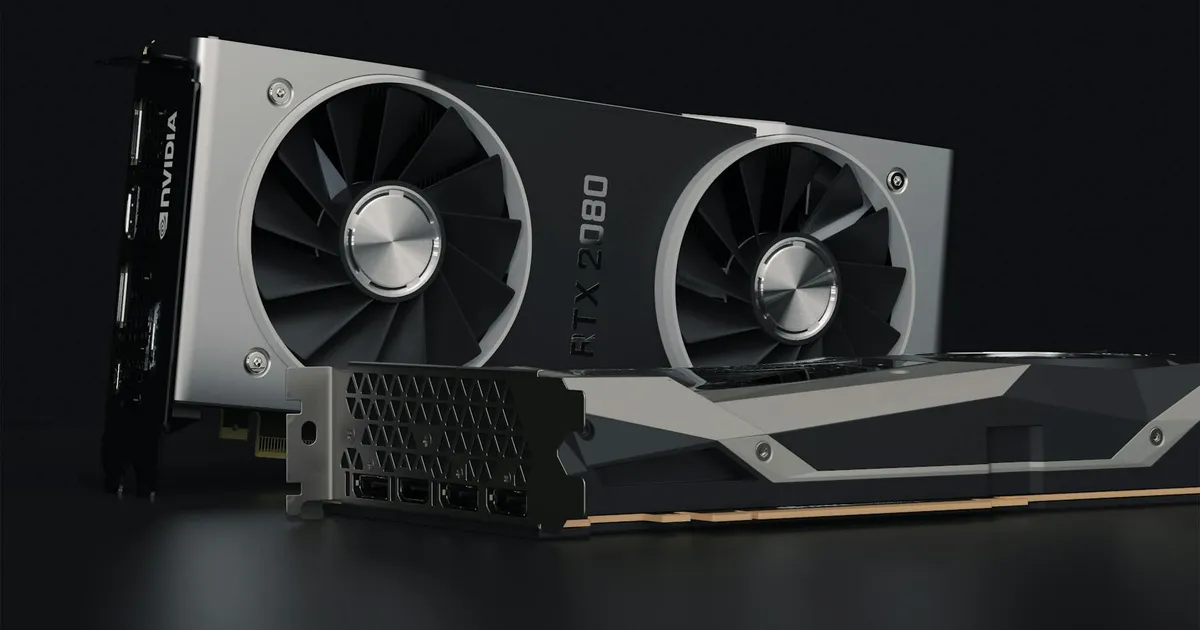
NVIDIA unveiled DLSS 5 at its GTC conference on March 16, 2026, marking what the company describes as its most significant graphics breakthrough since real-time ray tracing debuted with the RTX 2080 Ti in 2018. Unlike previous DLSS iterations — which focused on resolution upscaling and frame generation — DLSS 5 introduces a real-time neural rendering model that takes per-frame color and motion vectors as input and generates photoreal lighting, materials, and scene semantics at up to 4K resolution. The model is trained to understand complex elements including subsurface scattering on skin, fabric sheen, and hair light interactions, all derived from a single frame. CEO Jensen Huang called it "the GPT moment for graphics," drawing a parallel to how large language models transformed text generation. The technology arrives this fall and will be supported by major publishers including Bethesda, CAPCOM, Ubisoft, Tencent, and Warner Bros. Games, with confirmed titles including Starfield, Assassin's Creed Shadows, and Resident Evil Requiem.
What distinguishes DLSS 5 from offline video AI models is its grounding in the game's 3D world. Output is deterministic and frame-consistent — a core requirement for real-time interactive applications where offline models that generate bespoke, unpredictable results would be unusable. NVIDIA says developers retain controls for intensity, color grading, and masking, and integration uses the existing NVIDIA Streamline framework already in use by DLSS 4.5 and Reflex. DLSS 4.5, launched at CES 2026, already used AI to generate 23 out of every 24 pixels on screen; DLSS 5 represents a shift from performance optimization to visual fidelity transformation. The technology has been integrated across more than 750 games throughout the DLSS lineage.
Despite the strong publisher backing, the developer and enthusiast community isn't buying it. Hacker News commenters reviewing NVIDIA's own demo footage flagged significant visual artifacts: AI-generated faces with high-contrast lighting that conflicts with surrounding scene environments, plasticky skin rendering, and uncanny valley distortions that critics likened to an "Instagram yassification filter." The bigger issue is artistic control — DLSS 5 effectively overrides the dynamic lighting that developers invest considerable effort in to establish a game's mood and atmosphere, and the promised masking tools may not offer enough granularity to fix that. The showcase hardware didn't help either: a prominent demo rig carried an $8,000 dual-GPU prosumer price tag, prompting pointed questions about who this actually ships for. NVIDIA hasn't published masking granularity specs; until it does, developers have little basis to judge whether they can actually protect their work.