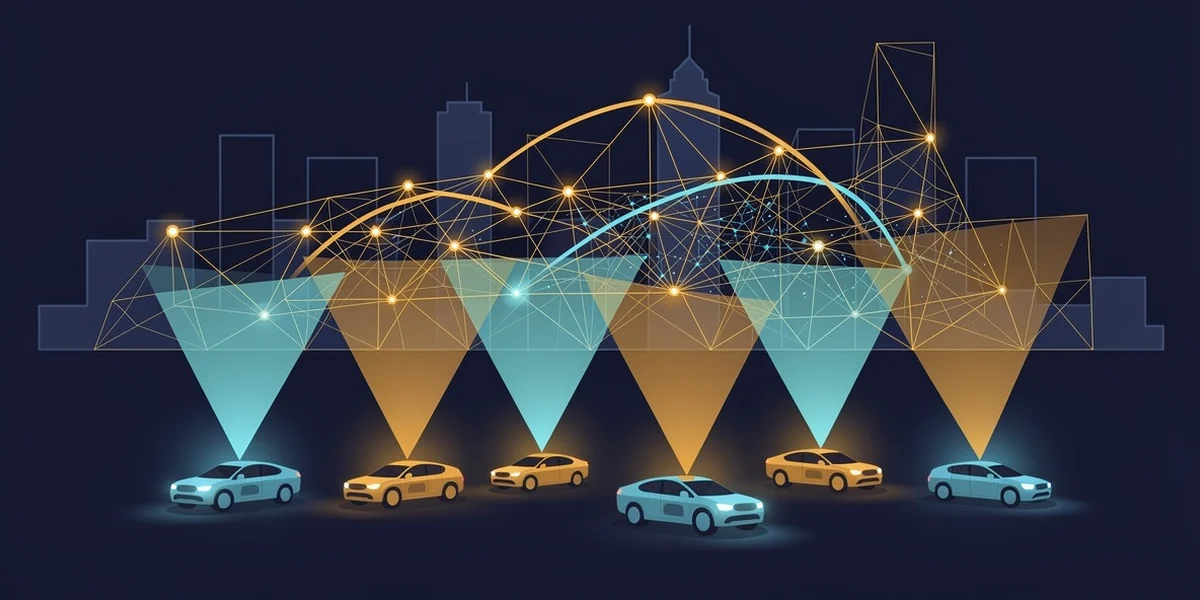
Uber is plotting to turn its millions of drivers into a rolling sensor network for autonomous vehicle companies. CTO Praveen Neppalli Naga revealed the plan at TechCrunch's StrictlyVC event, describing it as the eventual goal of AV Labs, a program Uber launched in January. Right now, AV Labs runs a small dedicated fleet of sensor-equipped cars. But the real play is much bigger: outfitting regular Uber drivers' vehicles with sensors that vacuum up real-world data for AV companies to train on.
The idea is to build what Naga calls an "AV cloud," a queryable library of labeled sensor data. Meanwhile, other tech giants are exploring alternatives like employee tracking to train AI agents. A company could request footage of a specific intersection at a certain time of day, then use it to train their models. Partners can also run their AI in "shadow mode" against real Uber trips, testing how an autonomous system would handle actual conditions without putting a car on the road. Uber already works with 25 AV companies, including London-based Wayve.
But Uber's premise has critics. The company says data scarcity is the main bottleneck holding back self-driving tech. Tesla has collected billions of miles of real-world driving data and still hasn't cracked full autonomy. The quality of your simulation and model architecture probably matters more than raw data volume.
Then there are the legal landmines. Stick sensors in cars and you'll capture faces, license plates, maybe conversations. Illinois' Biometric Information Privacy Act requires strict consent for facial scans and carries stiff penalties per violation. Two-party consent laws in California, Florida, and Pennsylvania complicate recording passengers. And Europe's GDPR demands data minimization and gives people the right to have their data deleted. Naga acknowledged the regulatory thicket, saying the company needs "clarity on what sensors mean, and what sharing it means" before scaling up—a situation that has raised similar privacy concerns. Getting that clarity could take a while.