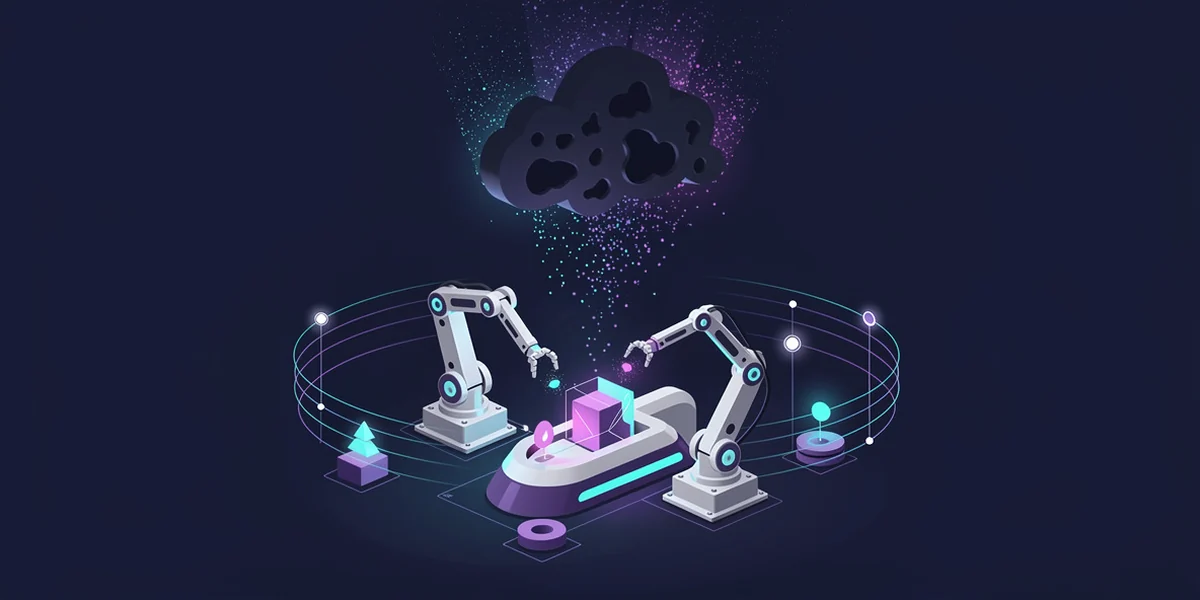
Eka, a startup founded by MIT professor Pulkit Agrawal and ex-Google DeepMind researcher Tuomas Haarnoja, has built robotic arms that move with a fluidity WIRED's Will Knight says he's never seen in over a decade covering robotics. The robots screw in lightbulbs, pick up earplug boxes, and handle jumbles of keys with a gentleness that makes you forget you're watching a machine. Knight compares the experience to his first ChatGPT conversation. That's high praise for a robot arm.
The approach relies on simulation-based training. Eka creates detailed virtual environments where robots practice manipulation tasks thousands of times faster than real time. A vision-force-action model lets the system learn autonomous skills that transfer to the physical world. Embodied AI has long been a pursuit for researchers, but bridging the gap remains a challenge.
What separates Eka from the humanoid hype is the hardware itself. The company built custom grippers with high-bandwidth force-torque sensors providing real-time tactile feedback. Industrial robots are usually rigid and ham-fisted. Eka's grippers prioritize compliance, letting them handle fragile objects without crushing them. The tight integration of sensing and actuation is exactly what skeptics like Rodney Brooks have said is missing from today's robots.
Brooks, the iRobot co-founder who has publicly dismissed humanoid robot claims as fantasy, appears to be an investor or adviser to Eka. He reportedly posted on Bluesky calling Eka the first company he's seen that's close to solving dexterity. When the field's most vocal skeptic backs your startup, people pay attention. Agrawal frames the economic case plainly: "Trillions of dollars flow through the human hand." If Eka can scale their approach, the implications stretch from factory floors to household chores, similar to how robots are currently being utilized to fill essential gaps.