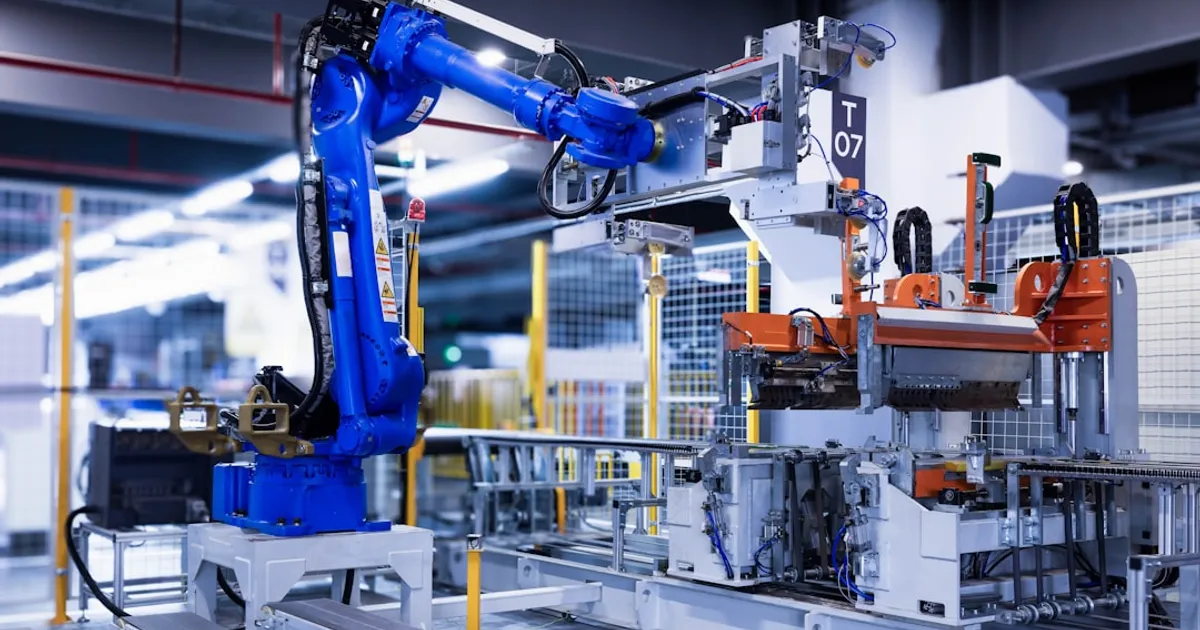
Japan's working-age population has been shrinking for 14 straight years. Workers now make up just 59.6% of the total population, and that share will drop by another 15 million people over the next two decades. The country can't find enough people to staff factories, warehouses, and basic services. So they're turning to robots out of necessity, not choice.
The Japanese government has committed $6.3 billion to AI and robotics. The Ministry of Economy, Trade and Industry wants Japan to capture 30% of the global physical AI market by 2040. They're starting from a strong position. Japanese manufacturers already control about 70% of the global industrial robotics market as of 2022.
What makes Japan's approach different from the US or China is where they're placing bets. Companies like Fanuc and Yaskawa Electric dominate the hardware side. Servos, precision reducers, industrial arms. Meanwhile, startups like Mujin build the software layer that makes existing robots more autonomous agents. "Physical AI is being bought as a continuity tool: how do you keep factories, warehouses, infrastructure, and service operations running with fewer people?" said Hogil Doh, a general partner at Global Brain.
Sho Yamanaka, a principal at Salesforce Ventures, put it bluntly: "The driver has shifted from simple efficiency to industrial survival." The evidence is visible in everyday life. Restaurants deploy robots for food delivery. Touchscreen kiosks handle seating. PayPay processes payments via tablet. For Japan, automation has become existential.