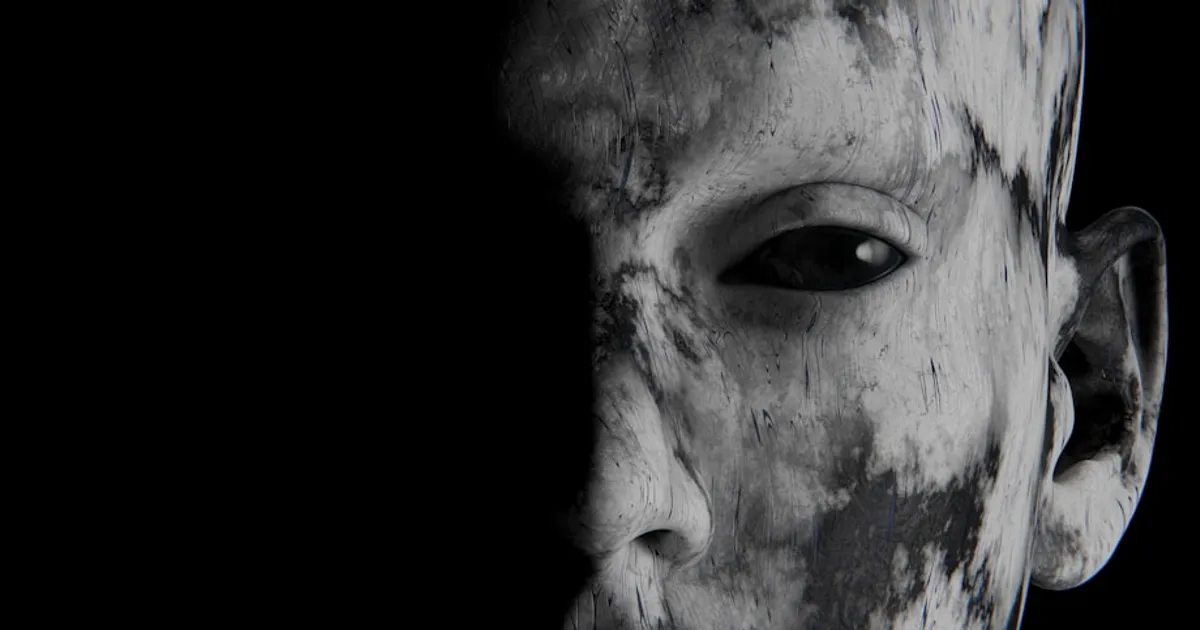
He was running toward the coast when the debris caught him. Now, nearly 2,000 years later, we can see his face.
Pompeii archaeologists have used AI for the first time to reconstruct the likeness of a man killed in the AD 79 eruption of Mount Vesuvius. The Pompeii Archaeological Park and the University of Padua built the reconstruction from skeletal data and archaeological evidence.
The man was found near the Porta Stabia necropolis outside Pompeii's walls. He died early in the disaster, crushed under volcanic debris while fleeing. He was clutching a terracotta mortar over his head as an improvised shield against falling stones. He also carried a ceramic oil lamp, a small iron ring, and ten bronze coins.
The reconstruction places him mid-stride on a debris-covered road, Vesuvius erupting behind him. It's a full scene, not just a face. The posture matches accounts from Pliny the Younger, who described residents grabbing whatever they could to protect themselves.
Pompeii park director Gabriel Zuchtriegel said the sheer volume of data from the site now demands AI tools. "If used well, AI can contribute to a renewal of classical studies," he said in a statement.
But AI reconstructions risk hallucinations that distort our view of the past. And there's another oddity. NPR's English-language report didn't include the actual image. You had to track down the Italian source to see it. For a project built around a visual reconstruction, that's a strange omission.