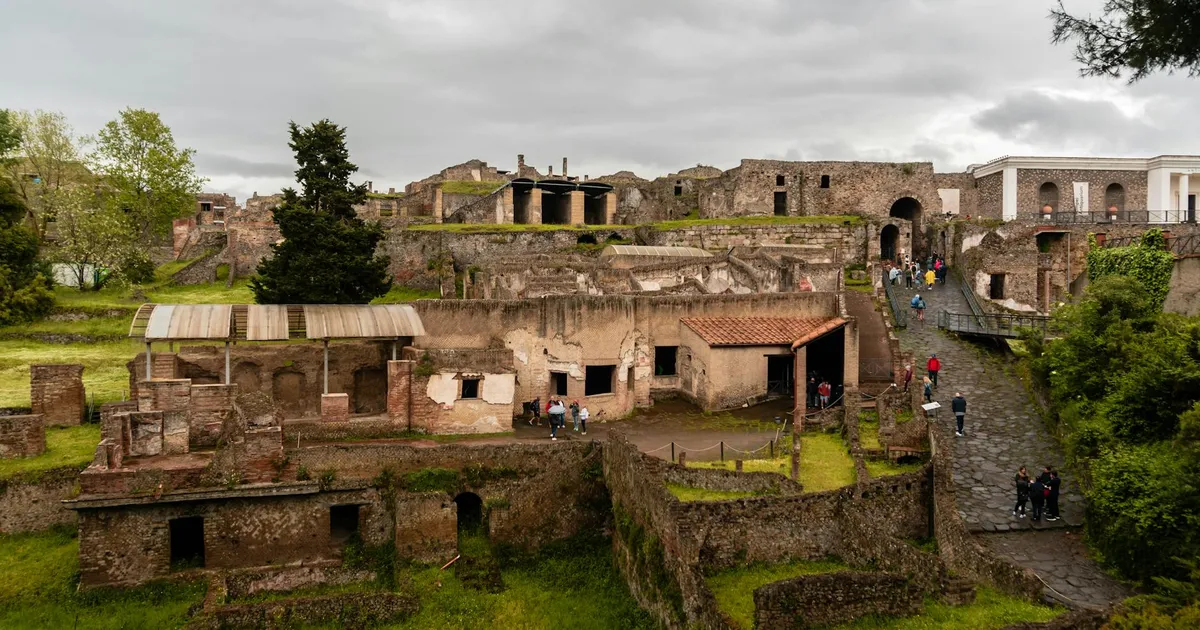
He was running when Vesuvius caught him. A terracotta mortar balanced over his head like a shield against the falling stones. An oil lamp in one hand for light. Ten bronze coins. A small iron ring. He died near the Porta Stabia necropolis alongside another victim who perished at a different stage of the eruption. That was AD 79.
Now AI agents have given him a face again. The Pompeii Archaeological Park and the University of Padua built a 3D digital mesh of his skull through photogrammetry. Generative adversarial networks predicted how soft tissue would have sat on that bone structure. Texturing algorithms added skin, hair, and aging.
The result looks like a photograph. It isn't one.
The algorithms, trained on craniofacial databases, produced a statistical best guess based on skull geometry. AI agents excel at generating plausible outputs, but they inherently involve probability. Features like the nose and eyes, which bone doesn't preserve, are estimations. Pompeii director Gabriel Zuchtriegel said AI will help "adequately protect and enhance" the site's data, adding that "if used well, AI can contribute to a renewal of classical studies." The project's goal is making research accessible to people who aren't archaeologists.
That's a fair aim. But when you present a photorealistic face and tell people "this is what a Pompeii victim looked like," the certainty implied outpaces what the method delivers. We're looking at a probability. Not a portrait.