Dr. Takanori Shibata didn't set out to build a robot. He wanted to create something that could deliver animal therapy without the allergies, bites, and bathroom breaks. What he built was PARO, a baby harp seal covered in white fur that blinks, coos, and responds to touch. That was 2003.
Twenty-two years later, PARO is still in production. The robot seal is now used in care facilities across more than 30 countries. A randomized controlled trial published in JAMA found that PARO reduced stress hormones in dementia patients as effectively as antipsychotic medication. The FDA classifies it as a biofeedback device. At roughly $6,000 per unit, it's not cheap, but it's cheaper than the side effects of sedatives.
PARO works because it asks almost nothing of the person holding it. You can't play PARO wrong. There's no high score, no objective, no interface to learn. It just responds to attention. For dementia patients who've lost the ability to follow conversation or recognize family members, that's enough.
The next generation of companion robots takes a different approach. Israel-based Intuition Robotics launched ElliQ in 2016 after four years of development. Unlike PARO, ElliQ isn't trying to be an animal. It's a lamp-like device with a swiveling head that sits on a table and initiates conversation. Founder Dor Skuler designed it specifically for older adults who live alone but aren't in care facilities.
ElliQ suggests activities, reminds users to take medication, and shares photos from family members. It costs around $250 plus a monthly subscription. The business model is telling: Intuition Robotics isn't selling to nursing homes. They're selling to adult children who worry about their aging parents and feel guilty about not calling enough.
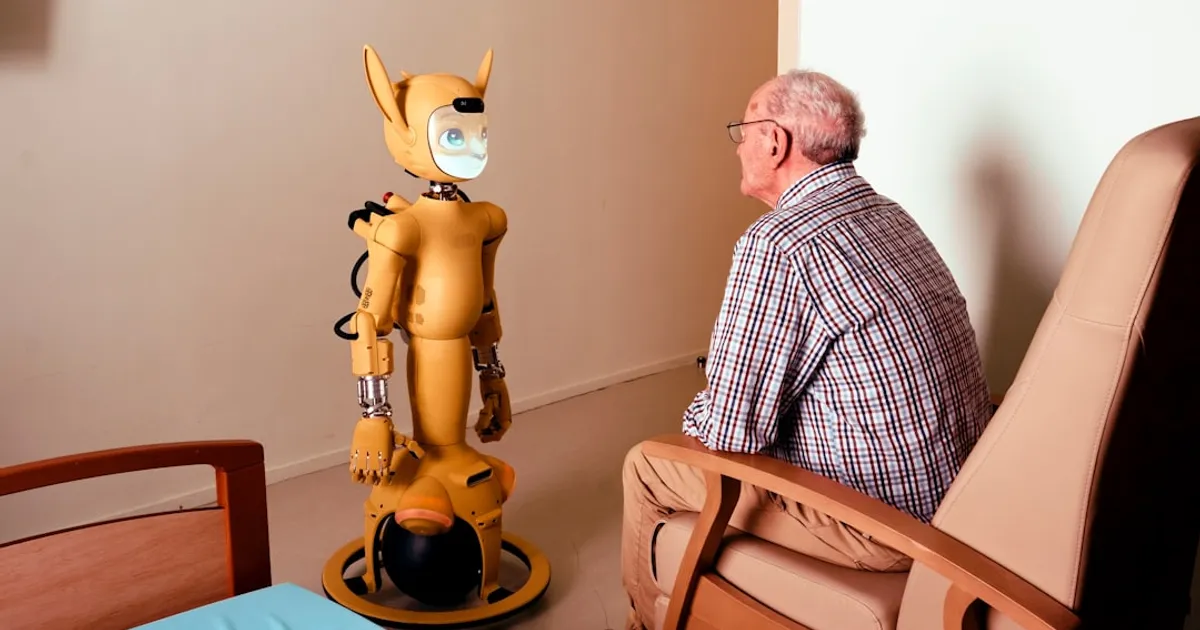
Catalia Health took a different angle with Mabu, a small robot that helps patients manage chronic conditions through conversation. Mabu asks how you're feeling, tracks symptoms, and relays information to doctors. It's less companion, more coach. Trinity College Dublin built Stevie, a more humanoid robot that can help with physical tasks and display facial expressions, though Stevie remains a research project.
Japan drove much of this innovation. Driven by severe labor shortages, the country is aggressively developing robotics to fill care gaps. Nearly 30% of the country's population is over 65. The government has poured funding into robotics as a solution to what they call the '2025 problem,' the year when Japan's baby boomers will all be 75 or older. Europe and North America are catching up to the same demographic math.
The appeal to care facilities is straightforward. Robots don't call in sick. They can work 24 hours and monitor health data between conversations. They're patient in ways that exhausted human caregivers sometimes can't be.
But the critics' question hangs over the entire industry: is this companionship, or is it just a cheaper alternative to hiring more people? PARO reduces agitation in dementia patients. That's measurable. Whether it reduces loneliness is harder to say. ElliQ might remind your mother to drink water, but it won't notice that she seems sad or ask why.
The companies building these devices insist they're supplements to human care, not replacements. The economics of elderly care suggest otherwise. When you can buy a robot for the cost of a few weeks of human caregiving, the math starts to look compelling.