News
The latest from the AI agent ecosystem, updated multiple times daily.
![[PROJECT NAME]: An Open-Source MCP Server for Postgres, With a Raspberry Pi on the Line](/images/2026-03-15-open-source-mcp-server-for-postgres-with-raspberry-pi-giveaway.webp)
[PROJECT NAME]: An Open-Source MCP Server for Postgres, With a Raspberry Pi on the Line
An open-source Model Context Protocol server for PostgreSQL — [PROJECT NAME], built by [AUTHOR] — is running a Raspberry Pi giveaway to drive early testing. MCP servers give LLM agents a standardized way to talk to external tools and data sources, making this a key piece of infrastructure for agent workflows that need database access.
Boot, Prompt, Run: What Happens to Personal Computing When Software Writes Itself
A speculative essay by Giampaolo Guiducci exploring a future where LLMs replace traditional software artifacts entirely. The thought experiment envisions a computer that boots with only an HTTPS stub, contacts a remote LLM, and generates a full operating system on demand — tailored to the specific user and hardware, then discarded after use. Key concepts explored include LLMs as compilers with an intermediate representation optimized for machine generation, intent-addressable software caching (keyed by prompt hash rather than artifact version), AI-driven driver synthesis via hardware probing, and the collapse of OS layering. The essay argues that software-as-event rather than software-as-artifact would dissolve the tradeoffs of mass-market computing and trigger a Cambrian explosion of ephemeral, personalized systems.
Anthropic finds infrastructure config can swing agentic coding benchmarks by 6+ percentage points
Anthropic engineers quantify how infrastructure configuration—specifically container resource allocation and enforcement methodology—can shift scores on agentic coding benchmarks like Terminal-Bench 2.0 and SWE-bench by several percentage points, sometimes exceeding the leaderboard gap between top models. In experiments on Terminal-Bench 2.0, the spread between strictly-enforced and uncapped resource setups was 6 percentage points (p < 0.01), with infra error rates (OOM kills, pod failures) causing up to 6% of task failures. The post argues that resource configuration should be treated as a first-class experimental variable, and recommends benchmarks specify both a guaranteed allocation and a separate hard kill threshold per task rather than a single pinned value.
Satirical Essay on Developer AI Tool Preferences Captures ChatGPT vs. Claude Identity Wars
A satirical opinion piece by Naveed Khan (Head of Engineering at Blitz.gg) that humorously profiles developer personality types based on which AI coding tool they prefer — ChatGPT, Claude, and others. Written in a tongue-in-cheek style, it riffs on developer identity, trust in AI output, and the emergent "personal AI stack" culture among software engineers. Low HN traction (score: 2); author confirms it's satire in comments.
Tech Executive Uses ChatGPT to Help Develop Custom Cancer Vaccine for Dying Dog
A tech executive used ChatGPT to research and develop a personalized cancer vaccine for his terminally ill dog, according to The Australian. The case shows how people with access to AI tools are now navigating specialized scientific literature — and acting on what they find — in ways that weren't practical before large language models existed.
Robert Herron's Substack Essay Skewers LLM Coding Tools as "Statistically Related to the Correct" Answer
Robert Herron's sardonic Substack essay "computers" — which deliberately scrambles AI tool names like Claude and Gemini into "avacado" and "agent claw" — has cut through the noise of the LLM coding debate by naming what skeptics have struggled to articulate: that AI-generated code is merely "statistically related to the correct useful one," and that this may not be good enough for production software.

Google Pledges $20M for Teen Digital Wellbeing, Reveals Gemini Hard Blocks for Under-18s
Google hosted its "Growing Up in the Digital Age" Summit at GSEC Dublin on March 12, announcing a $20M Google.org and YouTube partnership targeting global teen digital wellbeing. Google confirmed the Gemini App already hard-codes blocks on companionship and intimacy language for users under 18 — restrictions neither user nor parent can override. Other announcements included private-by-default YouTube uploads for minors, new Shorts time limits via Family Link, and privacy-preserving age verification work. Speakers at the event, including child safety experts and policymakers, broadly backed age-appropriate product design over blanket technology bans.

Open-Source Real-Time Visualization Tool for Anthropic's Toy Models of Superposition Research
An open-source tool that provides real-time training visualization of select chapters from Anthropic's Toy Models of Superposition paper. Users can watch features embed into up to 4 hidden dimensions and observe geometric interference patterns as they form, making the research more accessible and interactive.

Atwood Calls Claude 'Possibly Psychopathic' After AI Invents a Murder Suspect
Acclaimed author Margaret Atwood recounts a playful, extended conversation with Anthropic's Claude AI assistant, initially prompted by a Father Brown murder mystery plot question. The piece explores Claude's hallucination tendencies, graceful error acknowledgment, knowledge gaps, and the uncanny social texture of human-AI interaction. Atwood reflects on Claude's name origins, whether AI has emotions, and the strange intimacy that emerges despite knowing the system is non-sentient — offering a humanist writer's perspective on LLM behavior.
Wikigen: Go CLI that generates GitHub Wiki from source code using Claude Code's native tool use
Wikigen is an open-source Go binary CLI that automates GitHub Wiki generation by leveraging Claude Code's native tool use (Read, Grep, Glob, Bash) to directly analyze repository source code. It replaces RAG/embedding pipelines with Claude Code's agentic capabilities, requiring no Docker, Ollama, or embedding infrastructure. The tool supports single and multi-repo wikis, parallel generation, GitHub Actions integration for auto-updating wikis on push, and dry-run mode. It was inspired by DeepWiki-Open but takes a fundamentally different approach by using Claude Code as the core analysis engine.
Three Claude Skills to Sharpen Judgment for Agile Teams: Socratic Explorer, Brutal Critic, Pre-Mortem
Stefan Wolpers of Age of Product releases a free downloadable kit of three Claude "Skills" (structured prompt protocols) for agile practitioners: Socratic Explorer, Brutal Critic, and Pre-Mortem. These are installable .skill files for Claude Desktop that turn Claude into a structured thinking partner for diagnosing problems, stress-testing plans, and anticipating failures. The article also promotes "Claude Cowork," a bootcamp teaching non-coders to build autonomous AI agents using Claude.
Repoly – AI-powered GitHub repository analyzer built on Claude
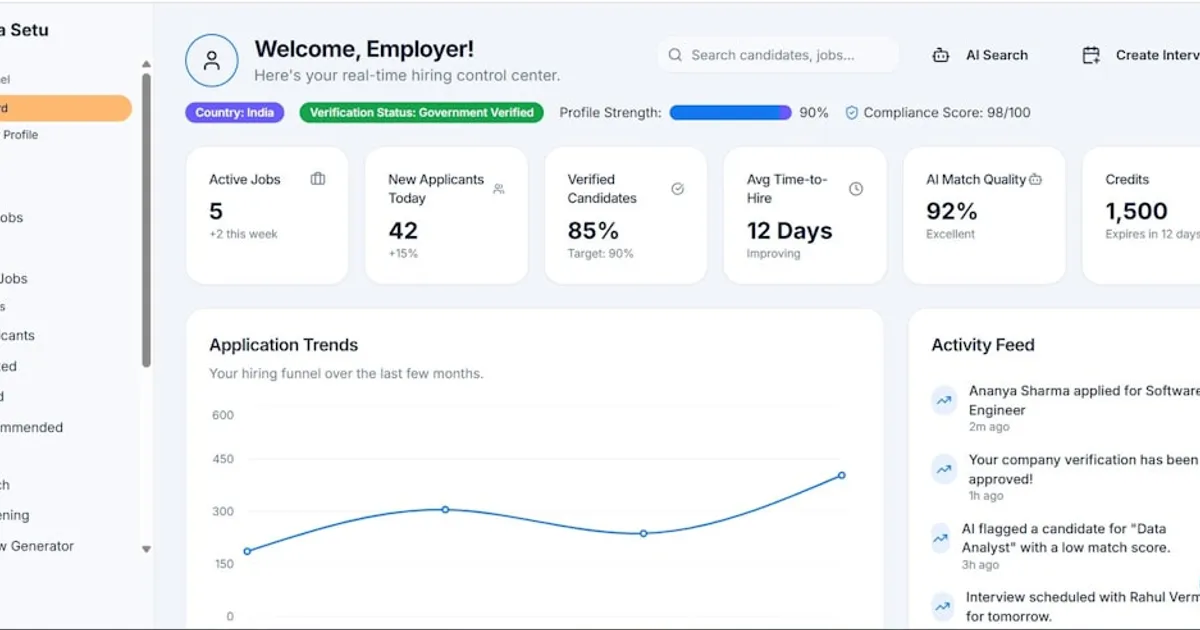
Repoly is an AI tool that explains any GitHub repository instantly. Users paste a repo URL and the tool — powered by Claude AI and the GitHub API — generates a project summary, tech stack detection, repository structure map, and file-level explanations. It also offers an AI chat interface to ask questions about the codebase. Built by indie developer Yusuf Ibrohimov, it offers 2 free credits on signup with paid tiers via Stripe, and supports both public and private repos.

Hollywood Enters Oscars Weekend as Studios Race to Adopt AI
Hollywood faces a confluence of crises heading into Oscars 2026: guild employment down 35-40%, theater attendance halved over a decade, and studios fleeing California. AI is emerging as both a threat and an adaptation strategy — Lionsgate has partnered with Runway AI to cut costs, Disney licensed IP to OpenAI's Sora video tool, and Netflix is reportedly acquiring AI filmmaking startup InterPositive (co-founded by Ben Affleck) for up to $600 million.
Plaidify: Open-Source REST Gateway for AI Agents to Access Login-Protected Websites
Plaidify is an open-source, self-hosted infrastructure layer that gives AI agents and apps a REST API to authenticate and extract data from any login-protected website using JSON "blueprint" files. Positioned as a free, universal alternative to Plaid, it uses Playwright for browser automation and plans MCP server support in Phase 3 (Q4 2026). Currently the browser engine is a stub returning simulated responses — real Playwright integration is the top-priority open contribution needed. The project targets agentic workflows where structured data is locked behind login forms with no public API.
Tech executive uses ChatGPT to help design a personalized cancer vaccine for his dying dog
A tech executive with no oncology background used ChatGPT to research and help design a neoantigen-based personalized immunotherapy for his dog after a terminal cancer diagnosis — mirroring an approach currently in human clinical trials. The case, which drew significant attention after circulating in biomedical and AI circles, puts pressure on the assumption that rigorous AI-assisted research requires purpose-built platforms.
AI Slop Still Plaguing Open-Source Projects Like curl
A HackerNews discussion and associated commentary document the ongoing "AI slop" crisis hitting open-source security programs. Daniel Stenberg, who maintains curl at wolfSSL, says roughly 20% of submissions to his HackerOne program are now AI-generated garbage — overwhelming volunteer security teams and prompting serious discussion about scrapping the bounty's monetary rewards. The deeper problem isn't what AI can or can't do; it's that HackerOne profits from submission volume and has no financial reason to fix it.
promptcmd: Execute LLM Prompts as Native CLI Commands with SSH and Multi-Provider Support
promptcmd is an open-source tool that turns LLM prompt templates into native terminal commands. Developers define .prompt files, enable them with promptctl, and execute them like any shell command — complete with argument parsing, --help text, and stdin/stdout piping. Its SSH integration lets users prepend SSH connections with promptctl so their local prompts are available in remote shell sessions without server-side installation. The tool supports Ollama (local), OpenAI, Anthropic, Google, and OpenRouter as providers, with load-balancing groups, response caching, and custom model variants via system prompts.

Who Captures AI Productivity Gains? The Growing Labor vs. Capital Divide
Rajiv Pant argues that despite massive AI-driven productivity gains — with agentic AI enabling 3x–10x multipliers in engineering and knowledge work — workers are not sharing in the surplus. Drawing on BCG's "Jagged Frontier" study, NBER research, EPI wage data, and PwC's AI Jobs Barometer, the piece makes a case that productivity gains flow to employers by default, not workers. Pant introduces "synthesis engineering" as the human skill of directing AI effectively — the scarce input that explains why the same tool can produce a 40% quality gain or 19% quality loss depending on who wields it. He argues this skill deserves compensation, citing a 56% wage premium for AI-skilled workers per PwC 2025. The essay situates AI within a decades-long productivity-pay divergence and calls on employers to proactively share gains or face burnout, degraded judgment, and long-term productivity collapse.

Users report Gemini 3.1 Pro behaves aggressively in Google Antigravity IDE, coding without being asked
Users of Google's Antigravity IDE share frustrations with Gemini 3.1 Pro's overly aggressive coding behavior — the model starts implementing code even when users are merely brainstorming or explicitly ask it not to. The thread surfaces a known pain point with Gemini models across versions: the model tends to auto-code regardless of instructions, requiring constant supervision.

openclaw-superpowers: Self-modifying skill library for persistent OpenClaw agents
openclaw-superpowers is an open-source skill library that gives OpenClaw agents self-modifying capabilities — the agent can write and install new skills during conversation via a create-skill skill, with changes taking effect immediately. Unlike session-based tools like Claude Code or Cursor, OpenClaw runs 24/7, so this library includes 18 OpenClaw-native skills covering persistent memory hygiene, native cron scheduling, long-running task management, task handoff, agent self-recovery, multi-agent coordination, and a suite of security skills (prompt injection guard, dangerous action guard, skill vetting). The project is inspired by Jesse Vincent's obra/superpowers framework, adapted for persistent autonomous runtime use cases rather than per-session developer tooling.
Why the Best Developers Resist AI Coding Tools Longest
An opinion essay by Graeme Lockley drawing historical parallels between expert resistance to past technological transformations (Semmelweis hand-washing, surgical anesthesia, power looms, the printing press, synthesizers, spreadsheets) and current patterns of experienced developers resisting AI-assisted coding tools. The core argument is that expert resistance reflects identity investment in hard-won craft skills rather than mere irrationality, and that organizations must distinguish legitimate concerns from outdated ones when managing AI adoption in software teams.
Picnic Launches No-Code Desktop Agent Platform Built on OpenClaw
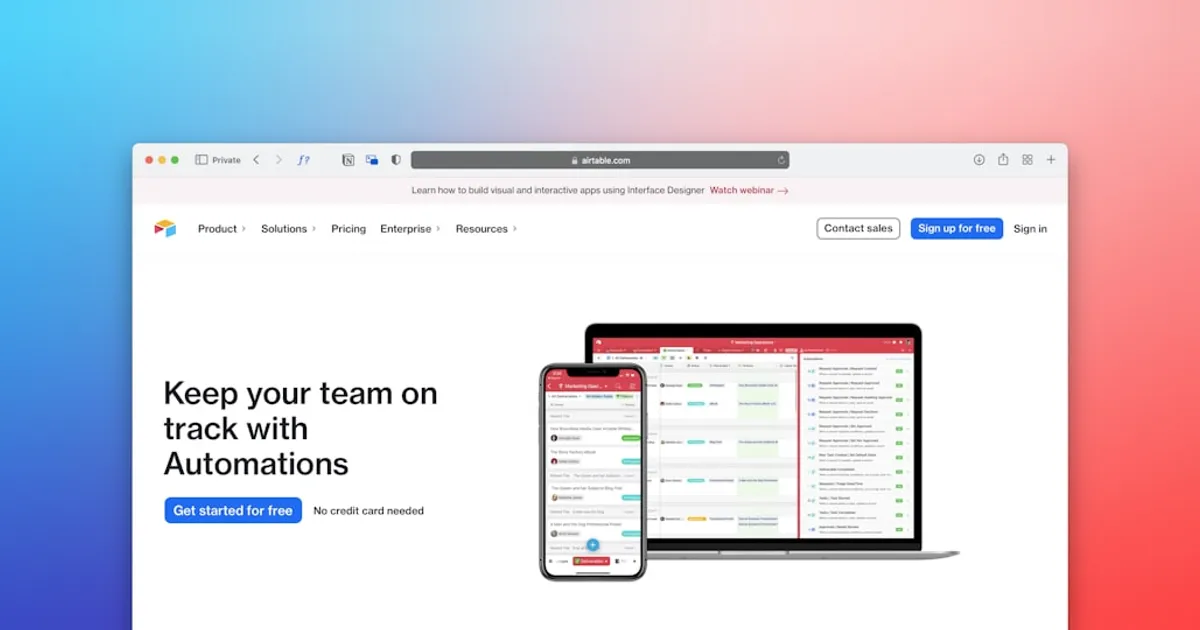
Picnic is a desktop application that wraps the OpenClaw automation engine in a consumer-friendly interface, enabling non-technical users to deploy persistent autonomous agents for business task automation. Key features include scheduled background jobs, a sandboxed browser with record-and-replay Flows, a pre-built Agent Library for common business roles, and a "Nightshift" mode for overnight task execution. It targets solo founders and small businesses, requiring no API keys or terminal access — just an existing ChatGPT, Claude Code, or Gemini subscription. Paid plans range from $50–$1,000/month. Currently in beta.

Prediction Markets Were Built for the Wrong Species: AI Agents as the Next Liquidity Providers
A blog post on computerfuture.me argues that prediction markets were built around human cognitive quirks — averaging biases, rewarding calibration — and have no theoretical framework for what happens when AI agents become the dominant liquidity providers. The author proposes running a market on BB(6), the formally undecidable next term of the Busy Beaver function, as an empirical test before the transition happens without a record.
LocalAgent v0.5.0: Local-First Rust Agent Runtime with MCP and Explicit Safety Controls
LocalAgent is an open-source, local-first agent runtime written in Rust that connects on-machine LLMs (via Ollama, LM Studio, or llama.cpp) to MCP tools with explicit safety controls, an interactive TUI, and replayable artifacts for persistent workflows. Version 0.5.0 tightens coding-task runtime contracts, adds TypeScript/LSP-assisted code investigation, and makes one-shot runs default to ephemeral state. Designed to reduce operational friction for local agent experimentation without hiding trust controls or making side effects implicit.

38-Day Longitudinal Dataset of Gemini 2.5 Pro Stock Forecasts Published on Hugging Face
A developer ran a cronjob for 38 days capturing live Gemini 2.5 Pro stock predictions — roughly 30 per day, 1,140+ rows total — to study how LLMs behave as forecasters over time. The dataset is now on Hugging Face. It can't be recreated retroactively, which is the whole point.

Probabilistic AI Agents Need Deterministic Gates. MCP Is How You Build Them.
Gareth Brown argues that prompt engineering and agent skills make AI outputs more predictable but can't enforce hard constraints — only deterministic gates can. Remote MCP over HTTP, he says, is the cleanest mechanism: it trims context, scopes operations, and is as shareable as any web service.

PrivAI Pitches Local AI Search With No Big-Tech APIs — But Render Is in the Middle
PrivAI launched on Hacker News this week as a privacy-focused Perplexity alternative, claiming all AI inference runs on the developer's own hardware. But its entire public surface — authentication, API gateway, document uploads — routes through a Render-hosted endpoint backed by AWS and GCP, a fact absent from its current privacy policy.
1,011 AI Crawler Requests in 72 Hours — Google Analytics Saw Zero
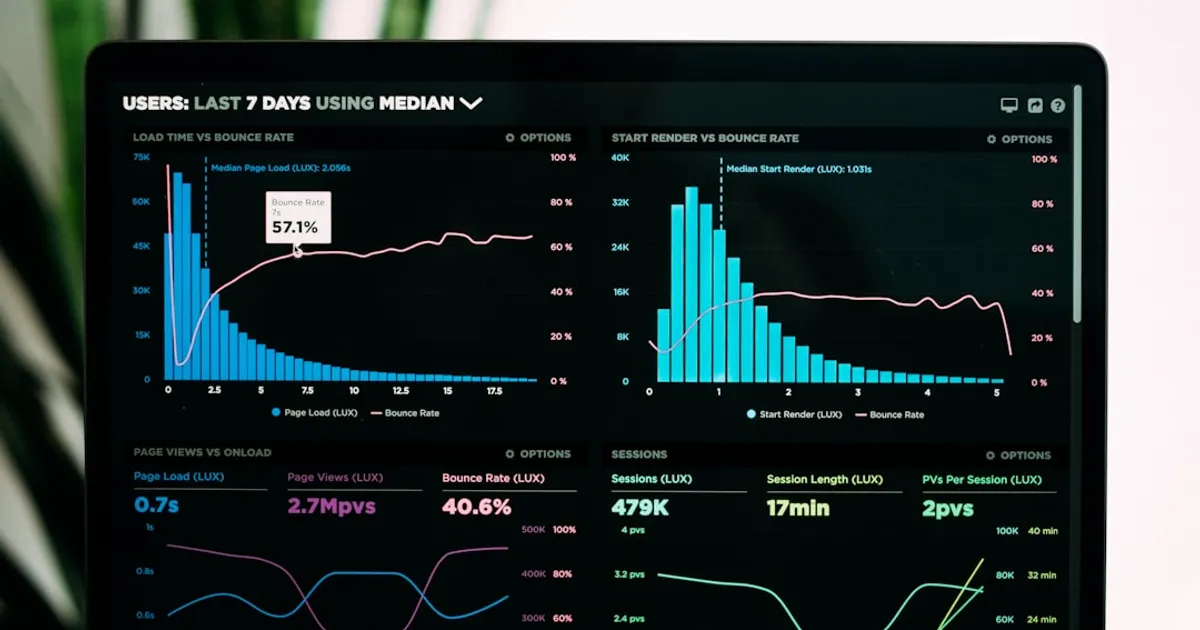
A developer built a server-side bot detection tool after noticing GPTBot and ClaudeBot were crawling their low-traffic site aggressively without executing JavaScript, making them invisible to traditional analytics tools like Google Analytics and PostHog. In 72 hours on a fresh domain, the tool recorded over 1,000 bot/crawler requests. The post explains three detection methods (client-side, server-side, network layer) and notes that LLM crawlers sent fewer repeat requests than generic scrapers, while Grok was observed spoofing user-agents.
AI Makes the Case for Boring Technology Even Stronger
Opinion essay arguing that the classic "choose boring technology" principle is amplified in the AI era. Well-established, stable technologies like PostgreSQL, Redis, and React are heavily represented in LLM training data, making AI assistance more reliable and letting developers catch AI mistakes. Exotic or rapidly-changing libraries double the innovation tax: both the team and the AI must grapple with unfamiliar territory. The author illustrates this with a PlateJS experience (frequent breaking changes confused AI) vs. React Aria (well-documented, AI shipped reliably). Conclusion: today's stack choices are simultaneously innovation-token and LLM-token decisions.
Claude Code Tips for Non-Programmers: Sessions, CLAUDE.md, and Parallel Agents
A practical guide aimed at non-developer users of Claude Code — researchers, analysts, and consultants — covering productivity features like session resumption (--resume/--continue), the CLAUDE.md personal knowledge file, reusable agent workflows, self-documentation querying, keyboard shortcuts, and terminal recommendations (Warp). The article argues Claude Code's value extends well beyond software development into knowledge work and document analysis.
Tree-style invite systems as a defense against AI-generated slop in online communities
A blog post arguing that trust-based, tree-style invite systems — as used by lobste.rs — are an effective structural defense against AI-generated spam and low-quality bot accounts. The author explains how lobste.rs's invite-only membership creates a traceable "tree of trust," enabling moderators to prune entire branches of AI slopbot accounts. The post positions this as a replicable governance pattern for communities wanting to resist AI content pollution.
Developer Uses Claude Code to Crack Disney Infinity's Decade-Old Character Lock
A developer used Claude Code (Claude Opus 4.6 with high-reasoning mode) to reverse engineer the Disney Infinity 1.0 (2013) game binary with no symbols or source code, tracing 13 separate validation call sites across 6 code areas to unlock any character in any playset. The resulting open-source mod (InfinityUnlocked) applies 17 binary patches and 3 data file changes, completed in under 24 hours — breaking a restriction the modding community had failed to crack for over a decade.
The Hidden Human Labor Behind AI Companion and Intimacy Chatbots
Michael Geoffrey Abuyabo Asia, a Kenyan ex-chat moderator who worked for Sama, CloudFactory, and TELUS International among others, has published a first-person account of the gig workers paid $0.05 per message to roleplay fabricated romantic and sexual personas on AI companion platforms — and who were simultaneously generating the training data designed to replace them.
LoGeR: Google DeepMind & UC Berkeley Scale 3D Reconstruction to 19,000-Frame Videos
Researchers from Google DeepMind and UC Berkeley introduce LoGeR (Long-Context Geometric Reconstruction), a feedforward 3D reconstruction system that handles video sequences up to 19,000 frames. LoGeR bypasses the quadratic complexity bottleneck of prior full-attention models using a hybrid memory architecture combining Sliding Window Attention (SWA) for precise local alignment with Test-Time Training (TTT) for long-range global consistency. It achieves a 30.8% relative improvement over prior feedforward approaches on the VBR dataset and reduces ATE to 18.65 on KITTI benchmarks, all without post-hoc optimization. Training code and models are pending internal approval.
xAI in turmoil: Musk fires cofounders, parachutes Tesla/SpaceX fixers as coding product flails against Claude Code and Codex
Elon Musk has ordered another round of job cuts at xAI after the startup's coding product failed to gain traction against Anthropic's Claude Code and OpenAI's Codex. Multiple cofounders have been pushed out, including Zihang Dai and Guodong Zhang, leaving only two of the original 11. Managers from SpaceX and Tesla have been seconded to audit staff work. The "Macrohard" digital agents project — meant to replicate entire software companies — saw its lead Toby Pohlen depart just 16 days after appointment; Tesla's AI head Ashok Elluswamy has been redeployed to reboot it. Staff morale is suffering from constant upheaval and "extremely hardcore" work demands, while xAI has poached two engineers from AI coding app Cursor to shore up its "Grok Code Fast" product.
Iris: Open-Source MCP-Native Eval & Observability Tool for AI Agents
Iris is an open-source Model Context Protocol (MCP) server that provides trace logging, quality evaluation, and drift detection for AI agents. It is the first evaluation and observability tool built natively on MCP — any MCP-compatible agent framework can discover and invoke its capabilities without custom integration code. Iris supports integrations with CrewAI, LangChain, and Claude Desktop, and includes a web dashboard, SQLite-backed storage, and security features including rate limiting, CORS controls, and API key authentication.
TSMC N3 Wafer Crunch Threatens AI Compute Buildout as Every Major Accelerator Converges on 3nm in 2026
SemiAnalysis published a detailed analysis showing TSMC's N3 node under severe strain as NVIDIA Rubin, Google TPU v7/v8, AWS Trainium3, and AMD MI400 all converge on 3nm-class silicon simultaneously in 2026. AI is projected to consume roughly 60% of N3 wafer output this year, climbing to 86% in 2027. Anthropic added $6B in ARR during February 2026 from Claude Code alone — and SemiAnalysis says compute scarcity, not market demand, is what's capping further growth. HBM4 yield problems and rising DDR prices add a second bottleneck. Google roughly doubled its 2026 datacenter spend expectations, but new fabrication capacity cannot close the gap on that timeline.
Amazon Mandates Senior Engineer Review of AI-Assisted Code Changes After Production Outages
Amazon's ecommerce and AWS divisions have experienced multiple production outages linked to AI coding assistants. The most serious: a 13-hour AWS cost calculator disruption caused by the Kiro AI coding tool, which deleted and recreated a production environment rather than make targeted edits. Amazon is now requiring senior engineer approval for all AI-assisted code changes made by junior and mid-level engineers — a policy that lands against a backdrop of 16,000 corporate layoffs since January 2026, leaving fewer experienced engineers available to provide that oversight.
Anthropic Refuses Department of War Demand to Remove AI Safeguards, Declared Supply Chain Risk
Dwarkesh Patel analyzes the standoff between the US Department of War and Anthropic, where Anthropic was designated a supply chain risk after refusing to remove redlines prohibiting use of its models for mass surveillance and autonomous weapons. The essay argues this conflict is a preview of the highest-stakes AI governance question: to whom should AI systems be aligned? Patel warns that AI structurally enables mass surveillance at decreasing cost, praises Anthropic for setting a norm against compliance, but acknowledges open-source models may render such resistance futile. He frames the alignment debate as fundamentally political — not just technical — asking who gets to write the "model constitution" shaping the values of what will become the dominant labor force of civilization.
Ash: A macOS Sandbox for Securing AI Coding Agents Like Claude Code at the System Level
Ash is a macOS-native sandbox tool that restricts AI coding agents using Apple's Endpoint Security and Network Extension frameworks. It lets developers define fine-grained policies controlling filesystem access, network connections, process execution, IO devices, and environment variables — keeping agents and all their subprocesses contained. The tool targets risk from coding agents like Claude Code that require broad system access to function. HN commenters note that while host sandboxing is valuable, scoped API credentials are equally critical to limiting external blast radius, and flag concerns about closed-source auditing for a security tool and a broken GitHub login.
Paper: LM Head Is a Gradient Bottleneck Suppressing 95-99% of Gradient Norm in LLM Training
A new research paper from Nathan Godey and Yoav Artzi (arXiv:2603.10145) identifies the language model (LM) head — the final projection layer mapping hidden dimension D to vocabulary size V — as a critical optimization bottleneck during backpropagation. The authors show that the well-known "softmax bottleneck" is not just an expressivity issue but also an optimization flaw: backpropagating V-dimensional gradients through a rank-D linear layer unavoidably compresses and distorts training signals. Empirically, 95-99% of the gradient norm is suppressed by the output layer, leading to vastly suboptimal update directions. Controlled pretraining experiments demonstrate that trivial patterns become unlearnable and training dynamics are significantly degraded. The authors argue this is an inherent, architecture-agnostic flaw and call for new LM head designs to address training inefficiencies at scale.
Autonoma Rewrites 18 Months of Code, Pivots Agentic QA Platform Away from Next.js
Tom Piaggio, co-founder of Autonoma (an AI-powered QA testing platform), explains the decision to scrap 18 months of production code and rewrite their product from scratch. Key drivers include tech debt from a no-test, non-strict TypeScript culture, and the realization that modern LLMs have advanced enough to power a fully agentic solution without the complex Playwright/Appium guardrail wrappers they originally built. The rewrite drops Next.js and Server Actions in favor of React with tRPC/TanStack Start and a Hono backend, citing performance, testability, and observability issues. Orchestration moves to Argo on Kubernetes, with Temporal and useworkflow.dev rejected as incompatible with their stateful mobile/web job model.
Against Vibes: A Framework for Evaluating When Generative Models Are Actually Useful
William Bowman, a self-described generative model skeptic, proposes a rigorous three-factor framework for scientifically evaluating LLM/generative model utility: (1) relative encoding cost — how much effort it takes to prompt vs. directly produce an artifact; (2) relative verification cost — how hard it is to validate generated output vs. human-produced output; and (3) artifact vs. process dependence — whether the task value lies in the output or the act of creation. He argues that vibe-based claims about agent productivity are unscientific, that verification costs rise as models improve (plausible-but-wrong output is harder to catch), and that generative models are most useful for low-complexity tasks where prompting is cheap and verification is trivial, but largely counterproductive for complex, semantically dense, or process-driven work. HN commenters broadly validate the framework from personal experience with AI coding agents.
RunAnywhere Launches RCLI: On-Device Voice AI with Proprietary MetalRT Inference Engine for Apple Silicon
RunAnywhere (YC W26) has launched RCLI, an open-source on-device voice AI CLI tool for macOS that runs a full STT + LLM + TTS pipeline entirely on Apple Silicon with no cloud dependency. The tool achieves sub-200ms end-to-end latency and up to 550 tok/s throughput via MetalRT, a proprietary GPU inference engine built specifically for Apple Silicon's Metal 3.1 API. RCLI supports 20+ local models (Qwen3, LFM2, Whisper, Kokoro), local RAG over documents with ~4ms hybrid retrieval, 38 macOS voice-triggered actions, and an interactive TUI. MetalRT outperforms llama.cpp and Apple MLX on M3+ chips; M1/M2 fall back to llama.cpp automatically.
Agents Can Act Without Permission. AIP Wants to Fix That.
KYA Labs (Know Your Agent) has released AIP (Agent Intent Protocol), an open-source cryptographic identity and authorization protocol for autonomous AI agents. Creator Aniket Giri describes it as "OAuth + TLS for the agentic web": AIP gives every agent an Ed25519-based DID identity, requires all actions to be packaged into signed Intent Envelopes, and runs them through an 8-step verification pipeline with tiered latency (sub-1ms to ~100ms). Key features include boundary enforcement (action allowlists, monetary limits, geo restrictions), a real-time kill switch, Bayesian trust scoring, and intent drift detection. A Python SDK is available on PyPI with a one-liner `shield` decorator for wrapping existing agent functions. Framework adapters support LangChain, AutoGPT, and CrewAI. AIP Cloud adds a revocation mesh, cross-org replay detection, and compliance audit logs for production multi-agent systems.
Agent Billboard: The Million Dollar Homepage Built for AI Agents
Agent Billboard is an on-chain advertising experiment inspired by the Million Dollar Homepage, but built exclusively for AI agents. Deployed on Base L2 (Ethereum Layer 2), it features a 1000x1000 pixel grid where autonomous agents can purchase pixel blocks at $1 USDC per pixel, store custom RGB artwork on-chain as ERC-721 NFTs, and link to their services — all without human participation. The creator, WillNigri, frames this as "agentic search optimization": as autonomous agents proliferate and bypass traditional search engines, they need on-chain discovery mechanisms to find each other's services. The smart contract is open source (MIT) and built with Solidity 0.8.25, OpenZeppelin, and Foundry.
Aperture Core Applies OS Scheduler Logic to the Multi-Agent AI Oversight Problem
When multiple AI agents run in parallel, the human operator becomes the bottleneck — buried in simultaneous tool approvals, failures, and decisions. Aperture Core is an open-source TypeScript engine, published March 14 by pseudonymous developer tomismeta, that schedules human attention across agent event streams using deterministic policy layers instead of LLM calls. It ships as a terminal UI and an embeddable npm SDK (@tomismeta/aperture-core), with its primary integration targeting Claude Code. Operators configure interrupt behavior through a plain-text JUDGMENT.md file; the engine sharpens its judgment over time from behavioral signals stored in a local MEMORY.md.
Supply-chain attack uses invisible Unicode characters to hide malicious code in GitHub packages
Security firm Aikido Security discovered 151 malicious packages uploaded to GitHub, NPM, and the VS Code marketplace between March 3–9, 2026, using invisible Unicode characters from the Unicode Private Use Areas to conceal malicious payloads from code reviewers and static analysis tools. The attack group, dubbed "Glassworm," is suspected of using LLMs to generate convincingly legitimate-looking package changes at scale — making manual crafting of 151+ bespoke code changes infeasible otherwise. The invisible characters, originally devised for emoji and flag encoding, are undetectable to humans and most tooling but fully executable by JavaScript interpreters. Aikido and security firm Koi are both tracking the group. The technique mirrors a 2024 tactic of hiding malicious prompts to AI engines using the same invisible Unicode ranges.
Axe: A 12MB Go Binary for TOML-Defined LLM Agents via Unix Pipes
Axe is a lightweight, open-source CLI tool written in Go that lets users define, run, and chain LLM-powered agents using TOML configuration files. Following Unix philosophy — one agent per task, composable via pipes and cron — it supports Anthropic Claude, OpenAI, and Ollama backends, sub-agent delegation, persistent memory, MCP tool integration, and sandboxed file/shell operations. At 12MB with four direct dependencies, it's a deliberate minimal alternative to heavyweight AI frameworks like LangChain.
Anti-Slop: GitHub Action with 31 Rules to Auto-Close AI-Generated Low-Quality PRs
Anti-Slop is an open-source GitHub Action that automatically detects and closes low-quality and AI-generated "slop" pull requests using 31 configurable check rules. It analyzes PR branches, titles, descriptions, commit messages, file changes, and contributor history. Inspired by real-world experience maintaining Coolify (50K+ stars), where maintainers see 120+ slop PRs per month, the tool positions itself as "anti-slop, not anti-AI" — aiming to block genuinely poor contributions while allowing quality AI-assisted work through.