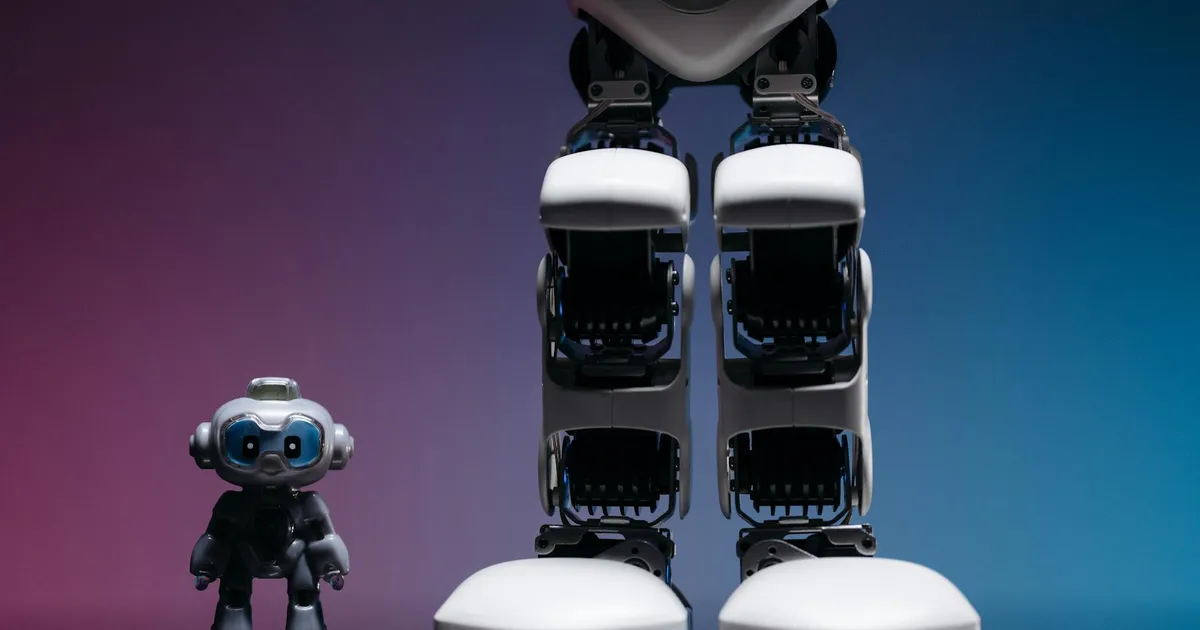
A humanoid robot just ran a half-marathon in 34 minutes and 6 seconds. That's more than 23 minutes faster than the human world record held by Ugandan runner Jacob Kiplimo. The STAR1, built by Beijing-based Four Intelligence, covered the 21-kilometer course at an average speed of 3.7 meters per second. It ran alongside human competitors in a Beijing event that the Associated Press filed under "Oddities."
The technical details matter more than the novelty. STAR1 stands 1.71 meters tall and weighs 54 kilograms, roughly the dimensions of a small adult. It uses high-torque joint actuators and a liquid cooling system to manage heat during sustained exertion. Deep reinforcement learning algorithms handle gait optimization and balance in real time. These have been the hardest problems in bipedal robotics. Running 13.1 miles means thousands of repeated impacts and constant micro-corrections to stay upright. The energy management alone is a beast.
This is real progress.
Endurance and mobility are the bottlenecks keeping humanoid robots out of actual work. A machine that can run for over half an hour at speed without overheating or falling over has solved problems that translate directly to practical applications. Four Intelligence hasn't detailed what comes next, but disaster response seems like the obvious play. A robot that can cover 21 kilometers fast and stay upright could reach survivors in collapsed buildings faster than any wheeled platform.