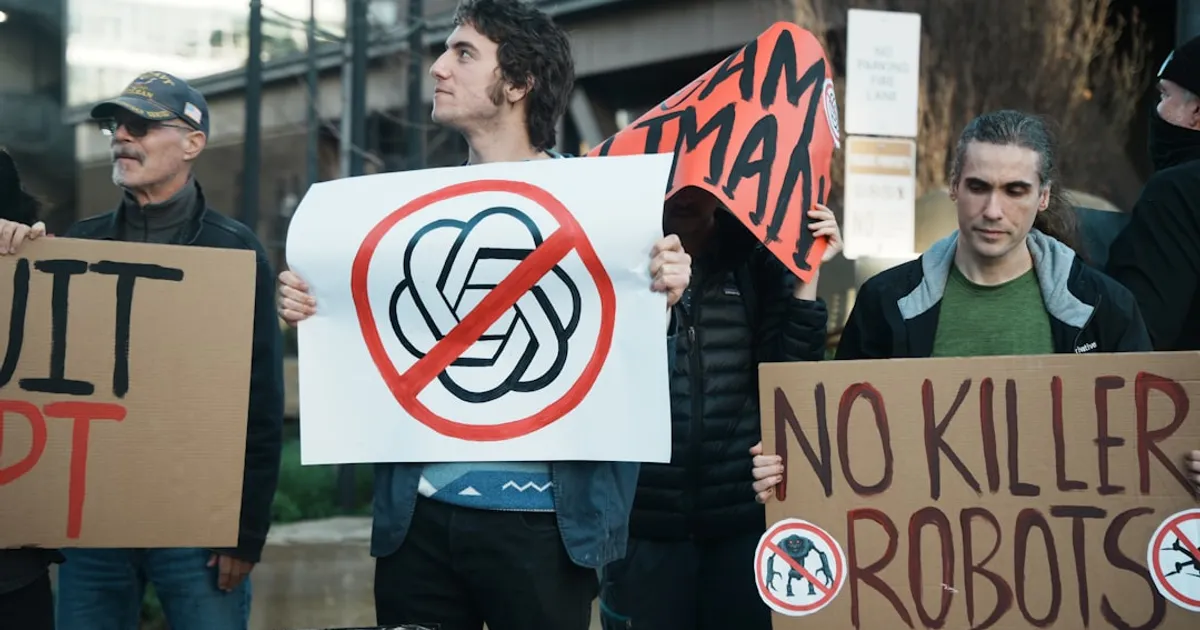
Alberto Romero, writing for The Algorithmic Bridge, draws a straight line from 1812 to 2026. Back then, Luddite George Mellor shot mill owner William Horsfall for boasting he'd ride "up to his saddle in Luddite blood." Last month, Daniel Alejandro Moreno-Gama allegedly threw a Molotov cocktail at Sam Altman's house. A few weeks earlier, someone shot Indianapolis councilman Ron Gibson's home 13 times and left a note reading "NO DATA CENTERS." Gibson supports a datacenter project in his district. In November 2025, a 27-year-old anti-AI activist threatened to murder people at OpenAI's San Francisco offices, prompting a lockdown.
Romero's argument is straightforward: as AI infrastructure gets harder to damage, people become the softer target. Datacenters have armed guards, electrified fences, and redundancy across continents. The algorithm itself is distributed, mirrored, and reconstitutable. But people live in houses with doors that burn.
The threats aren't only domestic. Iran's Revolutionary Guard released satellite footage of OpenAI's Abu Dhabi data center and promised its "complete and utter annihilation." When AI infrastructure gets sited offshore, it becomes a geopolitical asset. These facilities attract state-level threats from regional rivals, and protecting them depends on host nations like the UAE. Corporate security and state defense converge quickly in that environment.
Romero points part of the blame at AI leaders who keep telling the world they'll automate away jobs without offering any transition plan. "Every time I hear from Amodei or Altman that I could lose my job, I don't think 'oh, ok, then allow me pay you $20/month,'" he writes. The repeated messaging about displacement, delivered with no plan for the displaced, is building pressure. When people feel expelled from the system, Romero argues, they feel they have nothing to lose.