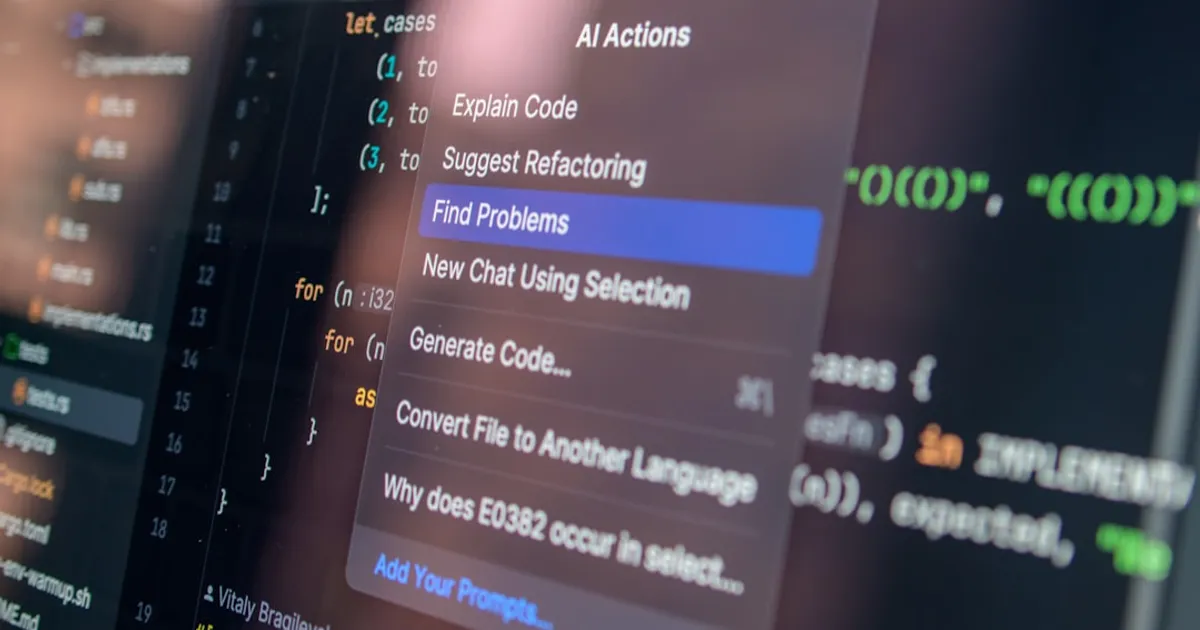
Ken Kantzer's AI bill at Truss equals the company's AWS bill. Half of major features would degrade without AI assistance. He rates himself at level 6-7 on the "Agentic Adoption" curve, using Claude Code daily with occasional tests of Codex and Gemini. His assessment: Claude Opus 4.6 is now smarter than him—solving problems he cannot, debugging faster, and writing fewer bugs on well-defined features. Yet he discards or significantly redirects Claude's solutions about 50% of the time.
The gap between AI capability and usefulness comes down to what Kantzer calls "taste"—invoking Steve Jobs' definition. Claude writes hundreds of lines where dozens would suffice. It optimizes for execution rather than human understanding. Two specific dangers emerge from "vibe coding": developers overestimate AI in domains they understand poorly, and debugging requires more intelligence than writing code (Kernighan's Law). If AI produces code humans cannot fully grasp, fixing it becomes nearly impossible.
Kantzer praises Thomas Ptacek's technical writing on Fly.io's blog as engineering that anticipates agentic needs. He dismisses Steve Yegge's "Welcome to Gas Town" as sophisticated but delusional hype.
His "do not use" list for 2026: MCP, OpenClaw, vector search for most use cases, fine-tuning, and agentic frameworks. The vector search recommendation has drawn pushback from practitioners who report success using it for tool discovery.
Kantzer's benchmark for teams adopting AI coding: expect to redirect or throw out half of what your AI produces.