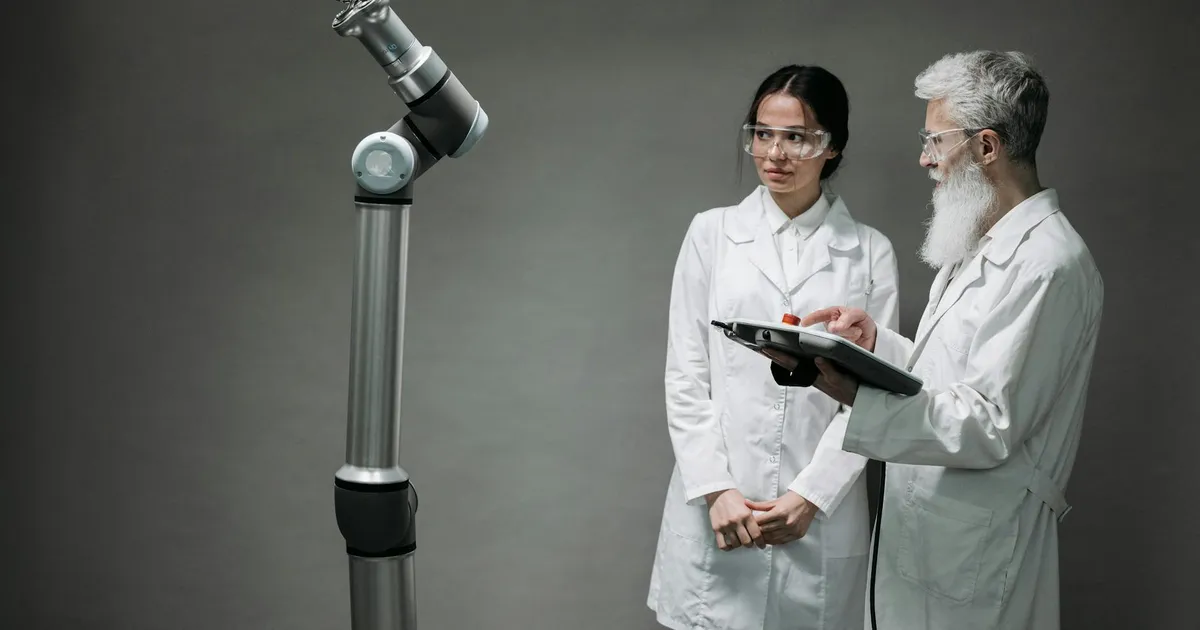
TU Munich's Munich Institute of Robotics and Machine Intelligence (MIRMI) and humanoid robot manufacturer NEURA Robotics announced on March 11, 2026 that they are jointly building the RoboGym — a 2,300 square meter robotics training and research facility at the TUM Convergence Center near Munich Airport. Total investment is €17 million, with NEURA Robotics contributing €11 million, the bulk of it covering robot hardware and ongoing maintenance. The facility is described as the largest of its kind in Germany and among the largest in the scientific research domain worldwide. MIRMI professors Lorenzo Masia and Achim Lilienthal will lead operations.
The core problem the RoboGym is built to solve: robots learning manipulation tasks can't train on internet text the way large language models do. They need precise, embodied demonstrations — and simulations routinely fail to capture real-world physical properties like friction. The facility's solution is human trainers who physically demonstrate tasks like folding boxes or assembling components, generating datasets that robots can use to build skills that transfer to new situations.
The partnership includes a deliberate open-science commitment. Most training data generated at the RoboGym will be released to the global robotics research community. NEURA Robotics gets early access to research outcomes in exchange for its €11 million — a structure that gives the company a commercial edge while keeping the underlying data public. TUM President Thomas Hofmann framed the project as part of an effort to ensure humanoid robots can operate safely alongside humans.
The timing is pointed. Figure AI, Physical Intelligence, and a string of Chinese state-backed programs are all racing to build proprietary training pipelines at scale. NEURA's bet on a university partnership — with shared data as part of the deal — is a different model: collaborative infrastructure rather than closed pipelines. Whether open training data can produce robots competitive with those built on proprietary datasets is the question the RoboGym will effectively test, with hundreds of robot systems running simultaneously once the facility is operational.