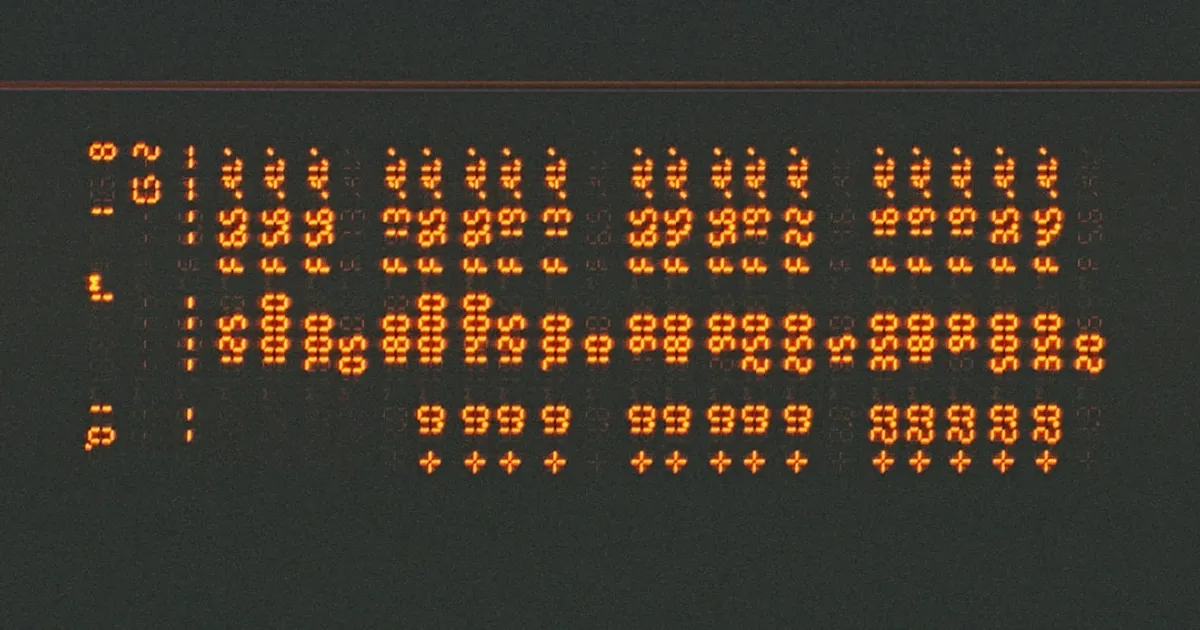
A developer who routinely runs up to ten concurrent AI coding agents has open-sourced a hardware monitoring display called lfg, which renders World of Warcraft-style raid frames on a $25 iDotMatrix 64x64 LED panel purchased from AliExpress. Built with a Rust backend using the btleplug Bluetooth library, the tool gives each agent an animated 8x8 sprite drawn from eleven retro game themes — Slimes, Ghosts, Space Invaders, Pac-Men, and others — with distinct theme assignments per IDE so Claude Code agents are visually distinguishable from Cursor agents at a glance. Three states are supported: Idle, Working, and Requesting, the last of which triggers a fire animation that pulses at double speed to signal an agent waiting for human approval.
The engineering complexity sits largely in the state machine. Claude Code fires PermissionRequest and PreToolUse hook events within approximately 100 microseconds of each other but out of order, meaning a naive implementation lets PreToolUse clobber the Requesting state before it can be rendered. The solution makes Requesting sticky — it is only cleared by PostToolUse (indicating an approval was resolved) or by Stop and SessionEnd events — preventing the failure mode where an agent appears idle while actually blocked. A separate render loop polls state every 250ms, diffs a state hash, debounces two seconds before pushing, then builds a 6-frame animated GIF using NeuQuant quantization across a single global 256-color palette before splitting the output into 4KB BLE packets with CRC32 integrity checks, a constraint imposed by the panel's inability to handle per-frame palette switching.
The actual differentiator isn't the sprites — it's the absence of a browser tab. Production agent observability platforms like LangSmith, Langfuse, Arize Phoenix, and AgentOps optimize for depth: trace replay, cost analytics, evaluation scoring. That depth comes with overhead. Lfg collapses multi-agent status to its minimum viable signal on a dedicated peripheral that requires no context switch away from the editor. The closest software peer is disler's open-source claude-code-hooks-multi-agent-observability project, which consumes the same Claude Code hook events into a WebSocket-driven Vue 3 dashboard — but still requires an open browser tab. Lfg is MIT licensed, installable via a Homebrew tap, and squarely aimed at developers now running agent fleets large enough that a glance at a wall panel beats alt-tabbing through terminals.