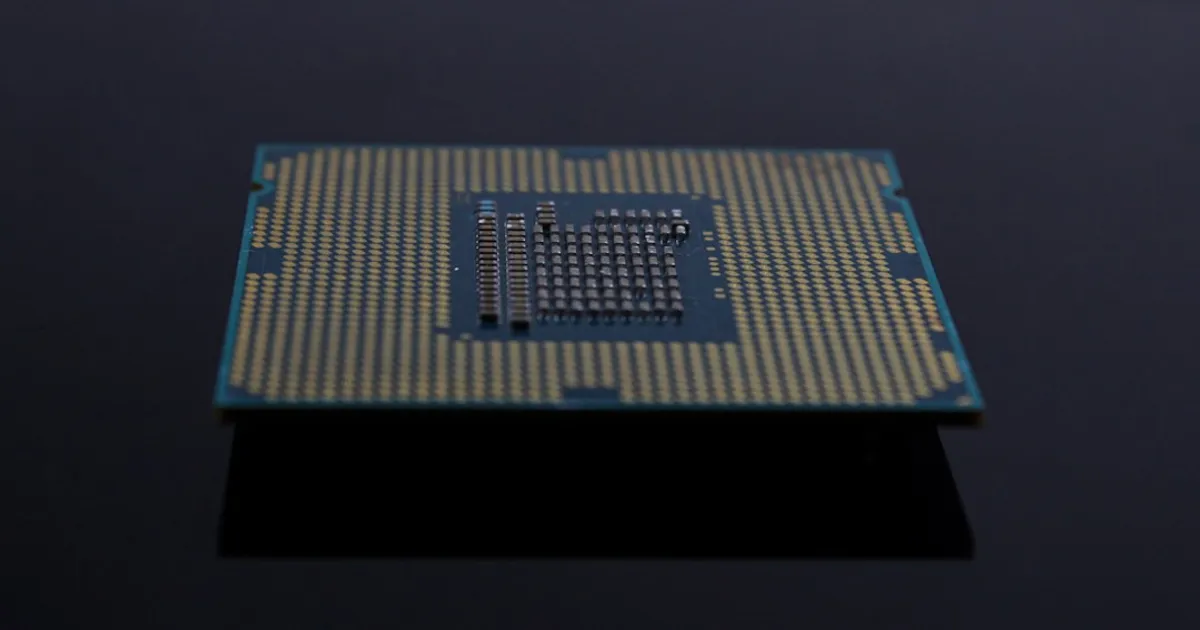
Intel demonstrated Heracles, a prototype fully homomorphic encryption (FHE) accelerator chip, at the IEEE International Solid-State Circuits Conference (ISSCC) 2026 in San Francisco last month. Built on Intel's most advanced 3-nanometer FinFET process, Heracles pairs 64 SIMD compute cores with 48GB of high-bandwidth memory running at 1.2GHz — a hardware configuration more commonly associated with AI training GPUs than cryptography chips. The measured speedup hits 5,547x over top-of-the-line Intel server CPUs for FHE workloads. The project was developed under a DARPA program over five years, according to Ro Cammarota, who led the effort at Intel before moving to the University of California Irvine.
FHE allows computation on encrypted data without ever decrypting it. The canonical use case is submitting a query to a cloud-based LLM without revealing the query's contents to the service provider. Duality Technology has already demonstrated FHE-encrypted inference on BERT, and Intel's live ISSCC demo put the performance gap in concrete terms: verifying 100 million voter ballots took over 17 days on a Xeon CPU versus 23 minutes on Heracles.
The FHE accelerator space is increasingly competitive. Niobium Microsystems is developing an 8nm chip in partnership with Semifive and Samsung Foundry, while Fabric Cryptography, Cornami, and Optalysys — which is pursuing a photonic approach — are all working toward commercialization. Intel's Sanu Mathew, who leads security circuits research at the company, claims Heracles holds a lead on scale, noting it is roughly 20 times larger in die area than competing research chips and is the first FHE hardware to operate at scale. No commercial FHE accelerator product has shipped at volume yet from any vendor.
One important caveat flagged by technical observers is that the 5,547x figure compares against CPU-based FHE, not against unencrypted plaintext computation — the latter is the commercially relevant benchmark. FHE operations still carry a significant throughput penalty compared to working with decrypted data, and whether that penalty is acceptable will vary by workload. The deployment picture carries a separate concern critics have raised: cryptographic hardware with privacy-enhancing capabilities has historically been redirected toward DRM or hardware attestation rather than end-user privacy. Whether Heracles-derived products follow that pattern will depend on how Intel and its enterprise customers choose to deploy it.