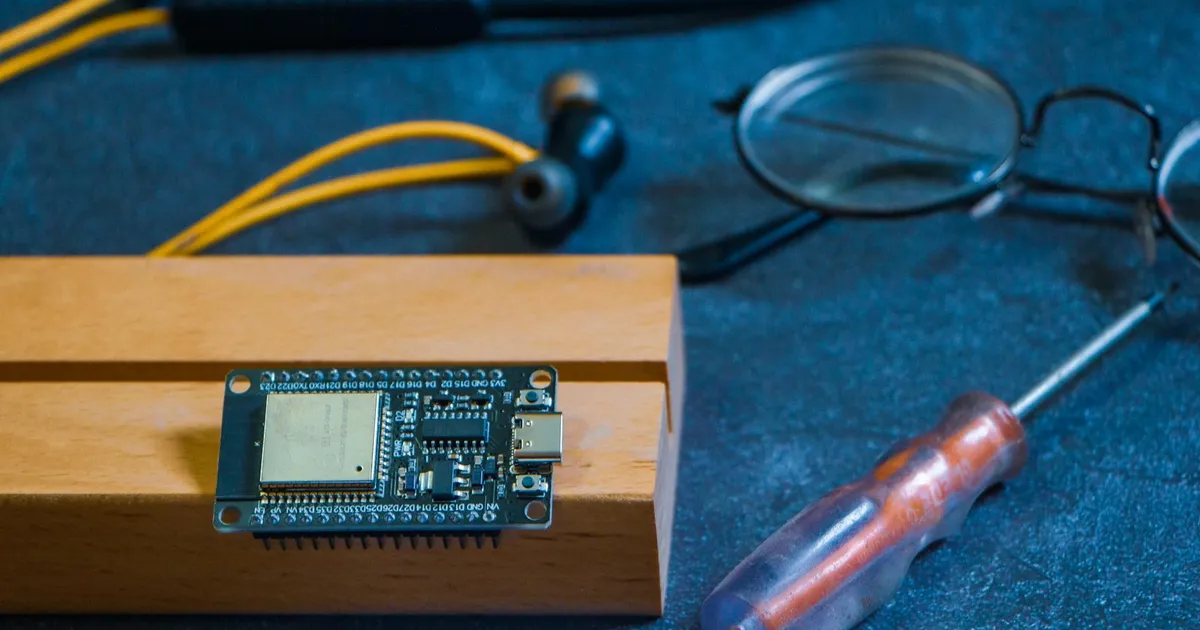
Blueprint, a new AI-powered hardware design tool at blueprint.am, is applying the "vibe coding" model to physical hardware — letting engineers and makers describe concepts in natural language and have AI generate design artifacts, rather than drawing schematics by hand.
Hardware is a harder target than software. PCB layout, component selection, signal integrity, manufacturing tolerances, and firmware all interact, and iteration cycles run in weeks rather than minutes. AI-assisted tooling in this space — Electronic Design Automation, or EDA — lags far behind software equivalents like Cursor or GitHub Copilot, where LLM-assisted coding has become mainstream. Though tools like RegisterForge are emerging, the broader EDA gap remains. That gap is Blueprint's pitch, assuming the technical stack can actually close it.
The company's website currently tells you almost nothing: no feature documentation, no pricing, no technical specifications — just a name and a product category. A Hacker News submission for the product drew minimal engagement, consistent with a stealth launch where the team has staked out a brand before making a public pitch. Whether Blueprint plugs into existing EDA toolchains or attempts to build an AI-native design pipeline from scratch remains unclear.
The core reliability question will define the product. In software, a hallucinated function gets caught in a test suite. A hallucinated trace width or wrong component tolerance ends up etched into a PCB — one that fails in the field, or catches fire.